Radar Level Transmitter Probe Crystallization: Causes & Solutions
Engineering Background of Radar Probe Crystallization
In chemical, new energy, and fine materials industries, radar level transmitters are widely used for liquid and solid level monitoring due to their non-contact measurement, high-temperature, and high-pressure resistance. However, during long-term operation, probe crystallization remains one of the most common and challenging issues in the field.
Once a crystallization layer forms on the probe surface, radar signals weaken, echo stability decreases, and measurement values begin to drift. In severe cases, signal loss or false alarms may occur, affecting continuous operation. Many sites have replaced instruments repeatedly, only to find that the problem persists, as the root cause often lies not in the instrument itself.
Main Causes of Radar Probe Crystallization
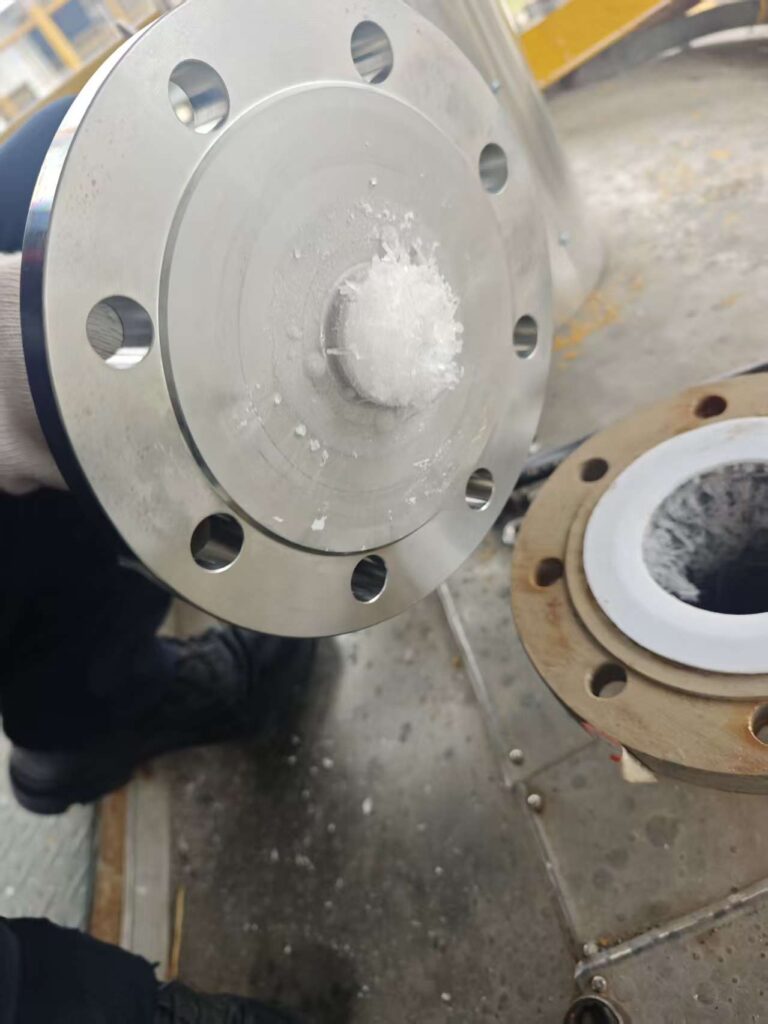
Crystallization is not a “quality issue” of the radar instrument. It results from the combined effects of process conditions, installation methods, and medium characteristics.
From an engineering perspective, probe crystallization is usually caused by multiple factors:
- Medium prone to crystallization
High-concentration alkaline solutions, salt solutions, battery material precursor slurries, or certain chemical slurries are close to saturation. - Probe forming a cold spot in the system
While the tank medium is hot, the radar flange, short connection, or antenna exposed to air dissipates heat faster, creating a local temperature lower than the medium. - Long-term temperature difference between inside and outside
The larger the temperature difference, the more likely crystals will precipitate and grow on the probe surface. - Antenna structure or surface not resistant to material adhesion
Cavity structures, rough or complex surfaces are more prone to crystal attachment.
Among these factors, temperature difference is present in almost all crystallization cases, making it a key focus for preventive measures.

Impact of Crystallization on Radar Measurement
Radar probe crystallization usually occurs gradually, not as a sudden failure. At the early stage, the crystal layer is thin and the measurement impact is minor, often overlooked. However, over time, crystals accumulate, interfering with the emission and reception of radar signals, gradually degrading measurement performance.
During this stage, the first noticeable sign is the gradual decrease of echo amplitude. The instrument still outputs values, but the signal margin reduces, lowering tolerance to process fluctuations and environmental interference. Subsequently, measurement signals may fluctuate irregularly, the level curve becomes unstable, and the control system may make frequent minor adjustments or corrections.
As crystallization worsens, radar echoes may be reflected or scattered by the crystal layer, generating stable false echoes. In empty or low-level conditions, the system may still indicate a false level, affecting interlock decisions and automatic control logic. High or low alarms may trigger frequently, requiring operators to repeatedly verify conditions, increasing operational burden.
In severe cases, automatic zeroing and echo suppression functions gradually fail. Crystals have a certain stability, making it difficult for the instrument to distinguish between true level echoes and fixed reflections, reducing calibration effectiveness. Eventually, the reliability of the measurement system is fully compromised.
Once the crystal layer thickens further, software adjustments alone cannot restore performance, and the probe must be manually removed and cleaned. This increases maintenance effort and often leads to production interruptions and safety risks, significantly raising operational costs.
Probe Insulation and Heat Tracing as the Most Effective Solution
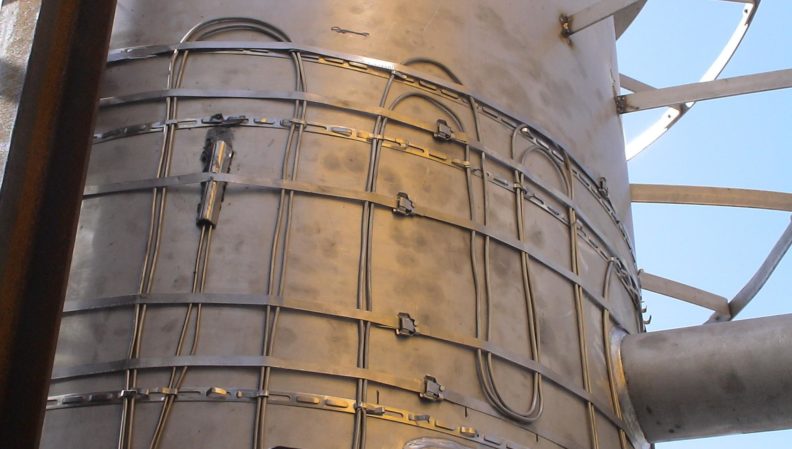
Among various solutions, engineering practice shows that probe insulation and heat tracing are the most direct and reliable methods to prevent crystallization.
The core logic is simple:
- Crystallization occurs when the local probe temperature is lower than the medium.
- Radar probes are often the system’s cold spots.
- Reducing or eliminating this temperature difference significantly lowers the crystallization rate.
Therefore, controlling the probe’s thermal environment from the start is more effective than repeated cleaning after crystallization occurs.
Application of Electric Heat Tracing
Electric heat tracing is widely used and highly effective, especially in systems prone to crystallization or long-cycle operations.
Common practices include:
- Wrapping the radar flange or short connection section with electric heat tracing.
- Using a temperature control system to maintain probe temperature.
- Ensuring heat coverage over all heat-loss-prone areas.
Note: The goal of heat tracing is not to heat the medium, but to compensate for probe heat loss. Temperature should be set to eliminate internal-external differences. Excessive heat may affect seals or electronic components.
Low-Cost Insulation with Thermal Blanket
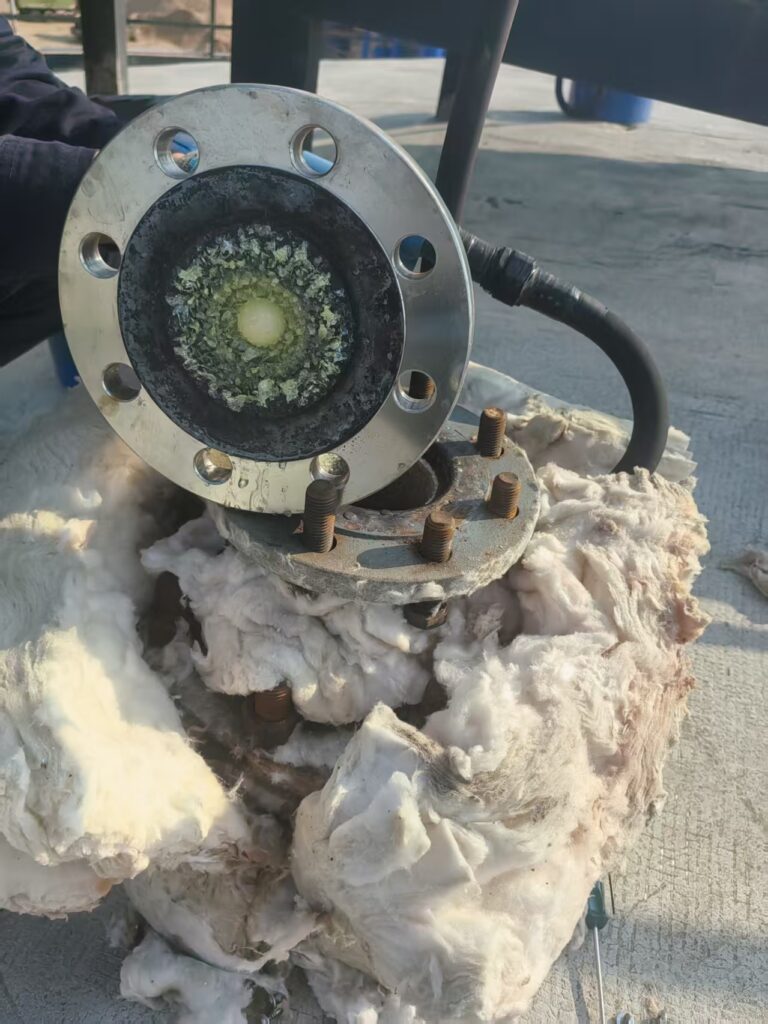
In sites where heat tracing is inconvenient, or crystallization is mild, simple insulation blankets can be effective:
- Wrap the radar flange and probe with insulation materials.
- Use fiberglass, ceramic wool, or other heat-retaining materials.
- Reduce direct cold air contact with probe surfaces.
While insulation does not actively heat, it significantly reduces heat loss, minimizing temperature differences. In medium-low temperature crystallization scenarios, this can maintain long-term stability.
Minimizing Temperature Difference: The Core Principle
Whether using heat tracing or insulation, the goal is the same:
- Prevent the radar probe from becoming a cold spot.
- Reduce the temperature gradient between medium and probe.
- Lower the likelihood of crystal deposition on the probe.
In design or retrofit stages, treat the radar probe as part of the process system’s thermal management, not just a measurement accessory, to prevent crystallization proactively.
Other Causes of Crystallization and Engineering Measures
Besides temperature, probe crystallization may also result from chemical properties, humidity changes, material characteristics, and process fluctuations, even under proper temperature control.
- Medium properties: Highly corrosive or crystallizable media (e.g., concentrated salts, alkaline solutions, sulfate solutions, or battery slurries) can precipitate crystals on the probe when over-saturated or if pH/ion concentration fluctuates. These often appear as localized deposits or fine particle coverage, gradually affecting signals.
- Humidity and vapor condensation: High-humidity or severe condensation zones can form salt crusts on probes, especially during nighttime or shutdown periods. Even with heat tracing or insulation, slight crystallization may occur.
- Material adhesion: Powders, pastes, or viscous liquids may stick to the probe during mixing, feeding, or transport, creating crystal nuclei that accelerate crystal layer growth.
Engineering measures for these non-temperature causes include:
- Surface coating optimization: Use smooth, corrosion-resistant, and anti-adhesive materials such as PTFE or enamel on antennas.
- Improving tank flow: Install agitators, baffles, or adjust feed points to maintain uniform flow around the probe.
- Regular online cleaning: Provide cleaning ports or spray systems to remove crystal nuclei periodically.
- Controlling medium concentration and chemistry: Adjust concentration, pH, or ion content within allowable ranges to reduce over-saturation.
These measures complement insulation and heat tracing, forming a comprehensive crystallization prevention strategy that enhances radar measurement reliability.
Conclusion: An Engineering Approach to Crystallization
Radar probe crystallization is preventable and does not require frequent instrument replacement. Field cases show that controlling thermal conditions with proper insulation and heat tracing significantly improves long-term measurement stability.
Rather than reacting after crystallization occurs, engineers should incorporate crystallization prevention into design and selection, as long-term reliability depends less on datasheet parameters and more on understanding and respecting the site’s process conditions.