
Comparison and Selection Guide: RF Admittance vs Dual-Rod Vibrating Rod Level Switches
In the field of powder level measurement, RF admittance level switches and vibrating rod level switches are often regarded as two “high-reliability” solutions suitable for complex conditions, especially in applications with heavy dust, strong material adhesion, or harsh environments. Both are frequently adopted in such scenarios.
However, in practical engineering applications, there is no absolute superiority between these two types of level switches. The key to proper selection does not lie in whether the principle is “advanced,” but rather in whether it matches the specific material characteristics, operating conditions, and maintenance requirements.
This article combines real engineering cases to systematically analyze the differences between RF admittance and vibrating rod level switches in powder applications, from three aspects: working principle, field performance, and engineering selection logic.
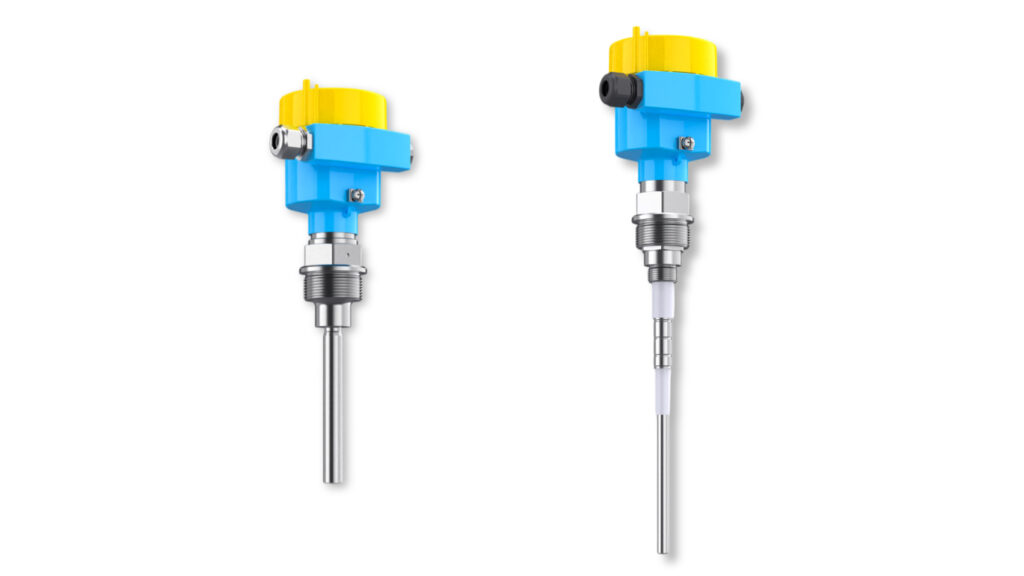
1. Differences in Working Principles of Two Powder Level Switches
1.1 RF Admittance Level Switch: Detection Based on Electrical Characteristic Changes
RF admittance level switches detect changes in the admittance of the medium around the probe (reflecting both capacitance and resistance characteristics) to determine whether the probe is covered by material. Its principle features include:
- Sensitive to the dielectric constant and moisture content of the material
- Detection logic can achieve point-level control, suitable for conditions requiring electronic adjustment
- Highly dependent on installation position and parameter settings
It should be noted that RF admittance level switches do not have inherent suppression capabilities for material buildup or dust accumulation. Their stability largely depends on the consistency of field conditions as well as the quality of commissioning and maintenance. Therefore, in high-adhesion or easily caking powder silos, misoperations may still occur, requiring careful selection based on actual field conditions.
1.2 Vibrating Rod Level Switch: Detection Based on Mechanical Vibration Changes
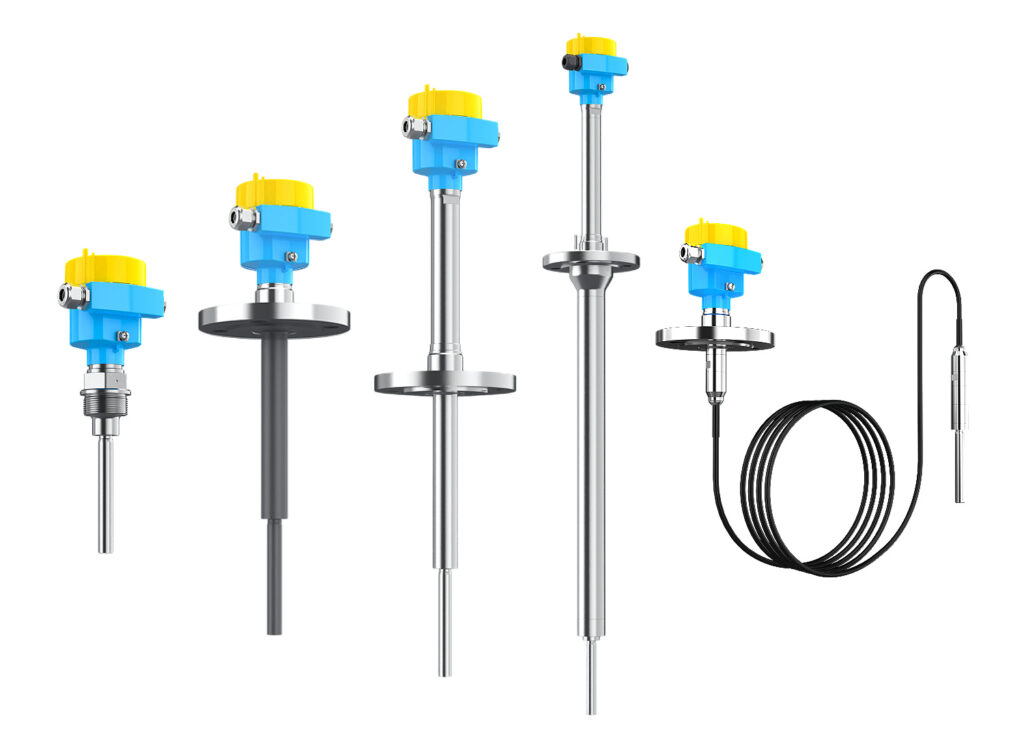
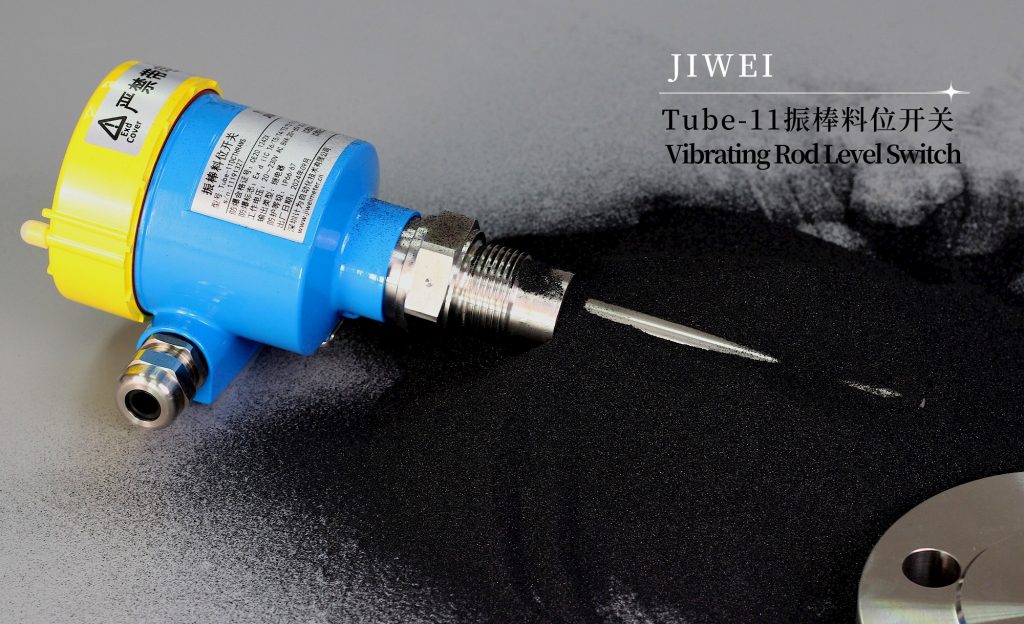
Vibrating rod level switches drive the probe to continuously vibrate. When the material touches the probe, the vibration frequency or amplitude changes, and the instrument outputs a level signal accordingly. It is important to note that the vibrating rod switches discussed here employ a dual-rod structure, which differs from low-end single-rod designs. The dual-rod design significantly improves anti-adhesion capability and detection stability.
Its principle features include:
- Independent of the material’s dielectric constant, providing wider adaptability
- Independent of material density or flowability, suitable for various powders or granules
- Insensitive to dust, adhesion, and electrical environment changes, providing stable and reliable output
This detection method is straightforward, with clear judgment conditions, closely reflecting the physical state of “material present or not.” The dual-rod structure ensures reliable long-term operation in high-adhesion, high-dust, or unmanned conditions, making it the preferred solution in many engineering projects for powder level detection.
2. Real Engineering Case: Comparison in a High-Adhesion Powder Silo
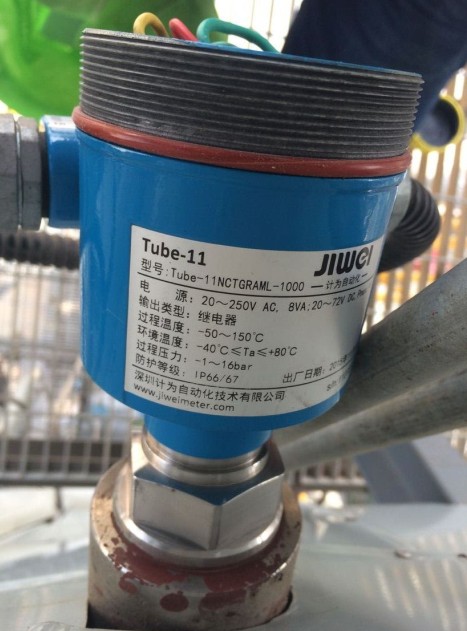
At a chemical production site in Liaodong, a powder storage silo was used to store dry or slightly moist chemical powders. Due to the fine and hygroscopic nature of the powder, light caking occurred in certain areas, with some powder adhering to the silo walls during flow. The dust concentration inside the silo was high, and cleaning cycles were limited, leaving some accumulation or adhesion unaddressed. These conditions required a high level of detection accuracy: the level switch had to accurately detect material coverage while maintaining stable output under heavy dust and significant adhesion.
Initial Solution: RF Admittance Level Switch
Initially, the engineering team selected an RF admittance level switch, mainly because its electronic compensation could suppress adhesion effects on detection. During the early operational stage, the instrument performed relatively stably and could accurately output level signals. However, as material buildup gradually increased inside the silo, the detection sensitivity of the RF admittance switch declined, necessitating periodic parameter adjustments to maintain normal operation. It is important to note that this issue was not due to any defect in the instrument itself but rather because the adhesion state of the material in the silo changed over time, altering the detection conditions and increasing reliance on commissioning and maintenance.
Retrofit Solution: Vibrating Rod Level Switch
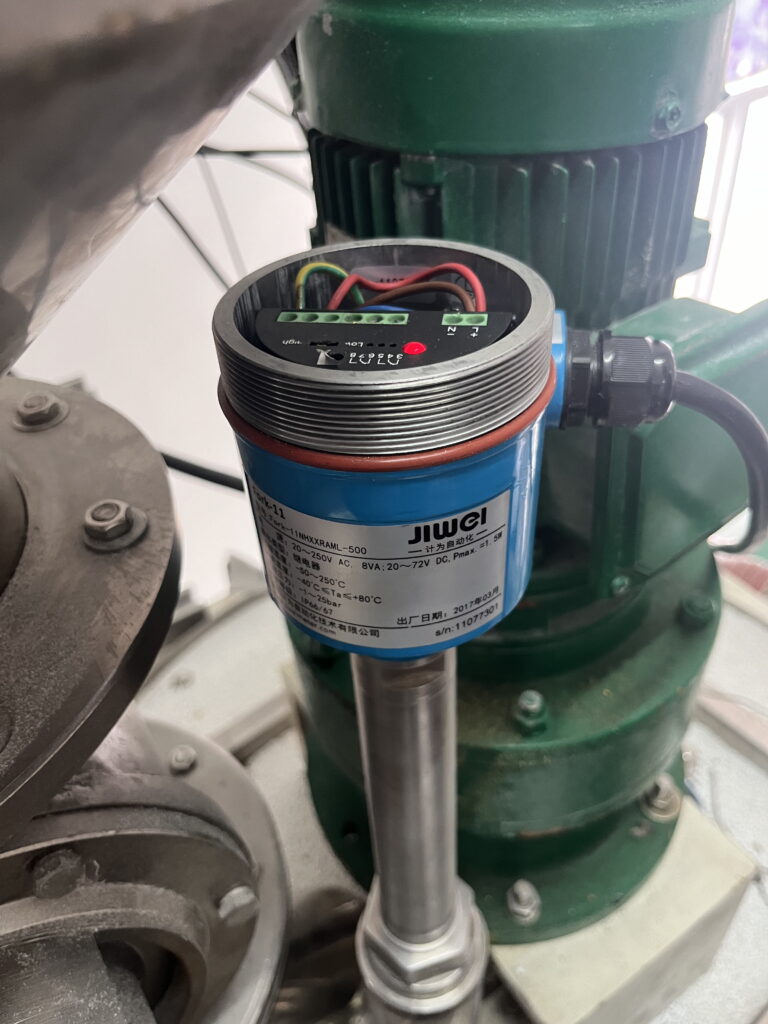
In the later technical retrofit, the engineering team replaced the level switch with a dual-rod vibrating rod solution and optimized the probe installation position. After the retrofit, system performance improved significantly: the instrument required almost no parameter adjustments, adhesion had minimal impact on detection results, and alarm signals remained stable over the long term.
Thanks to the dual-rod design, this solution maintained reliable detection performance even under high-adhesion and high-dust conditions. In similar applications, dual-rod vibrating rod level switches have accumulated mature experience across multiple chemical projects and are particularly suitable for unmanned or low-maintenance operational environments.
3. Typical Differences Between RF Admittance and Vibrating Rod Level Switches in Powder Applications
From an engineering perspective, the core differences between RF admittance and vibrating rod level switches are primarily reflected in operational stability and adaptability to working conditions:
RF Admittance Level Switch
- Highly dependent on installation position, parameter settings, and stable conditions
- Can achieve point-level detection under specific conditions where the material’s dielectric constant is relatively constant
Dual-Rod Vibrating Rod Level Switch
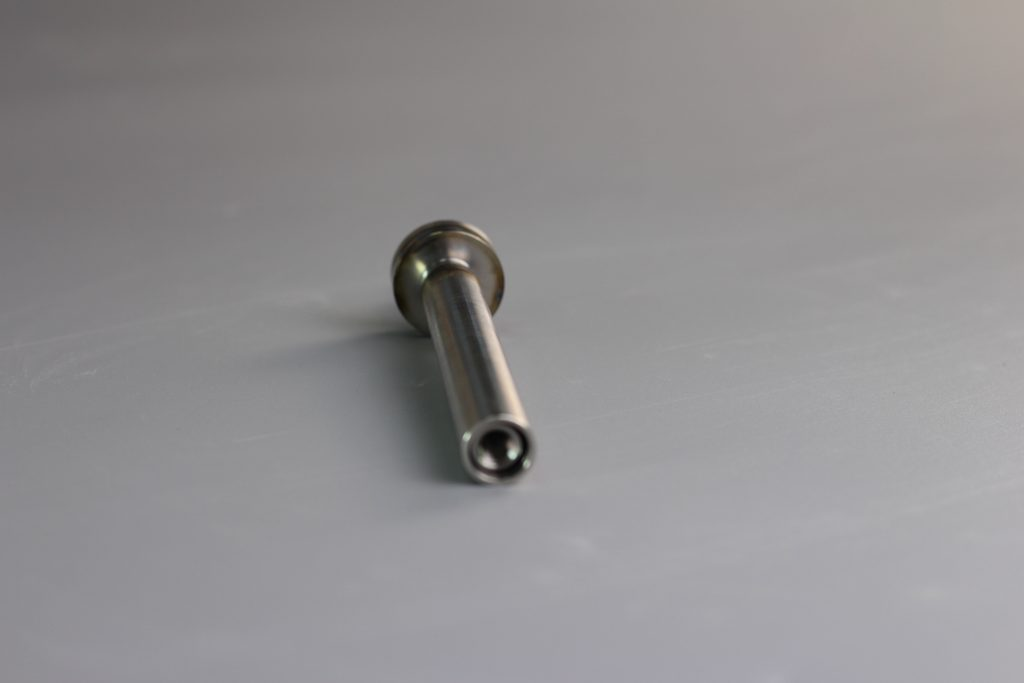
- Simple structure, intuitive detection logic, clear judgment criteria
- Strong adaptability to dust, adhesion, and changing working conditions; excellent anti-adhesion capability
- Maintains long-term stable operation even in high-adhesion or unmanned scenarios
4. Why Vibrating Rod Solutions Are More “Worry-Free” in Most Powder Applications
In long-term engineering practice, dual-rod vibrating rod level switches demonstrate clear advantages, especially in complex powder level measurement conditions. First, they require almost no complex parameter settings, avoiding repeated adjustments caused by variations in material moisture, adhesion buildup, or particle flow state. This is particularly important for unmanned or highly automated production equipment, significantly reducing maintenance workload and operational costs.
Second, the dual-rod design renders the instrument highly insensitive to adhesion, dust, and working condition changes, providing long-term stable and reliable detection. Even if powder adheres to the silo walls or dust concentrations fluctuate, the instrument continuously outputs accurate level signals.
Furthermore, the fault-detection logic of dual-rod vibrating rod level switches is straightforward: the output signal is generated whenever the probe contacts material, allowing field personnel to quickly identify the source of anomalies, minimizing misoperation and downtime. These characteristics make dual-rod vibrating rod level switches the preferred solution in chemical, food, and construction powder applications, especially where long-term stable operation, low maintenance frequency, or limited on-site operation are required.
5. Applications Where RF Admittance Level Switches Are Suitable
RF admittance level switches are not “obsolete” and retain application value under certain conditions:
- Limited installation space where mechanical vibration probes cannot be installed
- Special cases requiring high point-level detection sensitivity, achievable via electronic adjustment
- Silo or hopper conditions with relatively uniform powder flow and minimal adhesion
It should be noted that RF admittance level switches are sensitive to adhesion and dust, and in silos where material accumulation or dust concentration fluctuates, detection stability may decrease. Therefore, proper selection requires:
- Correct installation structure with accurate probe-to-container admittance measurement conditions
- Experienced commissioning personnel capable of proper parameter setup
- Periodic maintenance and parameter review to address changes in working conditions
Under these conditions, RF admittance switches can provide stable point-level detection, but they are not ideal for high-adhesion or easily caking powder silos.
6. Engineering Selection Guidelines for Powder Level Switches
In practical projects, the selection of RF admittance versus dual-rod vibrating rod level switches should consider material adhesion, operation and maintenance conditions, and project duration. Firstly, adhesion is the primary factor: for medium-adhesion conditions, dual-rod vibrating rod switches operate stably; for extreme adhesion or easily caking powder, dual-rod vibrating rod switches must be selected. Their anti-adhesion performance is excellent, making them the only reliable solution for long-term stable measurement. In any high-adhesion or caking scenario, RF admittance switches cannot maintain stable detection, so dual-rod vibrating rods are the preferred choice.
Secondly, selection should consider operational and maintenance conditions: for unmanned or maintenance-limited installations, dual-rod vibrating rod switches provide long-term stable operation, unaffected by adhesion or dust; in environments with regular maintenance, RF admittance switches can provide precise point-level detection but remain unsuitable for extreme adhesion. From both adhesion handling and operational stability perspectives, dual-rod vibrating rod switches are always recommended for high-adhesion conditions.
Finally, project duration should be considered: for long-term operation, critical equipment, or high-adhesion silos, dual-rod vibrating rod switches remain the preferred solution due to their robust structure and excellent anti-adhesion performance; for short-term, low-adhesion, or easily maintainable projects, RF admittance switches can serve as an auxiliary choice.
7. Long-Term Impact of Initial Selection
In the chemical project mentioned above, the initial cost difference between the two solutions was not significant, but after one year of operation:
- RF admittance solution: maintenance and parameter adjustment costs continued to rise
- Vibrating rod solution: virtually no manual intervention required
Long-term stability ultimately became the decisive factor in selection.
Conclusion
The core difference between RF admittance and dual-rod vibrating rod level switches lies in their detection principles and adaptability to field conditions. RF admittance switches are suitable for relatively uniform powder flow, low adhesion, and scenarios requiring high point-level detection accuracy. Dual-rod vibrating rod level switches, however, are simple in structure, highly anti-adhesive, and reliable, making them ideal for most powder level measurement scenarios, including medium to high adhesion, high dust concentration, or unmanned operation. In engineering projects, dual-rod vibrating rod switches represent the more prudent choice.