Why RF Admittance and Rotary Paddle Level Switches Are Not Suitable for Pressurized Silo Measurement
In the field of level measurement, rotary paddle level switches and RF admittance level switches are two common and mature solutions for detecting solid materials. They are widely used for level control and alarm of powdery and granular materials. For example, in applications such as ash hoppers in power plant flue gas dust removal systems, grain storage systems, and raw material silos in the building materials industry, these two types of products have long occupied the market due to their simple structure, low cost, and ease of installation and maintenance.
However, when the measurement target is a pressurized silo (such as pressurized ash hoppers, sealed reactors, chemical vessels, etc.), these two solutions are rarely used. This is due to their working principles, structural characteristics, and inherent limitations observed during long-term operation. This article will analyze from multiple perspectives including principle, structure, sealing, protection, and safety risks, helping engineers and selection personnel understand why RF admittance level switches and rotary paddle level switches are not suitable for pressurized silo measurement, and provide recommendations for safer and more reliable alternative solutions.
I. Working Principles of Rotary Paddle and RF Admittance Level Switches
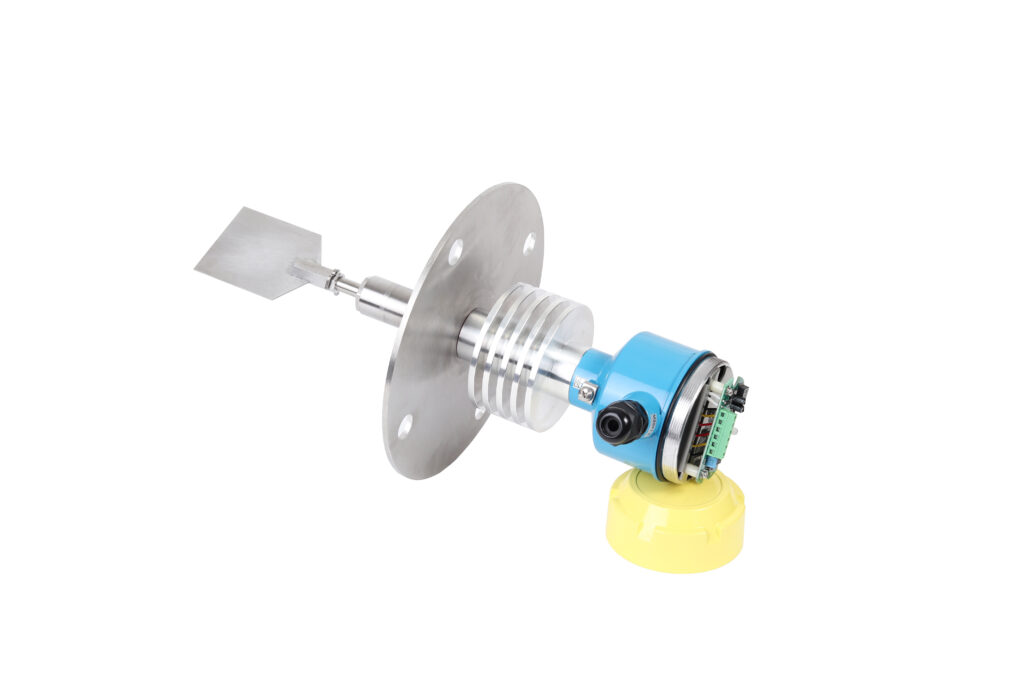
1. Basic Principle of Rotary Paddle Level Switch
A rotary paddle level switch is a device that detects material level through a rotating blade (paddle). A micro motor drives the paddle to rotate continuously. When the paddle encounters material resistance, the torque of the motor changes, which then triggers the switch signal output via a mechanical clutch mechanism.
The specific working process is as follows:
- At startup, the paddle rotates freely in the empty silo;
- When material fills to the paddle position, the paddle experiences increasing resistance;
- The motor senses the torque increase and triggers a stop via the clutch mechanism;
- The control unit outputs an alarm or control signal.
This detection method, relying on mechanical movement and friction changes, performs stably in many dry powder and granular material scenarios and is one of the earliest widely applied level measurement technologies in engineering.
2. Basic Principle of RF Admittance Level Switch
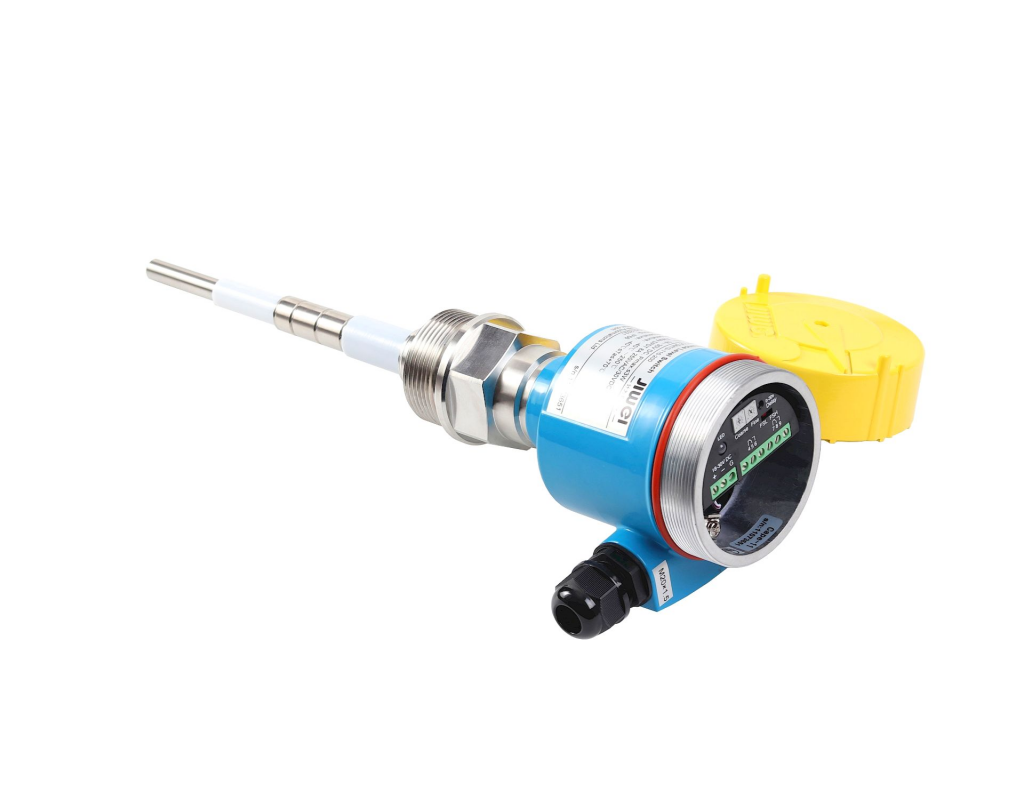
RF admittance level switches are essentially an extension of capacitive measurement technology, sensing whether the material touches the probe by monitoring the change in reactance between the probe and the tank.
The core principle is:
- The probe and the tank form a bridge oscillation circuit;
- When the probe is not covered by material, the reactance remains stable, and the oscillation signal continues;
- When material covers the probe, the reactance changes significantly, causing the oscillation to stop;
- The downstream circuit detects the oscillation change and outputs a level indication or control signal.
To avoid signal interference from material buildup, RF admittance level switches adopt a design where the measuring electrode and protective electrode are at equal potential, same frequency, and isolated, ensuring that buildup does not cause unnecessary signal interference.
II. Special Requirements for Detection Devices in Pressurized Silos
Pressurized silos refer to silos that maintain a certain gas pressure (positive or negative) during operation, such as:
- Pressurized ash hoppers in conveying systems;
- High-temperature reactors and pressure vessels;
- Sealed pneumatic conveying duct chambers;
- Vacuum suction silos.
These operating conditions impose strict requirements on measurement instruments:
High Reliability Sealing
In pressurized environments, material and gas have a strong tendency to permeate outward, and any micro-gap can allow dust or gas to enter the instrument.

Extremely Low Infiltration Risk
Fine dust particles will rapidly enter the detection chamber under pressure differential, causing false triggers or component damage.
Strong Protection Level
Instruments must prevent gas/dust ingress while operating reliably in high temperature, high humidity, and chemically active environments.
Safety Risk Management
Some pressure vessels contain inert or combustible gases, and any leakage may cause serious accidents. Therefore, the measurement device structure must provide high safety assurance.
These requirements far exceed those of normal pressure silos. Many measurement solutions that perform well under atmospheric conditions face severe challenges under pressurized conditions.
III. Why Rotary Paddle Level Switches Are Not Suitable for Pressurized Silos
1. Weakness in Core Sealing Structure
The key components of a rotary paddle level switch are the motor, main shaft, bearings, and paddle. Since this mechanism involves movement, there are inevitably gaps between the motor, outer sleeve, and end cover. These gaps may not cause noticeable issues at atmospheric pressure, but are amplified under pressurized conditions:
- Dust continuously infiltrates the interior through the gaps under pressure;
- Initially, this may cause shaft jamming;
- Continuous dust accumulation further enlarges the gaps;
- Eventually, dust may directly enter the motor and electronic modules.
This infiltration process is gradual but once it occurs, the consequences are severe:
- Shaft operation becomes hindered, requiring regular cleaning;
- Dust entering the motor and electronic modules causes functional failure;
- High-temperature dust may even burn motor windings or circuit boards;
- Frequent instrument replacement significantly increases operating costs.
The pressure differential in a pressurized environment acts as the “driving force” for dust infiltration, and the structure of a rotary paddle level switch cannot form an effective gas-tight barrier, resulting in significantly reduced reliability.
2. Dynamic Components Make High Protection Levels Difficult
It is a fact that rotary paddle level switches cannot achieve high protection levels (e.g., IP66, IP67):
- Dynamic seals wear out faster during long-term operation;
- Dust easily enters through gaps in moving parts;
- Long-term exposure to high-pressure dust erodes the original sealing structure.
Sealing is the core of protection level. Once sealing performance declines, whether due to pressure-driven dust or liquid ingress, it will corrode the motor and electronics chamber.
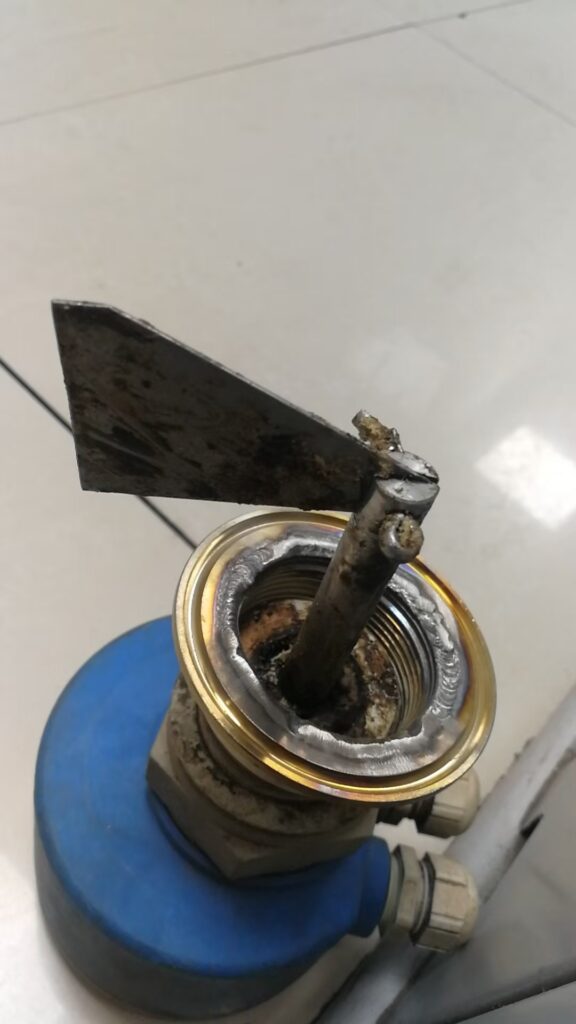
3. Safety Risks Cannot Be Ignored
More seriously, if the pressurized silo contains inert, flammable gases, or high-temperature steam, dust infiltration not only affects instrument performance but may also:
- Cause electrical short circuits;
- Allow internal combustible gases to contact the outside;
- Even trigger fire or explosion hazards.
From a safety compliance perspective, rotary paddle level switches should not be the primary choice for pressurized silos.
IV. Why RF Admittance Level Switches Are Not Suitable for Pressurized Silos
Although RF admittance level switches have strong sealing structures at atmospheric pressure (probes precisely combined with PTFE and stainless steel), there are still some issues:
Probe Structural Rigidity Insufficient
The probe is usually composed of a stainless steel outer tube and a PTFE inner tube, rolled together to form a seal. Due to the probe’s slender design, its rigidity is relatively weak. Under pressurized conditions, dust impacts the probe side, and gas pressure forces dust through micro-gaps. At elevated temperatures, PTFE may age, shrink, or develop micro-cracks. Over time under pressure, these micro-gaps expand, allowing dust to infiltrate between the inner and outer tubes and eventually enter the instrument housing.
Infiltration Aggravated Under Pressure
Under atmospheric conditions, short-term dust infiltration is minimal and typically does not affect signal stability. However, in pressurized silos, dust penetrates more rapidly under pressure differential, affecting probe reactance and causing dust accumulation in the electronics, leading to damage. Over prolonged operation, this phenomenon becomes more pronounced.
Safety Hazards Remain
If the pressurized environment contains non-inert gases, such as hydrogen used in some industrial processes, the risk of leakage and external exposure is very high. Gas leakage can cause explosions and even thermal runaway or safety failures in the detection structure.
V. Comparative Analysis: What Solutions Are Suitable for Pressurized Silos?
Based on the above analysis:
| Solution | Rotary Paddle | RF Admittance | Suitable for Pressurized Silos? |
|---|---|---|---|
| Sealing | Weak | Medium | ❌ |
| Moving Parts | Yes | No | ❌ |
| Dust Infiltration Risk | High | Medium | ❌ |
| Long-term Stability | Low | Medium | ❌ |
| Safety Risk | High | Medium-High | ❌ |
Thus, both RF admittance and rotary paddle level switches are unsuitable for pressurized silo level measurement.
VI. More Suitable Alternative Solutions
For pressurized silo measurement, the following solutions are generally recommended:
1. Radar Level Meters
- No moving mechanical parts;
- Fully sealed probe structure;
- Utilize microwave / frequency modulation technology;
- Suitable for high temperature, high pressure, and dusty environments.
2. Vibrating Level Switches (Rod / Fork)
- No rotating parts on the probe;
- Reliable sealing;
- Unaffected by gas pressure after installation;
- Suitable for high temperature and dusty environments.
VII. Conclusion: Selection Cannot Rely on Simple Parameters
Often, selection personnel only focus on superficial technical parameters, such as response sensitivity, rated voltage, probe length, and installation method. However, in pressurized silos, it is not enough to check whether the parameters meet the design institute’s requirements. One must comprehensively evaluate potential risks, including whether the sealing is sufficient to prevent dust infiltration, whether dynamic components are exposed to high-pressure conditions, and whether the safety protection level is adequate. Additionally, long-term reliability and maintenance costs must be considered. Only by starting from the actual operating conditions and analyzing potential risks can a safe and reliable level measurement solution be recommended, ensuring the enterprise’s safe production.