Silo Level Indicator Guide: Integrating Radar and Vibrating Rod Sensors
In modern industrial automation, selecting a reliable silo level indicator is a critical decision for ensuring production continuity and optimizing inventory management. Whether monitoring a dusty cement clinker bin or a complex chemical reactor, a high-performance silo level indicator serves as the “eyes” of the facility, preventing hazardous material overflow and costly dry-run scenarios.
To achieve maximum operational safety, the industry-leading approach is a dual-device strategy: combining continuous non-contact measurement with redundant point-level detection. This “measurement + protection” architecture typically pairs high-frequency radar technology with robust vibrating rod switches.
1. High-Frequency Radar: The Continuous Silo Level Indicator
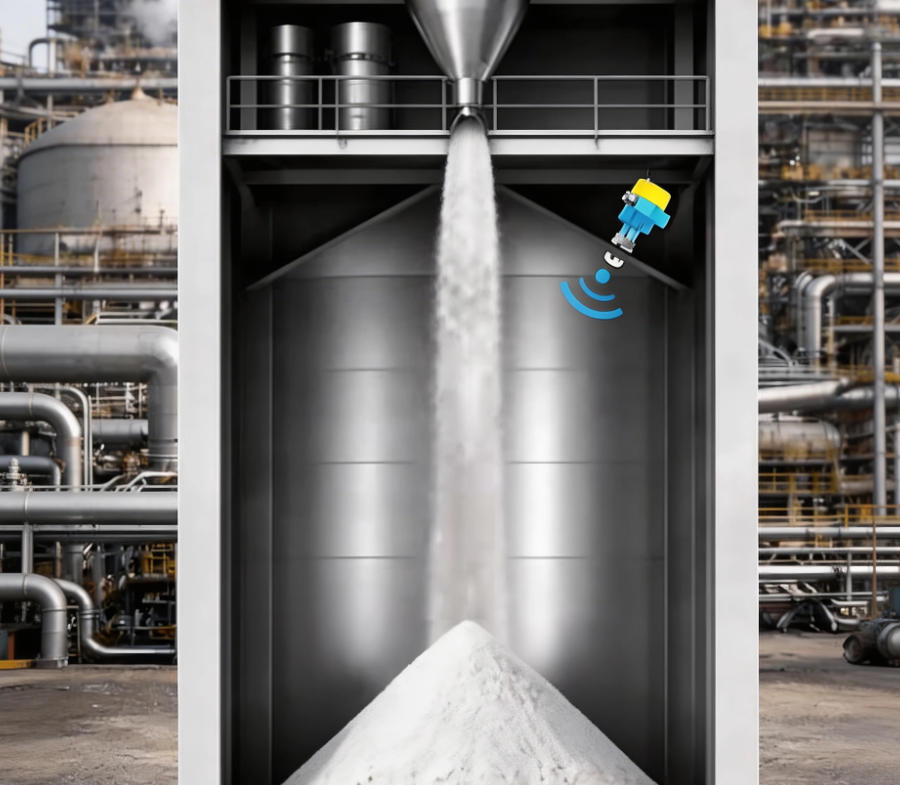
The core of any real-time monitoring system is the continuous silo level indicator. Jiwei’s 80GHz high-frequency radar series has set a new industry benchmark. Unlike traditional mechanical probes, this non-contact sensor utilizes electromagnetic waves to provide millimeter-level accuracy without ever touching the material.
Key Advantages of 80GHz Radar:
- Narrow Beam Precision: The 80GHz frequency produces a highly concentrated beam. This allows the silo level indicator to bypass internal obstacles like agitators or support beams that often trigger false echoes in lower-frequency models.
- Dust Penetration: Dust and steam are the primary enemies of ultrasonic sensors. However, radar waves easily penetrate dense dust clouds, ensuring a stable signal in mining and construction applications.
- Low Maintenance: Since the sensor head never contacts the medium, it is immune to mechanical wear and corrosive damage, significantly reducing long-term OPEX.
2. Vibrating Rod Level Switches: The Redundant Silo Level Indicator

While continuous sensors provide tracking, they can occasionally be affected by power fluctuations or extreme system noise. This is where the vibrating rod silo level indicator acts as the final line of defense for point level detection.
Why Jiwei Vibrating Rods Outperform Others:
- Dual-Tube Resonance: Jiwei’s unique dual-tube design provides exceptional sensitivity. This allows the silo level indicator to accurately detect ultra-low-density powders, such as fly ash or fumed silica.
- Durable Solid-State Design: Driven by piezoelectric elements, these switches have no rotating parts. This eliminates the motor burnout issues commonly associated with traditional rotary paddle switches.
- Self-Cleaning Property: The constant high-frequency vibration helps shed minor material buildup, preventing “false alarms” in sticky or clumping environments.
3. Application-Specific Selection Criteria
Choosing the correct silo level indicator requires matching the technology to the material’s physical properties:
| Industry | Primary Continuous Sensor | Point-Level Backup |
| Cement & Mining | 80GHz Radar (High Dust) | Vibrating Rod (High Level) |
| Chemical & LPG | PTFE-Protected Radar | Explosion-Proof Vibrating Rod |
| Grain & Food | Non-contact Radar | Stainless Steel Vibrating Rod |
Beyond the industry type, engineers must consider the dielectric constant of the material. For materials with low reflectivity, such as plastic pellets, a high-frequency silo level indicator is essential to ensure a strong return signal. Furthermore, for critical safety, selecting a SIL2/3 certified device ensures compliance with international safety integrity standards.
4. Conclusion: A Comprehensive Monitoring Solution
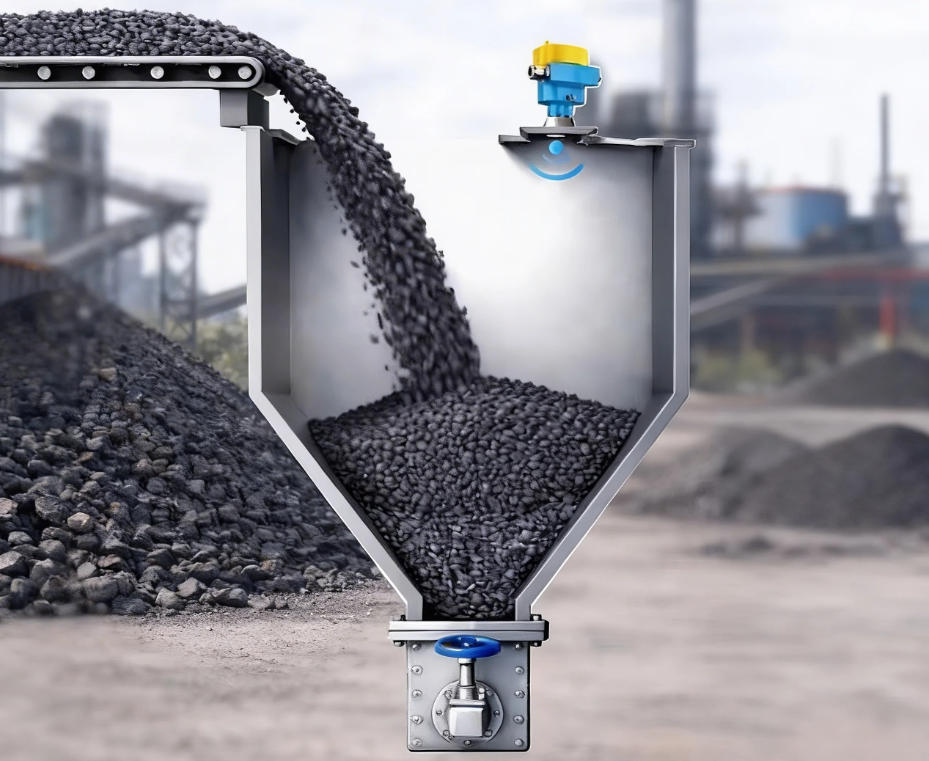
A robust bulk solids strategy should prioritize both data visualization and system safety. By integrating a Jiwei radar unit for precision tracking with a vibrating rod for redundant protection, facilities achieve total peace of mind.
Investing in a high-quality silo level indicator system today is the most effective way to prevent downtime and ensure a safer production environment.