Reliable Solids Detection in Water:Integrated vs Cable-Type Vibrating Rod Level Switches
In wastewater treatment plants, municipal water facilities, and various industrial water processes, the detection of suspended solids—such as sludge, sand, and flocculated materials—remains a technically challenging application in level measurement.
A common question raised during instrument selection is:
Can an integrated vibrating rod level switch be used for suspended solids detection in water?
The answer is: yes, but with clear application limitations.
Improper selection without considering actual process conditions often leads to false alarms or unreliable operation. Therefore, understanding the structural differences and their application boundaries is essential for achieving stable and dependable measurement.
Application Challenges in Liquid–Solid Interface Detection
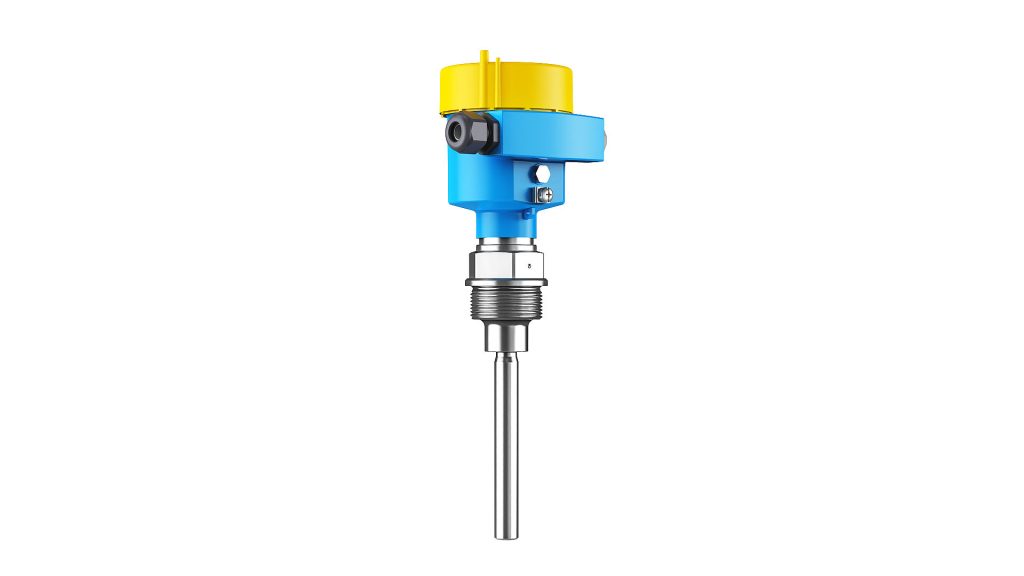
Suspended solids measurement in water typically involves complex and dynamic conditions:
- A liquid upper layer (water or process fluid)
- A gradually accumulating solid phase (sludge, sand, sediment)
- An indistinct interface with transition zones
- Fluctuating water levels, ranging from shallow to several meters
In such applications, the objective is not to detect the liquid, but to reliably identify when solid material reaches a defined level.
This places significantly higher demands on the measurement technology compared to conventional dry solid applications.
Integrated Vibrating Rod Level Switch: Capable but Limited
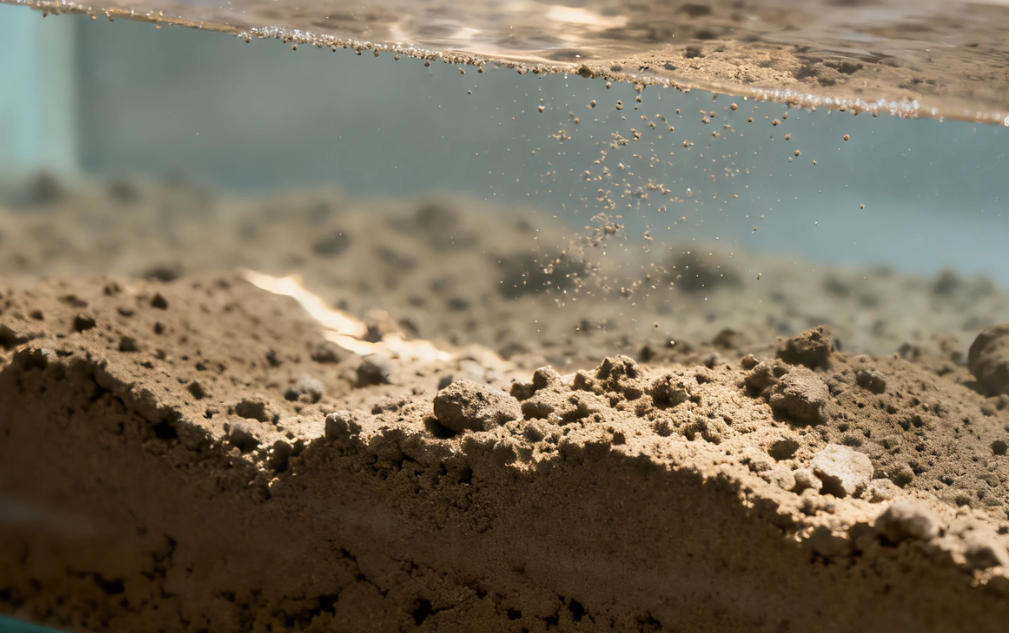
Integrated vibrating rod level switches are widely used for solid level detection due to their robust design, simple structure, and reliable switching behavior.
In suspended solids applications, they can still perform effectively—provided that certain conditions are met.
Suitable Conditions
- Relatively shallow water depth (typically ≤ 1–2 meters)
- Sufficiently dense and stable sediment layers
- Limited process fluctuations
Under these conditions, integrated designs can deliver stable and repeatable detection.
Limitations in Deeper Liquid Conditions
As water depth increases (e.g., beyond 2 meters), performance limitations become increasingly evident. These are not incidental issues, but are directly related to the interaction between the vibrating system and the surrounding liquid medium.
1. Resonance Behavior Affected by Liquid Coupling
When the probe is immersed in liquid, the vibration system interacts with the surrounding medium, forming a coupled system.
This may lead to:
- Changes in overall resonance characteristics of the device
- Frequency shifts away from the calibrated operating point
- Reduced distinction between liquid damping and solid contact
As a result, the measurement signal becomes less stable and harder to interpret.
2. Extended Rigid Structures Amplify Instability
To reach deeper measurement points, longer rigid probes are often required. However, increasing probe length introduces additional challenges:
- Higher sensitivity to fluid disturbances (flow, turbulence, bubbles)
- Increased energy attenuation along the probe length
- Shifts in structural natural frequency, affecting calibration consistency
In essence, longer rigid structures tend to reduce system stability, particularly in liquid environments.
3. Increased Risk of False Alarms
The combined effects of liquid coupling and structural limitations often result in a higher probability of false triggering.
Typical scenarios include:
- Probe still in liquid but interpreted as “material present”
- Temporary signal fluctuations caused by changing liquid conditions
- Premature switching before actual contact with solid sediment
Fundamentally, the device struggles to distinguish between liquid-induced damping and true solid contact.
Cable-Type Vibrating Rod Level Switch: Optimized for Deep Water Applications
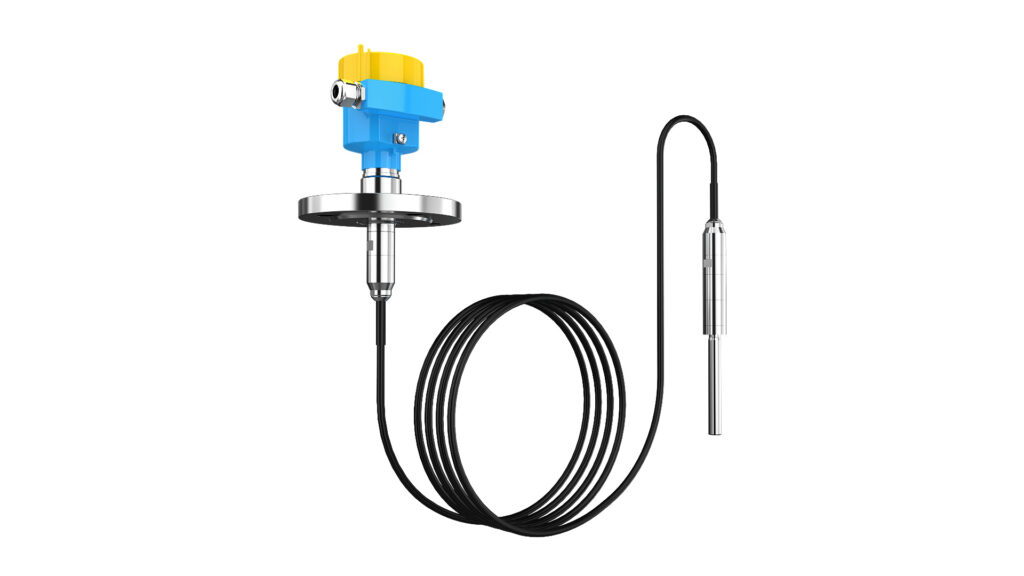
To address these challenges, cable-type (split design) vibrating rod level switches provide a more suitable solution for deeper liquid environments.
Structural Difference
| Type | Structural Characteristics |
|---|---|
| Integrated Type | Rigid structure, entire unit participates in vibration |
| Cable-Type | Flexible connection, independent vibrating unit |
Key Advantages of Cable-Type Design
1. Stable Operation Independent of Water Depth
The cable-type design eliminates rigid mechanical coupling between the sensing unit and the mounting structure.
Key benefits include:
- No participation of the cable in the resonance system
- Reduced influence of liquid-induced vibration coupling
- Stable and independent operation of the sensing element
As a result, reliable performance can be maintained even at depths of 5–10 meters or more.
2. Clear Interface Detection – Responds Only to Solid Contact
In liquid-solid environments, accurate detection depends on the ability to ignore liquid interference.
Cable-type vibrating rods provide a clean and well-defined response:
- No activation in liquid media
- Strong resistance to interference from low-density suspended materials
- Reliable switching only upon contact with dense sediment
This ensures a clear distinction between liquid presence and actual solid accumulation.
3. Adaptability to Complex Process Conditions
Cable-type vibrating rod level switches are well suited for a wide range of challenging applications, including:
- Sedimentation tanks and sludge thickening processes
- Clarification systems in water treatment plants
- Raw water intake sediment monitoring
- Industrial solid–liquid interface control
Their structural flexibility and stable operating principle enable consistent performance under varying process conditions.
Proven Performance in Field Applications
The Tube-11 cable-type vibrating rod level switch has been successfully implemented across multiple water treatment and industrial projects, including municipal utilities and industrial wastewater systems.
Typical applications include:
- Sludge level control
- Sediment accumulation monitoring
- Flocculation and settling process management
Field experience indicates:
- No significant false alarms during long-term operation
- Stable performance despite water level fluctuations
- Reliable operation under varying and complex conditions
Overall, the cable-type structure demonstrates strong suitability for suspended solids detection, offering both stability and long-term reliability.
Conclusion: Selecting the Right Structure Matters
Integrated vibrating rod level switches are not unsuitable for suspended solids detection—but their application is limited by water depth and process conditions.
For shallow and stable environments, they remain a practical and cost-effective solution.
However, in deeper or more complex liquid-solid systems, cable-type designs provide a more robust and reliable approach.
Ultimately, correct selection is not about choosing a technology, but about matching the structure to the application conditions.