How to Set Up a Chemical Tank Low-Level Alarm: Tuning Fork Level Switch Selection and Installation
In chemical processing, storage tanks must be protected against both overfilling and excessively low liquid levels. One often-overlooked risk is low liquid levels that can cause insufficient pump suction or dry running.
For example, a centrifugal pump may continuously transfer chemicals from a storage tank to downstream equipment. If the liquid level falls too low, the pump may experience insufficient liquid supply, potentially leading to cavitation, unstable flow, vibration, or damage to mechanical seals.
A properly designed tank low-level alarm helps operators identify low-liquid conditions before they affect equipment operation. Depending on the process requirements, the alarm may also initiate an automatic pump shutdown.
For applications that require detection at a specific liquid level rather than continuous level measurement, a tuning fork level switch can provide a practical point-level detection solution.
How to Set Up a Tank Low-Level Alarm
Chemical storage tanks are commonly used for raw material storage, process buffering, and intermediate product handling.
As liquid is discharged from the bottom of a tank, the level gradually decreases. If the transfer pump continues operating after the liquid level becomes too low, its suction conditions may deteriorate.
For centrifugal pumps, insufficient liquid supply can contribute to cavitation, vibration, and flow fluctuations. In certain operating conditions, prolonged operation may also damage mechanical seals or other pump components.
A low-level alarm therefore serves two purposes: alerting operators when replenishment may be required and, where appropriate, helping protect process equipment.
The low-level alarm setpoint should not simply correspond to the tank’s empty position. It should be determined by considering the pump inlet geometry, minimum allowable operating level, piping arrangement, and the time required for the control system to respond.
Can a Continuous Level Meter Replace a Low-Level Switch?
A continuous level meter provides ongoing information about the liquid level inside a tank. For example, a radar level meter can measure the distance to the liquid surface from the top of the tank and transmit level data to a control system.
Continuous measurement is useful for monitoring level trends, estimating inventory, and controlling process operations.
However, some applications also require a dedicated switching signal at a predefined low-level point. In these cases, a continuous level meter and a point-level switch can perform complementary functions.
The distinction is straightforward:
- Continuous level meter: Indicates the current liquid level and how it changes over time.
- Low-level switch: Detects whether the liquid has reached a specified level at which an alarm or other action may be required.
For applications with higher protection requirements, the need for an independent detection channel should be determined through risk assessment, control system design, and applicable safety requirements.
How Does a Tuning Fork Level Switch Detect a Low Liquid Level?
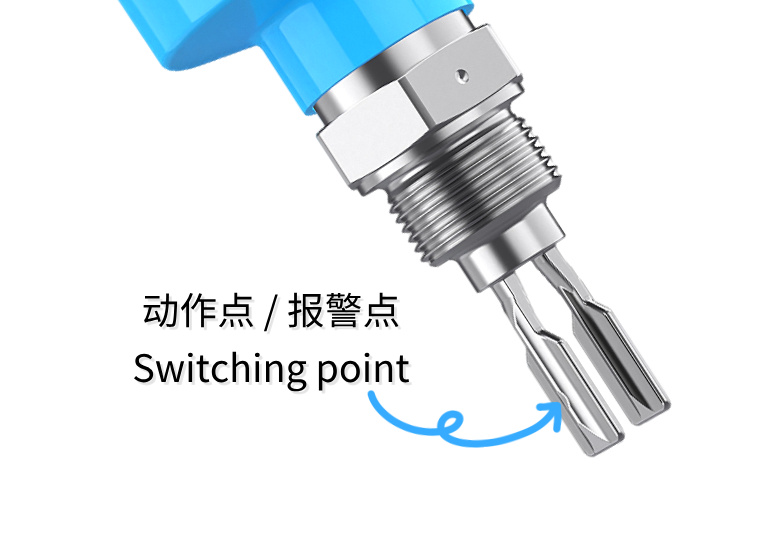
A tuning fork level switch detects changes in the vibration characteristics of its sensing fork when the fork is immersed in liquid or exposed to air.
During normal operation, the fork vibrates at its designed frequency. When liquid covers the fork, the liquid changes its vibration behavior. The instrument detects this change and switches its output accordingly.
When the liquid level falls and the fork becomes exposed, its vibration characteristics change again, allowing the instrument to detect that the liquid has dropped below the sensing point.
Unlike a continuous level meter, a tuning fork level switch does not need to calculate the entire liquid level inside the tank. It detects whether liquid is present at a specific installation point.
This makes tuning fork technology suitable for applications requiring a fixed low-level alarm or other point-level detection functions.
Where Should a Low-Level Switch Be Installed in a Chemical Tank?
Installation height is one of the most important factors in low-level protection.
If the switch is installed too low, the pump may already be experiencing insufficient suction before the alarm is activated. If it is installed too high, the alarm may occur while a substantial amount of usable liquid remains in the tank, potentially interrupting normal production.
The installation point should therefore be selected according to the actual process and equipment protection requirements.
1. Consider the Pump Inlet and Minimum Operating Level
Determine the pump inlet position and the minimum liquid level required for reliable operation.
The alarm setpoint should account for the tank outlet configuration, pump operating requirements, and the possibility of air entering the suction line.

2. Account for the Rate of Level Decrease
If liquid is discharged rapidly, the tank level may continue falling between detection and the completion of a shutdown action.
The control system response time and the expected rate of level decrease should therefore be considered when establishing the alarm point.
3. Evaluate the Tank Bottom Geometry
The usable liquid volume depends on the tank’s internal geometry.
For conical-bottom tanks, tanks with collection sumps, or tanks with specialized drainage arrangements, the remaining liquid volume cannot be determined simply from the overall tank height.
The low-level alarm point should be selected to protect the process and equipment, not merely to allow the tank to be emptied as far as possible.
Does Liquid Viscosity Affect a Tuning Fork Level Switch?
Chemical liquids vary significantly in density, viscosity, temperature, and surface characteristics.
For a tuning fork level switch, liquid properties can influence the vibration behavior of the sensing element. Highly viscous liquids may introduce additional damping, while materials that crystallize, solidify, or adhere to surfaces may leave deposits on the fork.
If substantial material remains on the sensing element after the liquid level falls, the instrument may not respond as expected to the actual process condition.
Before selecting a tuning fork level switch, verify the following:
- Liquid density and viscosity.
- Minimum and maximum operating temperatures.
- Tendency to crystallize, solidify, or form deposits.
- Chemical compatibility of wetted materials.
- Allowable operating pressure and other process conditions.
For corrosive chemicals, the wetted materials must be compatible with the specific medium and operating environment.
A tuning fork level switch should not be assumed suitable for every chemical liquid without checking the application requirements against the instrument specifications.
Can a Tank Agitator Affect Low-Level Detection?
Some chemical storage tanks contain agitators that create surface movement, turbulence, or localized level fluctuations.
If a level switch is installed in an area where the liquid repeatedly covers and exposes the sensing fork, the output may change frequently. Strong local flow or mechanical impact near the agitator can also place additional stress on the sensing element.
To improve reliability:
- Avoid locations close to moving agitator blades.
- Select an installation point with less severe turbulence where possible.
- Evaluate whether protective structures are appropriate for the application.
- Consider signal filtering or a suitable time delay if permitted by the process safety requirements.
Any delay must be carefully evaluated. Excessive delay may prevent the control system from responding quickly enough to a genuine low-level condition.
How Should the Low-Level Switch Output Logic Be Configured?
A tank low-level alarm system involves more than detecting the liquid level. The control system must also respond appropriately to the switch output.
For basic monitoring, the switching signal may activate an audible or visual alarm or generate a notification on the control room display.
For applications requiring pump protection, the low-level signal may initiate a pump shutdown or another predefined control action, depending on the process design.
The control logic should clearly define the expected behavior under normal conditions, low-level conditions, and relevant instrument fault conditions.
For example, some applications require a predefined safe response to power loss or a broken signal wire. The appropriate arrangement depends on the instrument’s electrical characteristics, the control system architecture, and the consequences of a failure.
A low-level switch also does not replace every form of pump protection. Depending on the application, additional monitoring of suction pressure, flow, or other operating parameters may be necessary.
For safety-related functions, the complete detection and control loop must be designed and validated according to the applicable requirements. A level switch alone does not guarantee a safety function.
Application Solution: Ring-11 Tuning Fork Level Switch for Chemical Tank Low-Level Alarms
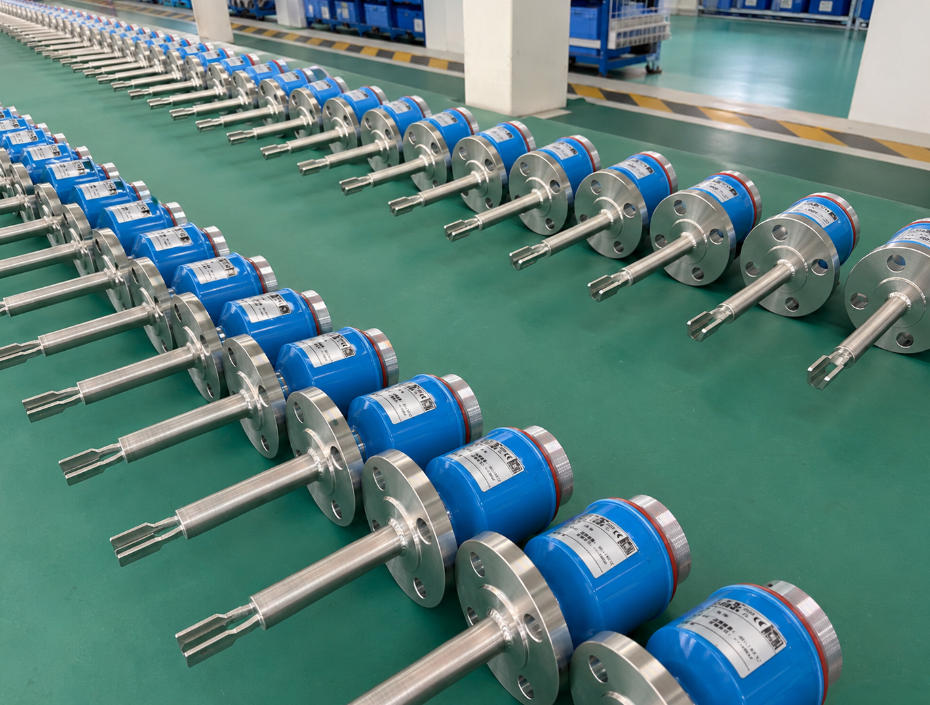
For chemical storage tanks, intermediate liquid storage, and other applications requiring fixed-point liquid detection, the Jiwei Ring-11 tuning fork level switch can be evaluated according to the process conditions.
The Ring-11 uses the tuning fork vibration principle to detect whether liquid is present at a designated sensing point.
For a tank low-level alarm, the installation height can be selected according to the pump inlet position, minimum allowable operating level, and control system response requirements.
Unlike an instrument designed to provide continuous level readings, the Ring-11 performs point-level detection. Its switching signal can be used as a source for low-level alarms or other control system functions, subject to the selected model and electrical configuration.
Before selecting a specific configuration, engineers should confirm:
- Liquid density and viscosity.
- Operating temperature and pressure.
- Chemical compatibility of wetted materials.
- Installation connection and available mounting space.
- Electrical output and control system compatibility.
- Agitation, turbulence, and potential material buildup.
For tanks requiring both continuous level monitoring and a dedicated low-level switching point, a radar level meter can be combined with a Ring-11 level switch when the process design calls for both functions.
Conclusion
Designing a reliable chemical tank low-level alarm requires more than selecting a level switch. The installation point, liquid properties, pump operating conditions, instrument output, and control system response must all be considered.
A tuning fork level switch provides a practical solution when the process requires detection at a predefined liquid level. When properly selected and installed, it can provide a switching signal for operator alarms or pump control functions.
The Jiwei Ring-11 tuning fork level switch can be evaluated for chemical tank applications based on the required process conditions and instrument configuration.
The key to effective low-level protection is to match the sensing point, instrument characteristics, and control logic to the actual operating requirements of the tank and pump system.