Engineering Analysis of 80GHz Radar Level Measurement in Complex Industrial Tanks
1. Engineering Nature of Industrial Level Measurement Systems
In industrial automation systems, radar level measurement is generally considered a basic process variable. However, from an engineering system perspective, this function extends far beyond simply measuring liquid height. It serves as a critical input for process control systems, directly influencing pump control logic, storage tank safety interlocks, and material balance calculations.
In real engineering applications, the core challenge of level measurement is not whether the level can be detected, but whether the measurement signal can remain stable over long-term operation while resisting interference from structural conditions and process disturbances. Therefore, evaluation criteria for level measurement systems should shift from static accuracy to dynamic stability and anti-interference capability. Radar Level Measurement
2. Mechanisms of Measurement Signal Interference in Complex Tank Environments
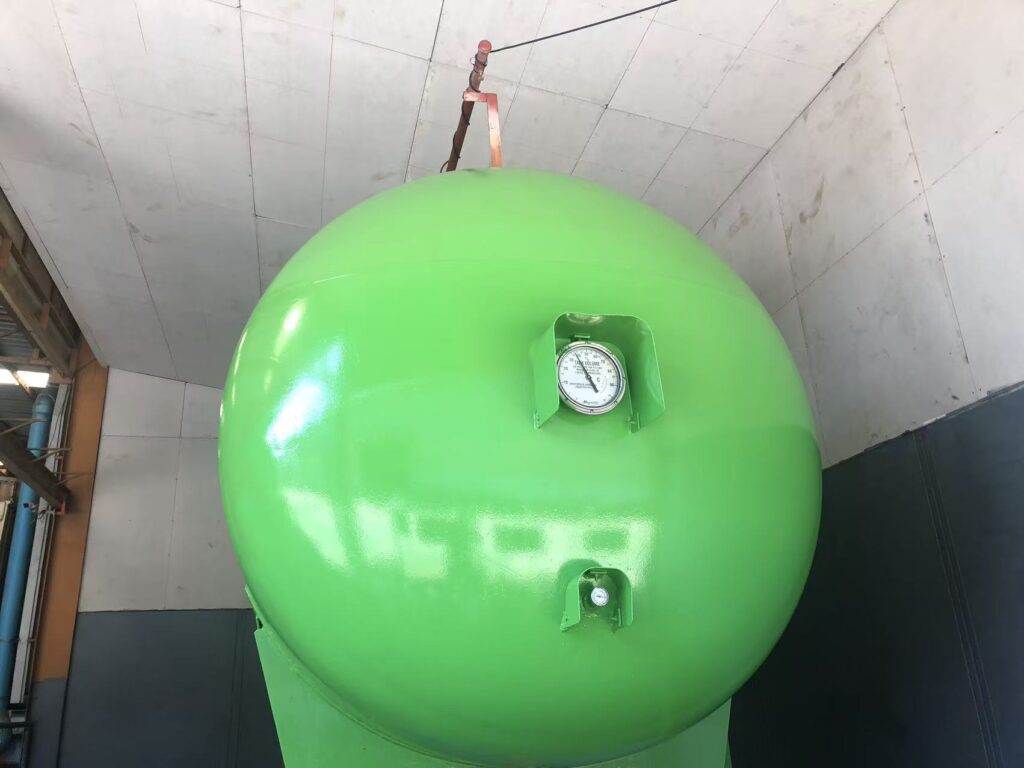
In typical industrial storage tank applications such as horizontal pressure vessels or buffer tanks, the internal measurement environment is often non-ideal. It includes multiple reflective structures, dynamic fluid disturbances, and spatial constraints. These factors collectively cause multipath reflections and energy attenuation during signal propagation.
For microwave-based measurement technologies, internal tank structures such as flanges, inlet/outlet nozzles, and piping components introduce additional reflection sources, resulting in multi-peak echo signals. In such cases, the system must rely on signal processing algorithms to identify the primary echo; otherwise, false level readings or signal fluctuations may occur.
In horizontal tanks, another challenge arises from geometric nonlinearity. The relationship between liquid level height and volume is not linear, which further increases the complexity of signal interpretation and engineering calculations.
3. Limitations of Conventional Level Measurement Technologies in Engineering Applications
From practical engineering experience, traditional level measurement technologies show varying degrees of limitations in complex tank environments.
Ultrasonic measurement relies on acoustic wave propagation in gas media. Its stability is significantly affected by temperature gradients, gas density variations, and vapor conditions inside the tank. In real operation, this often leads to signal attenuation and measurement drift. In confined top-space installations, multiple reflections further reduce measurement stability.
Contact-based measurement methods, such as pressure or float-type instruments, are not limited by measurement principles but by long-term mechanical wear, media adhesion, and maintenance dependency. In industrial circulation systems, these factors gradually degrade measurement consistency.
Guided wave radar performs well in terms of accuracy, but in environments with complex internal structures or strong process disturbances, its waveguide path can be disturbed, leading to uncertainty in echo interpretation. Radar Level Measurement
4. Signal Advantages of 80GHz Radar Level Measurement in Complex Structures
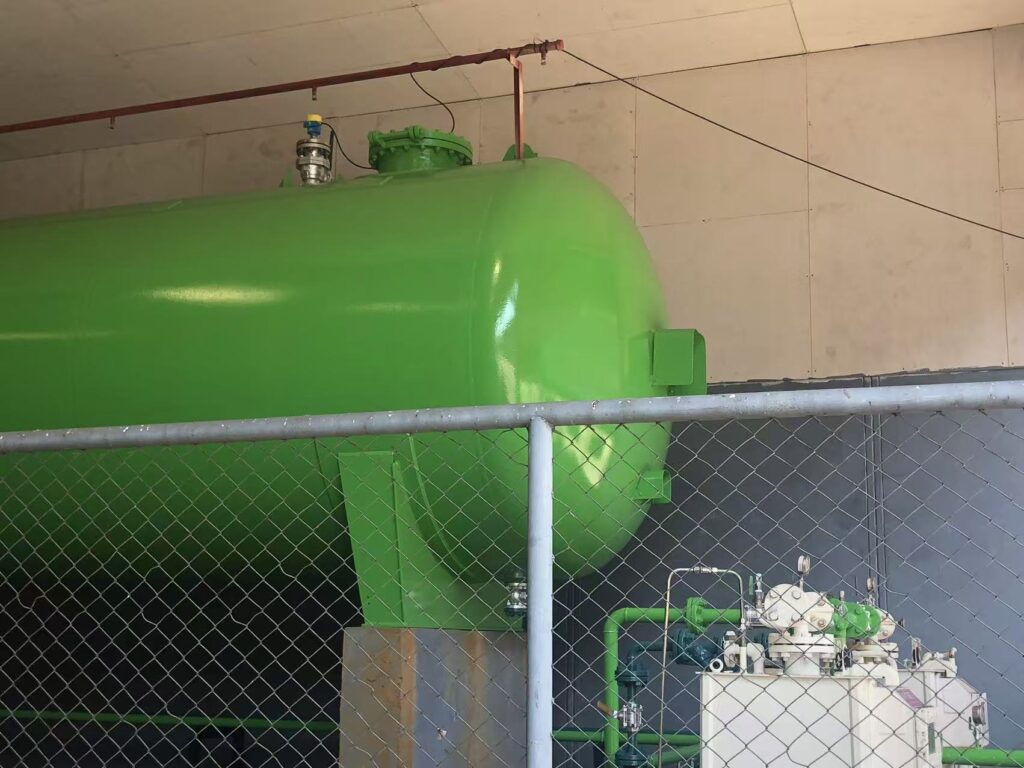
The engineering value of 80GHz FMCW radar level measurement technology lies primarily in its improved spatial resolution enabled by higher operating frequency. As frequency increases, the antenna beam becomes significantly narrower, allowing electromagnetic energy to be more concentrated during propagation and reducing interference from tank walls and structural components.
In practical industrial environments, this narrow beam characteristic reduces the number of multipath reflections, making it easier for the system to identify the true surface echo. In addition, improved distance resolution enhances signal separation in short-range measurement zones, thereby reducing blind zone effects.
On the signal processing level, modern 80GHz radar systems typically integrate echo tracking algorithms. By continuously analyzing historical echo patterns, the system can dynamically lock onto the true liquid surface. This is particularly important under conditions with fluctuating liquid levels or localized disturbances, as it prevents short-term abnormal signals from affecting output stability.
5. Key Engineering Requirement: Stability Takes Priority Over Accuracy
In long-term industrial operation, an important but often overlooked fact is that the key performance indicator of a level measurement system is not instantaneous accuracy, but signal repeatability and long-term stability.
In automatic control systems, even small but continuous fluctuations in level signals may trigger frequent control actions, leading to excessive pump cycling, incorrect refill logic, and unstable process control. In real industrial environments, such issues are often more damaging than measurement deviation itself.
Therefore, from a systems engineering perspective, a qualified level instrument must ensure continuous output stability under dynamic disturbance conditions, rather than merely demonstrating high precision under laboratory conditions.
6. Special Requirements of Horizontal Storage Tank Structures
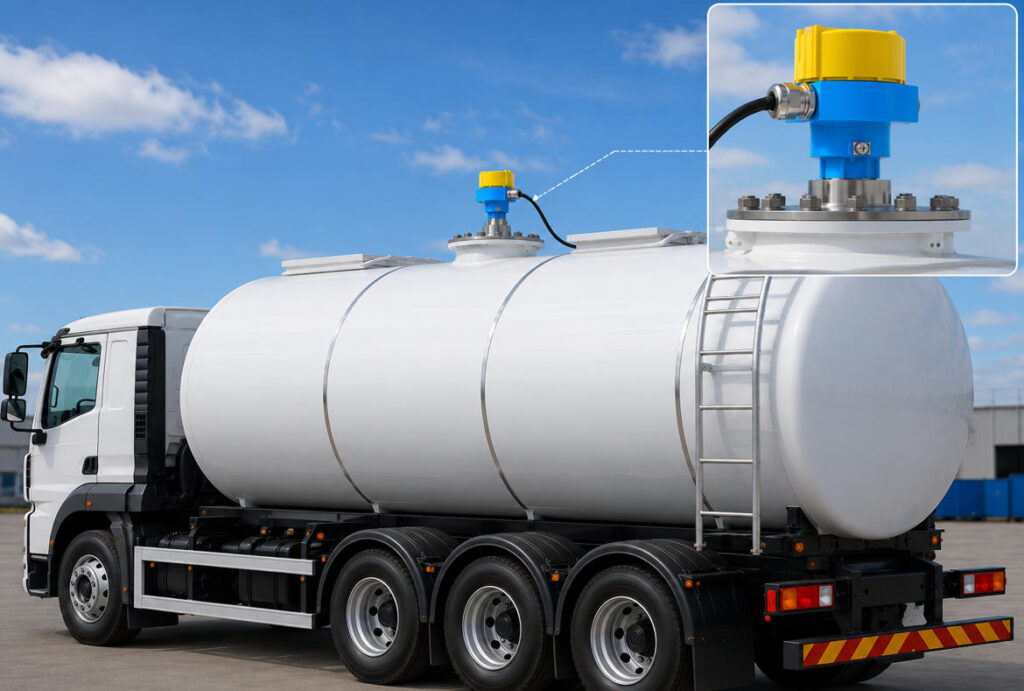
A fundamental difference between horizontal and vertical storage tanks lies in their geometric characteristics. In horizontal tanks, level changes correspond to arc-shaped cross-sectional variations, meaning that volume changes are not linearly proportional to level height.
This geometric property requires measurement systems not only to provide distance data but also to support nonlinear mapping within control systems. Additionally, horizontal tanks are often constrained in installation space, and instrument positioning is limited by structural conditions, which places higher demands on beam directionality and installation tolerance.
7. Engineering Conclusion: Adaptation Logic of 80GHz Radar Level Measurement in Complex Tanks
Based on engineering application experience, the advantages of 80GHz radar level measurement technology are not reflected in a single parameter improvement, but in its adaptability to complex structural environments. Radar Level Measurement
Its core value lies in combining high-resolution signal acquisition with narrow beam design to reduce interference from environmental structures, while using advanced signal processing algorithms to ensure stable output under dynamic operating conditions.
Therefore, in horizontal storage tanks, buffer systems, and structurally complex industrial vessels, this technology is better suited to meet the process control requirement for continuous and stable signals.
8. Digital Commissioning and Field Operation Capability
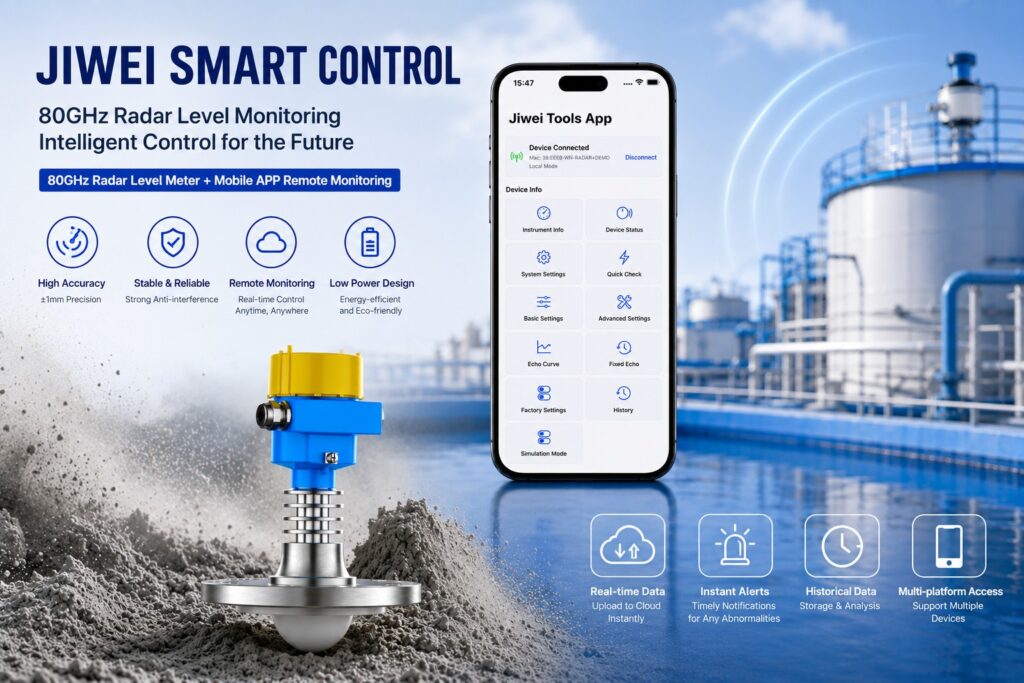
In modern industrial instrumentation systems, commissioning efficiency and multi-device consistency have become critical factors affecting project delivery quality. The JWrada® radar level transmitter not only focuses on measurement performance but also enhances digital commissioning and multi-terminal configuration capabilities, making it suitable for large-scale industrial deployments.
The series integrates a stable Bluetooth communication module, enabling wireless connection via mobile applications. In field applications, engineers can perform parameter reading and configuration using smartphones or tablets without additional dedicated commissioning tools. The device supports factory pre-configured range settings, while also allowing on-site fine-tuning even when the tank is in operation or filled with media.
In practical deployments, parameter configuration for a single device typically takes about 2 minutes, significantly reducing commissioning time, especially in multi-point tank systems or batch delivery projects.
In addition, the Bluetooth APP enables real-time remote monitoring and commissioning. In multi-device environments, the system supports parameter template cloning, allowing configurations from one device to be copied and synchronized across multiple units. This eliminates repetitive setup work and reduces human configuration errors.
At the local level, the device is equipped with an LCD display and physical buttons, enabling fully independent manual operation. On-site personnel can directly view real-time level status and perform basic configuration without relying on mobile devices, improving adaptability in complex industrial environments. Radar Level Measurement
From a software perspective, the Bluetooth APP also supports function expansion and firmware upgrades, ensuring continuous system evolution. This lifecycle management architecture reduces downtime associated with upgrades and improves long-term system reliability and consistency.
Overall, the JWrada® radar level transmitter forms a complete engineering ecosystem in digital commissioning capability, offering high flexibility and system integration efficiency in global industrial markets. In practical applications, this series has already achieved replacement of brands such as VEGA in multiple projects, particularly demonstrating strong advantages in large-scale deployment and rapid commissioning scenarios. Radar Level Measurement
Radar Level Measurement