Why Is the Dual-Tube Vibrating Level Switch More Accurate? From Structural Principle to Manufacturing Challenges
In the field of solid material automation control, point-level detection may appear simple, but in reality it places extremely high demands on instrument stability and structural design. With the widespread application of powders and granular materials, enterprises increasingly require early response, low false alarms, and strong adaptability. Against this background, the dual-tube vibrating level switch has gradually become a focus of market attention.
Compared with traditional single-tube structures, the dual-tube vibrating level switch not only offers higher measurement accuracy, but also presents significantly greater manufacturing difficulty—especially in extended-length designs and inner-outer tube resonance tuning, which require strong R&D and precision machining capabilities.
I. The Essence of Accuracy: Optimization of the Vibration Mechanism
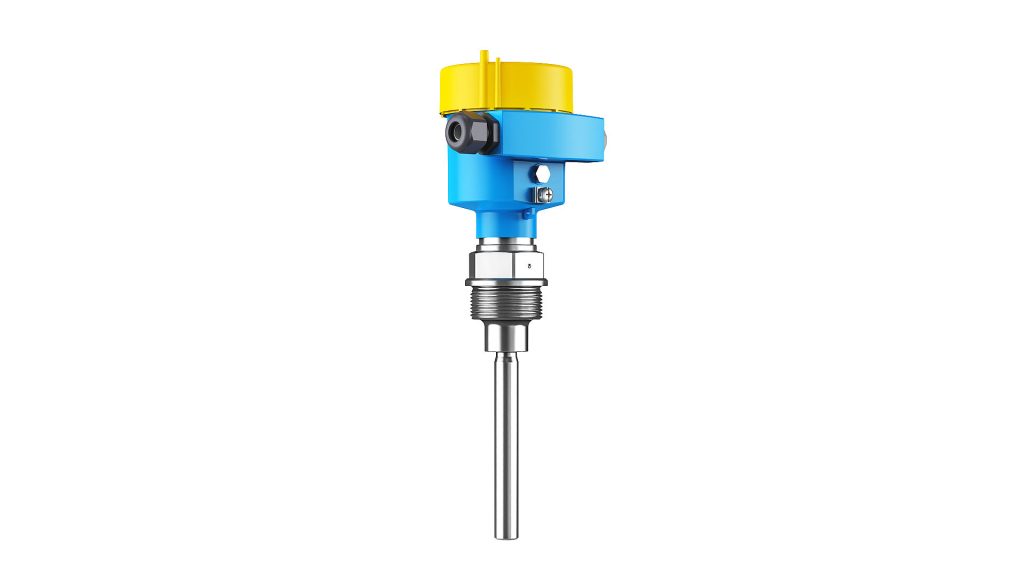
The core of vibration-based level detection technology lies in vibration state change recognition. When the probe is in a free vibration state, the system maintains a stable resonant frequency. Once it comes into contact with material, the vibration characteristics change, and the electronic module detects the signal difference and outputs a switching signal.
Single-tube structures typically rely on damping changes caused by material contact, and therefore depend heavily on complete material coverage. In contrast, the dual-tube vibrating level switch adopts an inner-outer tube synchronous resonance structure. When the probe contacts the material, the outer tube frequency shifts first, breaking the original resonance balance and causing the vibration amplitude to decrease rapidly, thereby generating a clearer and more stable detection signal.
This structural design results in:
- Immediate response upon contact
- Clearer triggering boundary
- More stable signal variation
Therefore, in low-density solid material detection, the dual-tube structure provides higher sensitivity and better repeatability. In addition, it is highly responsive to partial contact conditions, making it suitable not only for powder and granular silos, but also for applications involving sediment or suspended solids in liquids, such as sand in water, rice particles in water, or sludge interface detection.
In solid-liquid mixed or sedimentation conditions, the dual-tube vibrating level switch can respond promptly to the sediment layer and provide more reliable status judgment.
II. Why Is the Dual-Tube Structure More Sensitive?
The improvement in sensitivity is not achieved by simply increasing parameters, but through coordinated optimization of structure and algorithm.
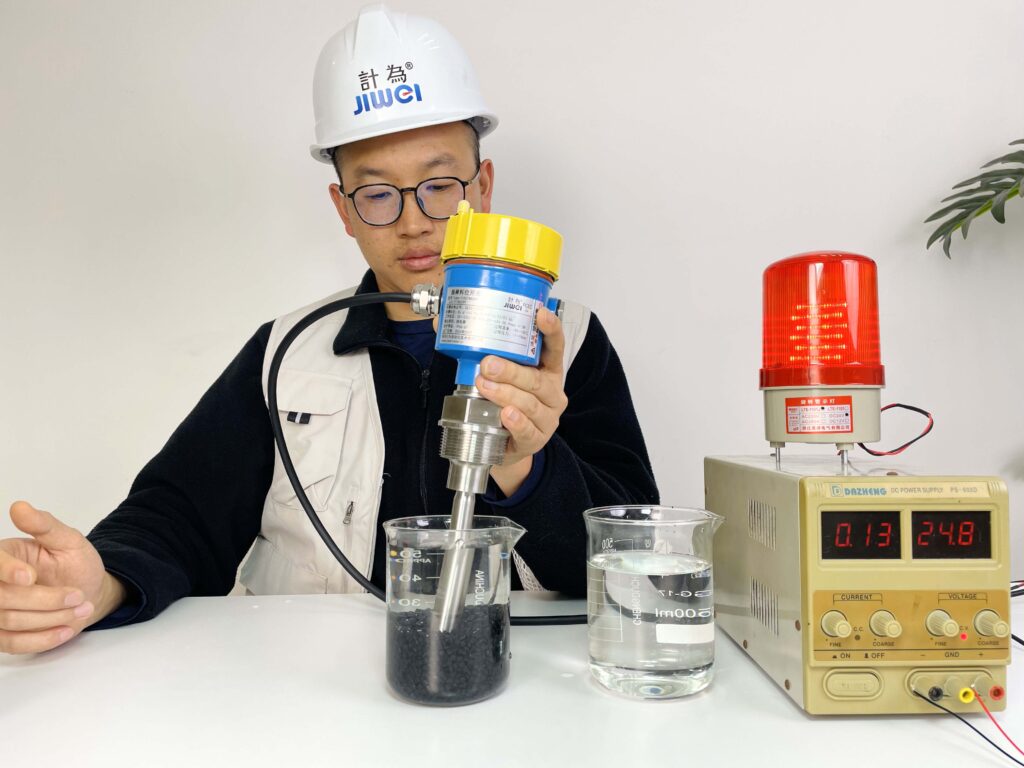
The Jiwei dual-tube vibrating level switch uses piezoelectric elements to drive the inner and outer tubes at the same frequency. When material contacts the outer tube, the system no longer relies on overall damping increase, but instead generates a signal mutation through resonance detuning. This structural resonance shift is easier for the electronic circuit to recognize than a simple damping change.
Therefore, its minimum detectable density can reach 0.02 g/cm³, covering lightweight materials such as wood powder, foam particles, and plastic granules.
In automation systems, this early triggering capability means:
- Earlier high-level alarm
- Timely low-level protection
- Safer interlocking control
Reliable sensitivity is essentially an advancement in structural response logic.
III. The Real Challenge: Inner and Outer Tube Resonance Tuning
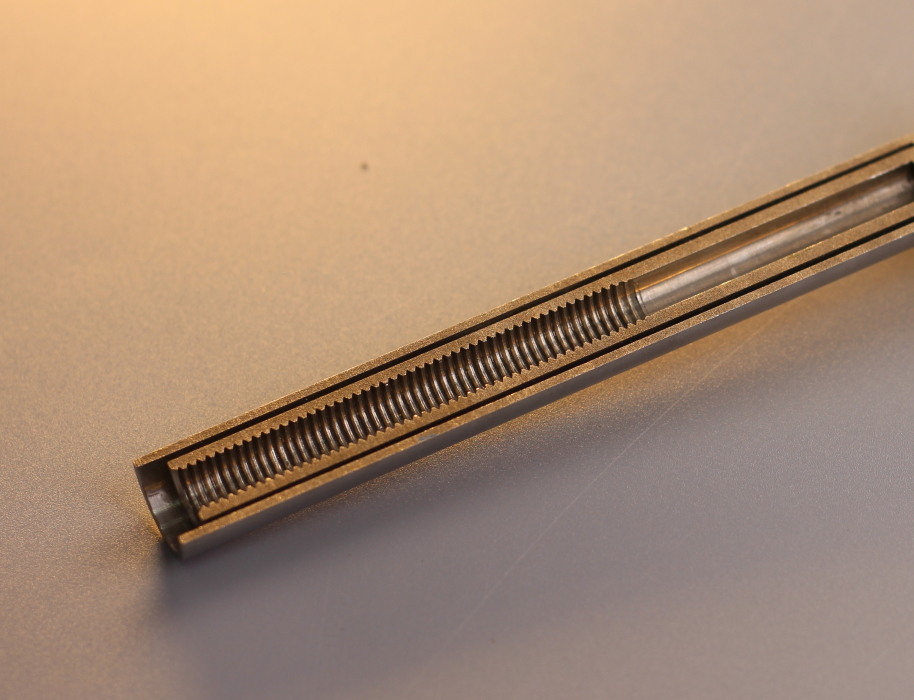
The core technical barrier of the dual-tube vibrating level switch lies in resonance tuning.
The inner and outer tubes must operate at exactly the same resonant frequency. Any dimensional deviation, material inconsistency, or welding stress variation may affect the resonance state. Once the frequencies are not synchronized, vibration signal drift may occur, leading to false alarms or delayed response.
This requires:
- Extremely consistent tube diameter machining
- Strict wall thickness control
- Precise compensation for welding deformation
- Repeated matching and testing of piezoelectric components
In extended-length products, the tuning difficulty increases significantly.
IV. Why Is Extended Length More Difficult?
As the probe length increases, the natural vibration frequency changes. The longer the structure, the higher the flexibility, and the more difficult it becomes to maintain stable resonance.
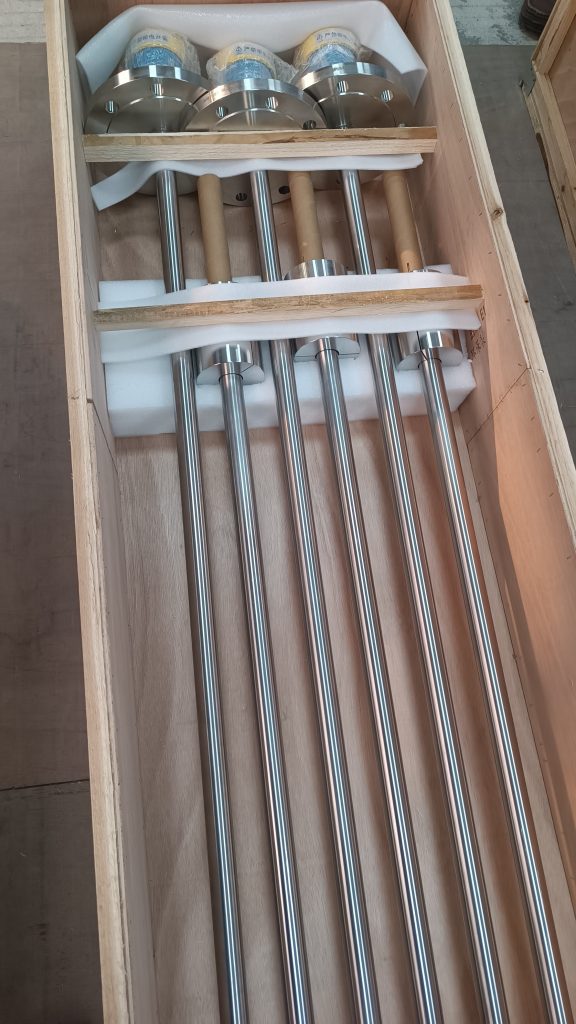
In China, most manufacturers limit dual-tube vibrating level switches to within 2 meters, mainly due to tuning complexity and machining limitations. However, Shenzhen Jiwei Automation’s Tube-11 dual-tube vibrating level switch can achieve a maximum extension length of 6 meters, placing it at an advanced level among similar products in China.
This achievement requires not only high-precision machining capability, but also deep understanding of vibration modeling and algorithm optimization.
Maintaining stable resonance under extended conditions represents strong manufacturing capability. The transition from 2 meters to 6 meters is not merely an increase in length, but a sign of mature vibration tuning technology.
V. Why Is It More Favored by the Market?
Accuracy is only the first step. Long-term stable operation is what enterprises truly value.
The dual-tube vibrating level switch offers the following comprehensive advantages:
- Strong anti-material adhesion performance
- Higher impact resistance
- High-temperature type up to 250°C, air-cooled/water-cooled type up to 400°C
- Minimum detectable medium density of 0.02 g/cm³, suitable for most solid particles
In applications involving PVC, lime, coal powder, sodium hydroxide, grains, and other solid materials, it demonstrates stable performance.
For enterprises, fewer false operations mean fewer shutdowns; higher sensitivity means a safer process boundary.
In addition, Jiwei’s dual-tube vibrating level switch has established an independent intellectual property portfolio in core structural and vibration control technologies. Currently, three invention patents have been applied for, with three authorized (Patent No.: ZL201510009538.3, ZL201510059187.7, ZL201610511184.7), and one utility model patent authorized (ZL201620679133.0).
These patents focus on vibration structure optimization, frequency stability control, and anti-interference improvement, providing structural assurance for long-term reliable operation.
Based on the above technical foundation, Jiwei’s dual-tube vibrating level switch has reached advanced industry standards in vibration stability, anti-adhesion performance, and anti-false-trigger capability, ensuring higher reliability in complex working conditions.
Conclusion
The reason why the dual-tube vibrating level switch achieves higher measurement accuracy lies in its optimized resonance mechanism and improved signal judgment logic. Its manufacturing difficulty is mainly reflected in inner-outer tube resonance tuning and extended-length structural control.
For this reason, it is increasingly favored in complex solid level detection applications.
Reliability is not accidental — it is the result of both structural design and manufacturing capability.