APEC 2026 in Shenzhen: New Trends in Manufacturing, Innovation and Industrial Cooperation
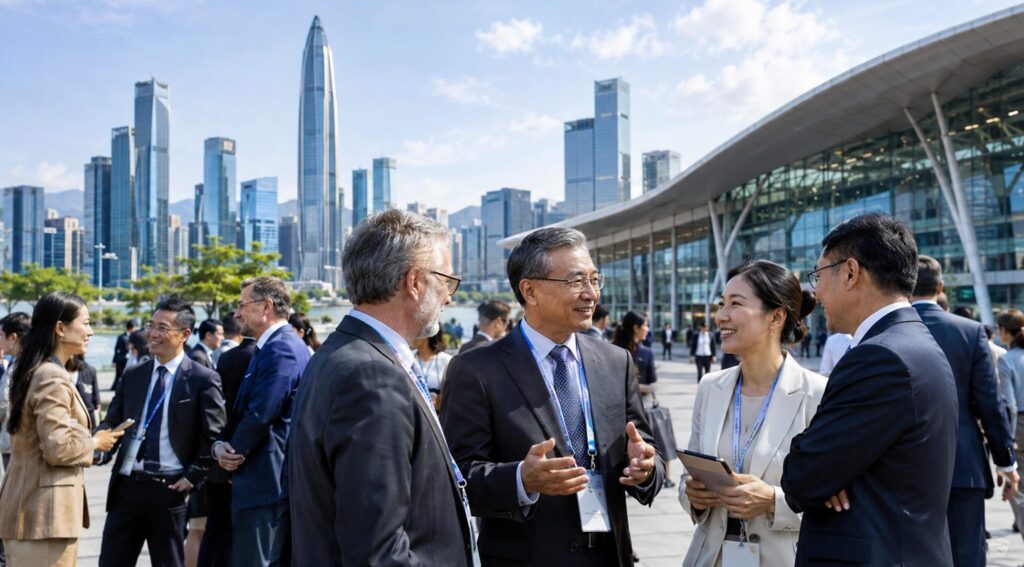
As the 2026 APEC Economic Leaders’ Meeting approaches, Shenzhen is once again attracting international attention as a major center for Asia-Pacific economic cooperation and technological innovation.
China is hosting APEC in 2026 under the theme “Building an Asia-Pacific Community to Prosper Together.” The three priorities for the year are openness, innovation and cooperation. The 33rd APEC Economic Leaders’ Meeting will be held in Shenzhen on November 18–19, 2026.
Throughout the year, APEC discussions have continued to focus on trade and investment, artificial intelligence, digital transformation, supply chain resilience and regional connectivity. These topics also reflect some of the major changes taking place in global manufacturing.
As technologies and the external business environment continue to evolve, manufacturers are gradually shifting their focus from simply expanding production capacity toward improving operational efficiency, technological capabilities, supply stability and collaboration across industries.
APEC 2026 and Manufacturing: New Trends in Growth, Innovation and Industrial Cooperation
From Scale Expansion to More Efficient Growth
For many years, manufacturing growth was closely associated with market expansion and increasing production capacity.
As digitalization and intelligent manufacturing accelerate, however, the sources of business growth are becoming more diverse. Production efficiency, equipment utilization, R&D capabilities, information sharing and the ability to respond quickly to market changes are becoming increasingly important.
APEC has placed strong emphasis on artificial intelligence and emerging technologies in 2026, reflecting the search for new drivers of economic growth across the Asia-Pacific region.
For manufacturers, the impact of new technologies is moving beyond business management and increasingly into the production environment.
Production planning, equipment maintenance, material management, process optimization and quality control are becoming more closely connected through industrial data.
As a result, competition in manufacturing is gradually shifting from simple scale expansion toward a broader combination of technology, efficiency and operational capability.
More Resilient and Reliable Supply Chains
Supply chains and industrial connectivity have also become important topics in APEC discussions.
Modern manufacturing depends on extensive cooperation. Behind a single production system are often numerous connected elements, including equipment, materials, components, logistics and technical services. Changes in one part of the chain can affect multiple downstream processes.
Manufacturers are therefore paying greater attention to suppliers’ ability to provide stable delivery, consistent product quality, technical support and long-term cooperation.
This is particularly important for industrial equipment.
The delivery of an industrial product is not the end of the cooperation. Once equipment reaches the customer’s site, it may require installation, commissioning, operation support and maintenance. Different industries and working conditions can also create changing technical requirements.
For this reason, industrial supply relationships are increasingly developing from one-time product transactions toward long-term technical cooperation.
APEC’s focus on regional connectivity and supply chain resilience further highlights this direction.
Bringing Innovation into the Industrial Field
Artificial intelligence, the digital economy and emerging technologies are receiving increasing attention across industries. For manufacturing, however, technology ultimately needs to create value in the real production environment.
In recent years, digital transformation has expanded from enterprise management systems toward the industrial field.
Equipment status, process parameters, inventory information and production environment data are increasingly incorporated into integrated automation and information systems.
This makes industrial sensing an essential part of digital transformation.
Temperature, pressure, flow, liquid level and material level measurements may represent only the front end of an industrial data chain, but they directly influence subsequent control and management processes.
Reliable field data provides the foundation for PLC, DCS and higher-level information systems to make meaningful decisions.
From this perspective, smart manufacturing is not simply about deploying software platforms. It is a gradual process that connects field sensing, data transmission, automatic control and production management.
Back to the Fundamentals of Manufacturing
While new technologies are rapidly entering manufacturing, basic production capabilities remain equally important.
Stable equipment operation, continuous production and accurate field data still determine the reliability of everyday industrial processes.
This is particularly evident in continuous-process industries such as oil and gas, petrochemicals, power generation, building materials, mining and new energy.
Measurements such as tank liquid level and silo material level may represent only one part of a production process, but they can directly affect material management, production scheduling and equipment control.
As automation levels increase, the relationship between basic measurement and the overall production system becomes increasingly important.
Digital transformation at the enterprise level ultimately depends on individual field devices and data points operating reliably in real industrial environments.
Therefore, while manufacturers continue to explore artificial intelligence and digital platforms, they are also placing greater emphasis on equipment reliability and field data quality.
Shenzhen’s Manufacturing and Technology Ecosystem
The decision to hold the 2026 APEC Economic Leaders’ Meeting in Shenzhen has once again placed international attention on the city’s manufacturing and technology ecosystem.
Shenzhen has developed a highly interconnected industrial environment covering electronics, automation equipment, intelligent manufacturing and technology-driven industries. Local manufacturers are also moving beyond basic production toward independent R&D, engineering applications and technical services.
Industrial automation instrumentation is one of these specialized fields.
As industrial requirements become more diverse, industrial instruments are expected to do more than provide basic measurements. Customers increasingly require products that can adapt to complex working conditions, support industrial communication and maintain stable operation over long periods.
Different industries present very different measurement challenges.
Chemical plants may involve high temperatures, steam, corrosive media and complex vessel structures. Mining and building-material applications may involve dust, vibration, material impact and irregular material surfaces.
These practical requirements continue to drive industrial instrument manufacturers to improve product design, signal processing and application adaptability.
From Industrial Trends to Practical Applications
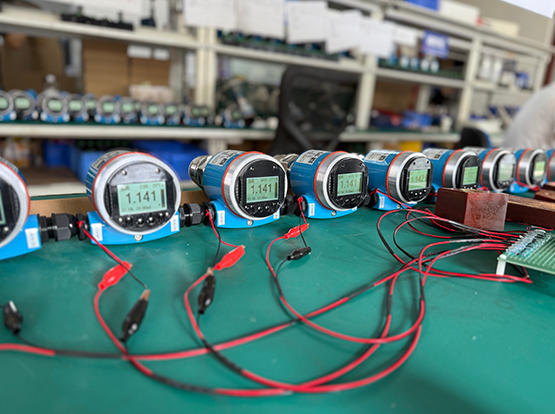
Jiwei Automations has long focused on the R&D, manufacturing and application of level measurement instruments.
Its product portfolio includes radar level meters, tuning fork level switches, vibrating rod level switches, RF admittance level switches, rotary paddle level switches and magnetic level gauges, serving industries such as chemical processing, power generation, environmental protection, food processing, pharmaceuticals and building materials.
In recent years, Jiwei products have also been applied in projects involving new energy batteries and mining, while product development has continued for demanding applications involving steel, ore, cement and other bulk materials.
The differences between these industries create very different requirements for level measurement technology.
To address practical field requirements, Jiwei has continued to develop radar level measurement technology while exploring application areas including high-temperature measurement, low-power radar and 4G wireless communication.
High-temperature radar products have already entered practical applications, while low-power radar and 4G wireless communication technologies continue to be developed and expanded.
This development path reflects a broader trend in modern manufacturing.
Industrial R&D is no longer focused only on improving individual technical specifications. Instead, product development is increasingly connected with manufacturing, testing and real-world industrial applications.
Radar Level Measurement and Digital Industrial Applications
For industrial processes, reliable level measurement is an important part of field data acquisition.
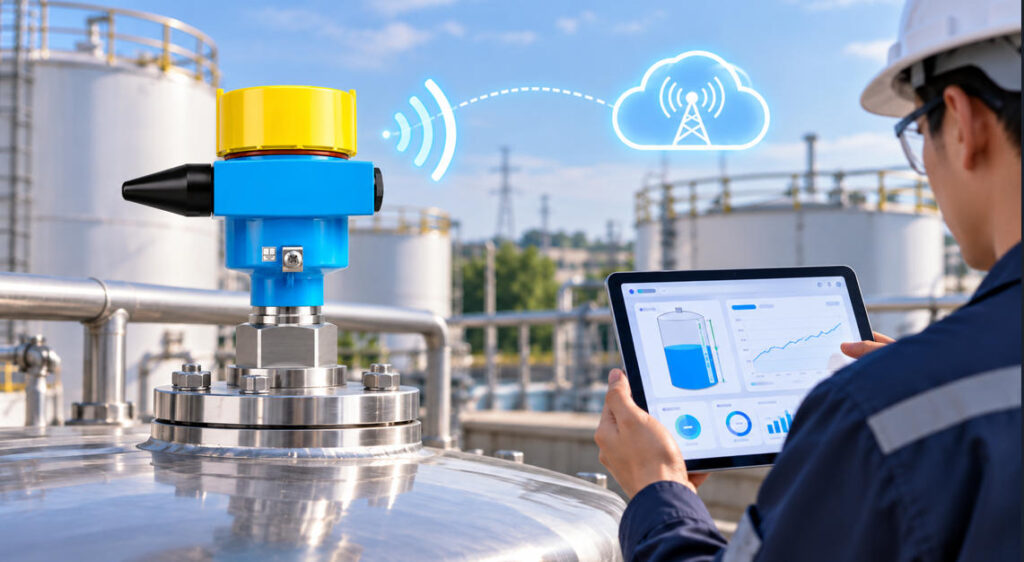
Modern radar level meters can provide continuous level measurement while supporting increasingly digitalized industrial environments. Wireless communication and remote monitoring can further reduce the need for operators to repeatedly enter potentially hazardous field areas.
For example, Jiwei’s JWrada radar level meters can be used in industrial applications where remote parameter monitoring and commissioning are valuable.
Through Bluetooth connectivity and a mobile application, users can access device parameters and measurement information more conveniently, helping improve commissioning efficiency and reduce unnecessary manual inspections.
For high-risk industrial environments, this combination of radar level measurement, digital connectivity and remote monitoring represents one direction in which traditional field instrumentation is evolving.
Cooperation Ultimately Depends on Capability
From APEC’s emphasis on openness, innovation and cooperation to manufacturing’s development toward digitalization, intelligent production and industrial collaboration, macroeconomic trends ultimately translate into the capabilities of individual companies.
Regional cooperation creates broader opportunities for market development and technical exchange, while also placing higher requirements on products, R&D, manufacturing and technical services.
For industrial companies, long-term technical accumulation remains an important foundation for participating in broader international cooperation.
As a Shenzhen-based industrial automation company, Jiwei Automations continues to focus on liquid level and solid level measurement, developing products and technologies around the practical requirements of industrial applications.
Through projects across different industries, Jiwei continues to build experience in complex industrial environments and improve its understanding of real-world measurement requirements.
From a single measurement point to an entire industrial data chain, the development of industrial automation ultimately depends on reliable equipment operating in real-world conditions.
As Asia-Pacific industrial cooperation continues to deepen, Jiwei Automations will remain focused on level measurement technology, combining R&D, manufacturing and application experience to provide measurement solutions that are better adapted to demanding industrial environments.
APEC 2026 in Shenzhen is not only an important event for regional economic cooperation. It also provides a useful perspective on the broader transformation of manufacturing—toward greater openness, stronger innovation, more resilient supply chains and deeper industrial collaboration.