Radar Level Sensor Guide: Working Principles, Types, Applications and Selection
In modern industrial automation, the radar level sensor has become one of the most reliable technologies for continuous level measurement. Due to its high stability, strong environmental adaptability, and excellent performance in harsh conditions, radar measurement technology is widely used in industries such as oil and gas, chemical processing, power generation, food production, and water treatment.
This article provides a comprehensive overview of radar level sensors, including their definition, working principles, types, advantages, comparison with ultrasonic level sensors, and key selection guidelines.
1. Key Information About Radar Level Sensors
1.1 Working Principle
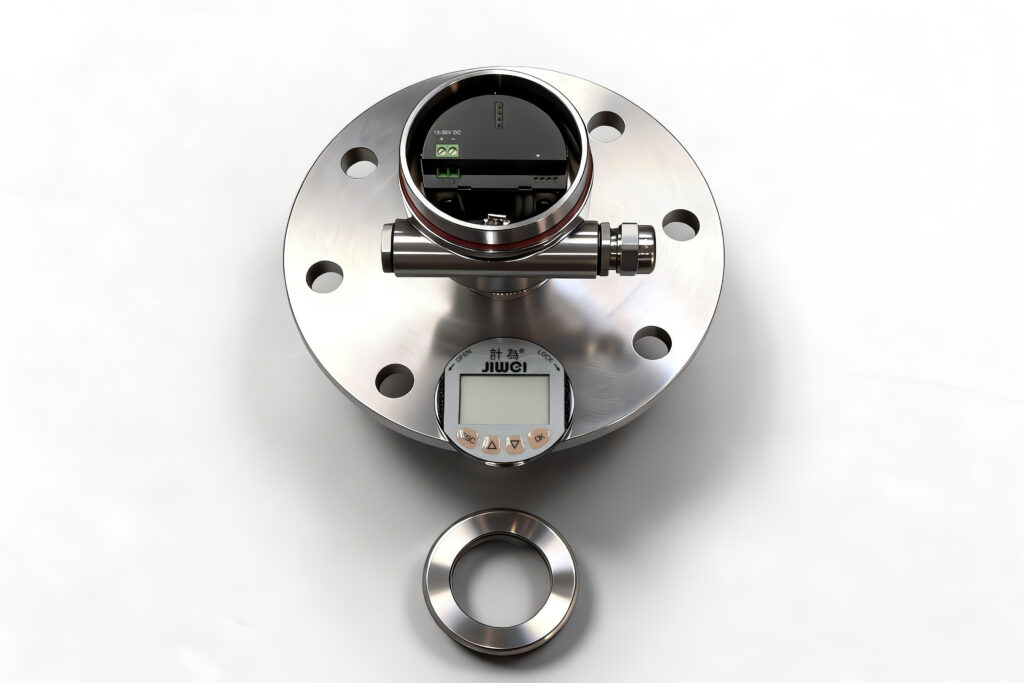
A radar level sensor (radar level transmitter) operates based on microwave technology. The device emits high-frequency electromagnetic waves toward the material surface. The reflected signal is received by the sensor, and the system calculates the distance based on the time-of-flight principle. The measured distance is then converted into level data.
1.2 Typical Applications
Radar level sensors are widely used in:
- Oil and gas industry
- Chemical and petrochemical plants
- Pharmaceutical production
- Food and beverage processing
- Environmental and wastewater systems
- Mining and bulk solid storage
They perform especially well in high-temperature, high-pressure, dusty, or corrosive environments.
1.3 Calibration Method
Radar level transmitters are typically configured by setting upper and lower range limits. The output signal, commonly 4–20mA, is matched with the control system to ensure accurate level representation.
1.4 Radar vs. Ultrasonic Level Sensor
Unlike ultrasonic sensors that rely on sound waves, radar level sensors use microwaves. Therefore, radar is not significantly affected by temperature changes, vapor, pressure variations, or dust. This makes radar more suitable for complex industrial conditions.
1.5 Non-Contact Radar vs. Guided Wave Radar
Radar level sensors are generally divided into:
- Non-contact radar level sensor
- Guided wave radar level sensor
Both technologies operate on microwave principles but differ in signal transmission methods.
2. What Is a Radar Level Sensor?
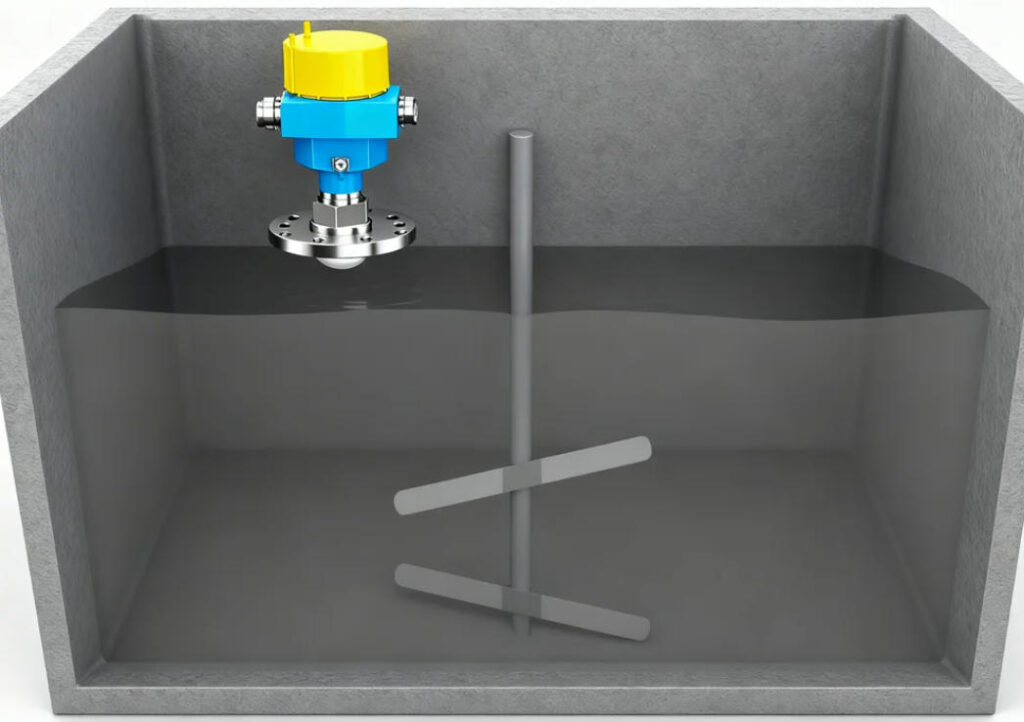
A radar level sensor, also known as a radar level transmitter, is a non-contact continuous level measurement instrument based on microwave technology.
The sensor emits electromagnetic waves that travel toward the surface of liquids or solids. When the waves hit the surface, they are reflected back. The system measures the travel time and calculates the distance, which is then converted into level information.
Because electromagnetic waves travel at a stable speed, radar provides reliable and accurate measurements even in demanding environments.
3. How Does a Radar Level Sensor Work?
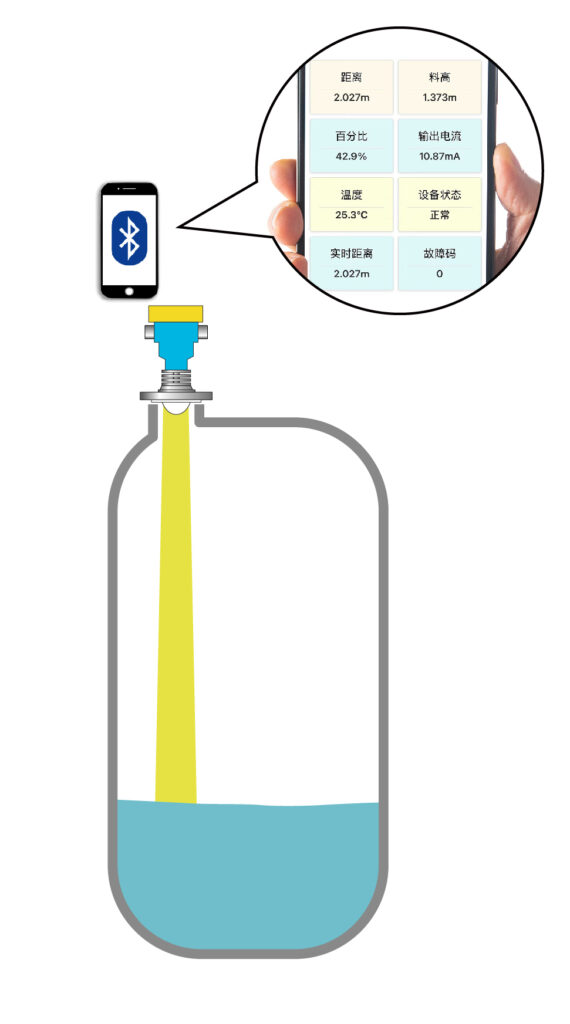
Radar measurement uses the Time-of-Flight (ToF) principle.
The distance is calculated using the formula:
Distance = (Speed of Light × Time) / 2
After calculating the distance, the system determines the actual level based on installation height.
Modern radar sensors also use advanced digital signal processing algorithms to filter interference and identify true echoes, improving measurement reliability.
4. Types of Radar Level Sensors
4.1 Non-Contact Radar Level Sensor
A non-contact radar level sensor transmits microwaves through air without touching the medium.
Features:
- No physical contact with the material
- Suitable for liquids and bulk solids
- Low maintenance requirements
- Simple installation
For example, Shenzhen Jiwei’s JWrada® radar level sensor is a non-contact radar solution widely used in tanks, silos, and process vessels.
4.2 Guided Wave Radar Level Sensor
Guided wave radar transmits microwave signals along a probe or cable that contacts the medium.
Features:
- Suitable for interface measurement
- Stable signal transmission
- Good performance in turbulent conditions
- Effective for oil-water interface detection
Guided wave radar is often used in applications requiring liquid interface measurement.
5. Difference Between Non-Contact Radar and Guided Wave Radar
Although both technologies are based on microwaves, their measurement structures differ.
Signal Transmission
- Non-contact radar: Signals propagate through air.
- Guided wave radar: Signals travel along a probe.
Application Scenarios
Non-contact radar is ideal for:
- Large storage tanks
- Bulk solids silos
- Corrosive media
- Harsh environments
Guided wave radar is suitable for:
- Interface measurement
- Small tanks
- Applications with liquid turbulence
Installation
Non-contact radar requires only top mounting.
Guided wave radar requires probe installation.
6. Advantages of Non-Contact Radar Level Sensors
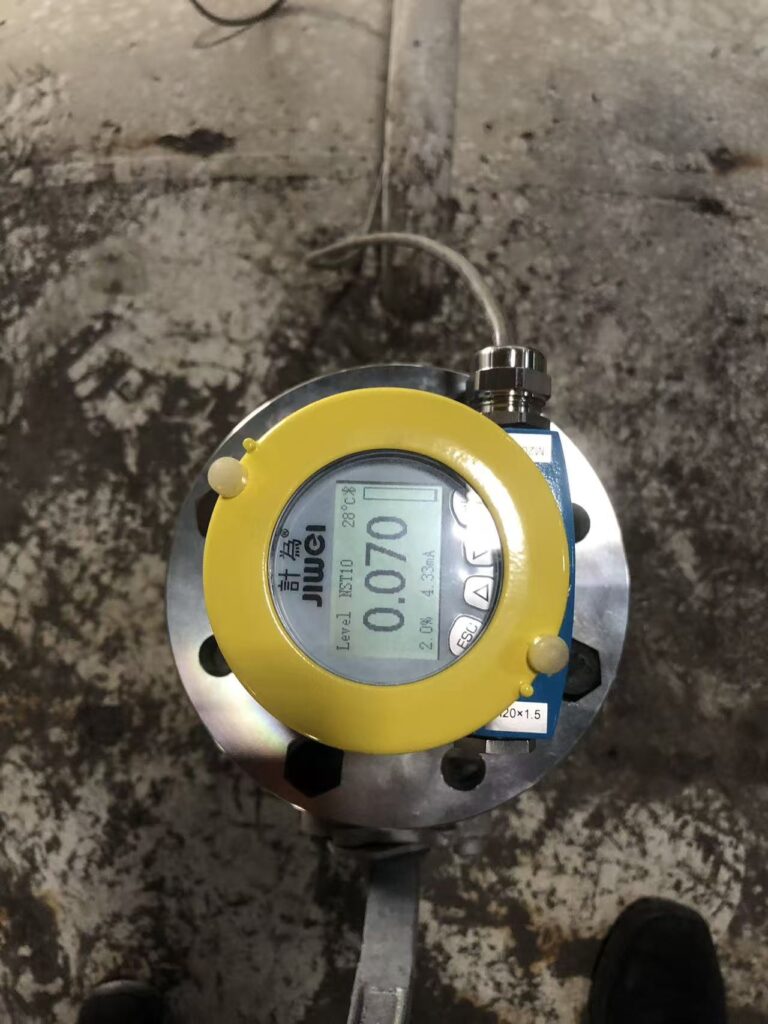
Non-contact radar technology offers multiple benefits:
Wide Applicability
Suitable for liquids, solids, powders, and slurries.
Strong Environmental Resistance
Not affected by temperature, pressure, vapor, or dust.
Low Maintenance
No moving mechanical parts.
High Accuracy
Modern 80GHz radar provides narrow beam angles and high precision, even achieving millimeter-level performance in certain applications.
Easy Installation
Simple mounting structure with fast commissioning.
7. Advantages and Limitations of Guided Wave Radar
Advantages:
- Effective foam suppression
- Suitable for interface measurement
- Stable in vapor-heavy environments
- Reliable performance in agitated liquids
Limitations:
- Measurement range is generally shorter
- Requires probe installation
- Not ideal for certain hygienic applications
8. JWrada® Radar Level Sensor – Software Advantage
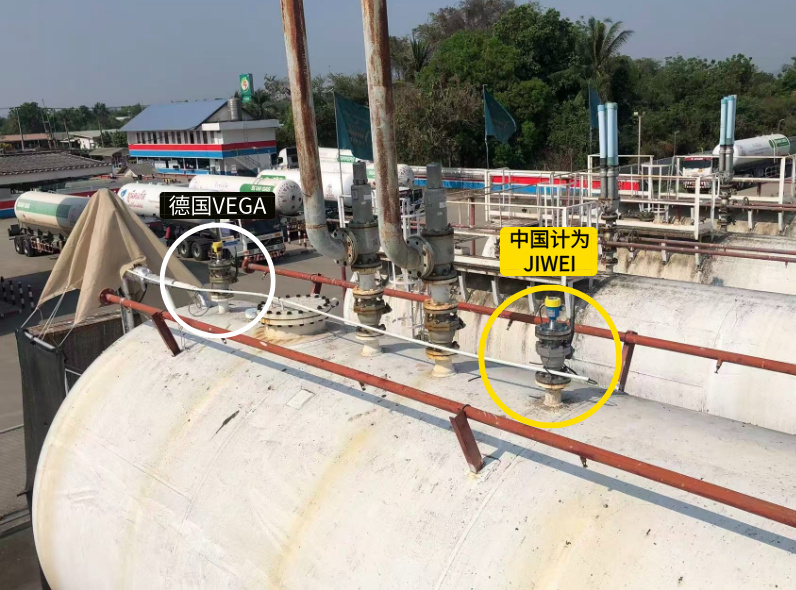
A key competitive advantage of JWrada® radar level sensors is their independently developed software platform.
The system supports:
- Online software updates
- Parameter configuration
- Fault code diagnostics
- Echo curve analysis
- Field condition optimization
Cloud-Based Remote Commissioning
JWrada® devices support cloud server-based remote debugging. Engineers can:
- Access real-time device status
- View echo curves remotely
- Analyze EFT curves
- Adjust parameters collaboratively
- Optimize algorithms based on site conditions
This remote capability enables customized parameter tuning for each application, ensuring optimal performance in unique environments.
The cloud-based solution is fully developed in-house and represents a significant technological advantage.
9. Radar Level Sensor vs Ultrasonic Level Sensor
Measurement Principle
- Radar: Microwaves
- Ultrasonic: Sound waves
Environmental Sensitivity
Radar is highly resistant to:
- Temperature variations
- Vapor
- Pressure
- Dust
Ultrasonic sensors are more affected by environmental conditions.
Measuring Range
Radar can measure long distances, even over 100 meters.
Ultrasonic sensors are typically limited to shorter ranges.
In complex industrial environments, radar is generally more stable and reliable.
10. How to Choose a Radar Level Sensor
When selecting a radar level sensor, consider:
- Type of medium (liquid, solid, slurry)
- Tank height and measuring distance
- Temperature and pressure conditions
- Corrosive characteristics
- Required measurement type (point level, continuous level, interface level)
For harsh environments and long distances, radar technology is usually the preferred solution.