The Impact of Piezoelectric Ceramic Preload on the Reliability of Level Switches
1. Why Is Piezoelectric Ceramic the Core Component of Vibrating Level Switches?
The basic logic of a vibrating level switch is not complicated: keep the probe, tuning fork, or vibrating rod vibrating steadily. When material or liquid comes into contact with the vibrating body, the vibration state changes, and the circuit identifies this change and outputs a switching signal.
In this process, piezoelectric ceramic performs two key functions:
First, it drives the vibrating body. Under the action of an electrical signal, the piezoelectric ceramic produces slight deformation. Through structural amplification or resonance, the tuning fork, vibrating rod, or probe maintains stable vibration.
Second, it detects vibration changes. When material covers the probe, the vibration frequency, amplitude, or energy state changes. The detecting piezoelectric element converts the mechanical change into an electrical signal for the subsequent circuit to judge.
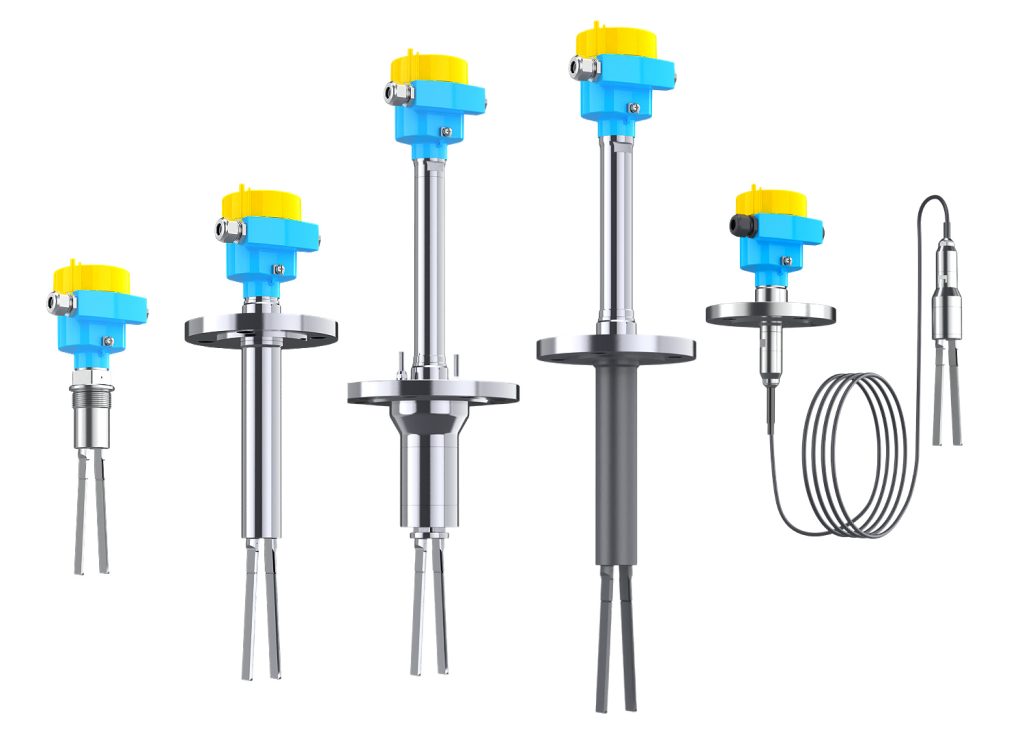
Taking Jiwei’s Tube-11 vibrating rod level switch as an example, it uses piezoelectric components for vibration driving and detection. The inner and outer tubes resonate at the same resonant frequency. When the vibrating rod contacts material, the resonance condition is disrupted, the amplitude decreases, and the detection circuit outputs a switching signal accordingly. Tube-11 is mainly used for powder and granular solid materials, with a required medium density of ≥0.02 g/cm³.
The Fork-11 tuning fork level switch is designed for powder and fine granular materials. It can detect media with a density as low as ≥0.008 g/cm³ and is commonly used for point level detection of low-density powders and small particles.
The Ring-11 tuning fork liquid level switch is used for liquid point level detection. With a fork length of 40 mm, it is suitable for liquids with a density of ≥0.5 g/cm³ and can be used for level alarm or pump protection in vessels, storage tanks, process tanks, and pipelines.
Although these vibrating products are used for different applications, stable vibration depends on the reliable assembly of piezoelectric components.
2. Why Does Preload Affect the Reliability of Level Switches?
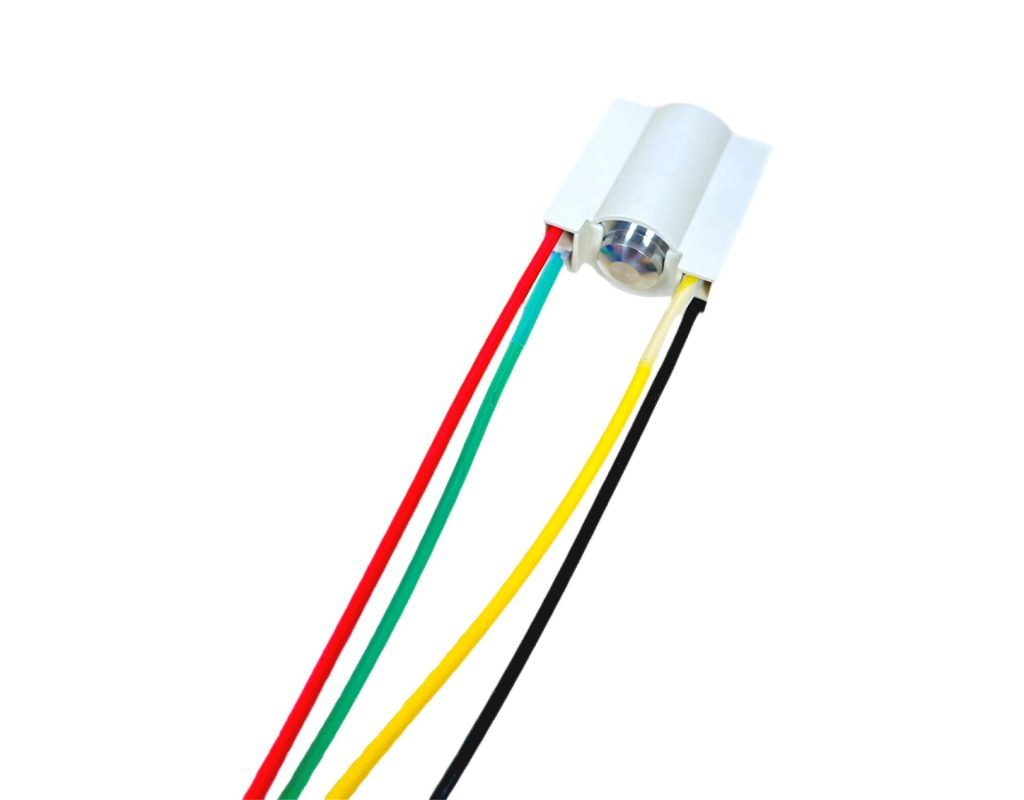
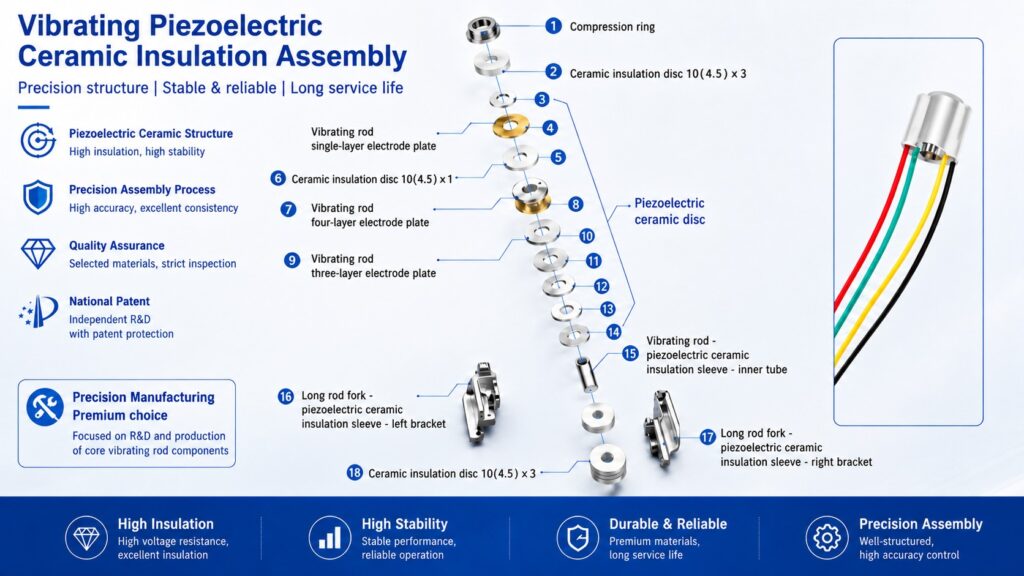
Piezoelectric ceramic is usually installed in a stacked structure and preloaded by bolts or structural parts. This preload is not simply a matter of “tightening.” It must ensure stable contact among the piezoelectric ceramic, metal structural parts, and electrode sheets, while also avoiding damage to the elastic working state of the piezoelectric ceramic.
This can be understood from three aspects.
1. Preload Affects Driving Efficiency
If the preload is too small, the mechanical coupling between the piezoelectric ceramic and the structural parts will be insufficient. Although the electrical signal is input into the piezoelectric element, the mechanical energy transmission efficiency is inadequate, resulting in weak driving force of the vibrating body. Under boundary conditions such as low-density powders, lightweight particles, and foamy liquids, insufficient driving force may reduce the detection signal margin and increase the risk of misjudgment.
2. Preload Affects Resonant Frequency
Vibrating level switches rely on a stable resonant state for operation. Changes in preload alter the equivalent stiffness between the piezoelectric component and the vibrating body, thereby affecting the operating frequency. Both insufficient preload and excessive preload may cause the vibration state to deviate from the design range.
3. Excessive Preload May Damage the Ceramic
Piezoelectric ceramic is hard and brittle. It has good compressive strength but is sensitive to local stress concentration, impact, and uneven force. If the bolt preload is too high, or if burrs, foreign matter, or misalignment exist on the assembly surface, microcracks or even fractures may occur in the piezoelectric element. Even if it works in the short term, long-term temperature cycling and on-site vibration may amplify hidden risks.
3. How to Determine the Optimal Preload Through Static Capacitance?
Piezoelectric ceramic is not only a mechanical component but also an electrical component. Its static capacitance changes with the stress state, so it can be used as an important reference during the assembly process.
A relatively reasonable process approach is as follows:
- Before preloading, measure the static capacitance of the piezoelectric ceramic element with a digital bridge or capacitance meter, recorded as C0.
- Apply preload gradually and avoid rapid tightening in one step.
- Observe the change in static capacitance of the piezoelectric ceramic group.
- When the static capacitance reaches approximately (1–1.05) C0, it can be used as a reference for a relatively suitable preload state.
- Then comprehensively confirm the result by combining vibration frequency, output signal, insulation, electrical safety, and finished product testing.
It should be noted that the static capacitance method does not simply replace all tests. Instead, it helps assembly personnel identify a more reasonable preload state as a process control method.
In actual manufacturing, factors such as piezoelectric ceramic batches, electrode sheet condition, bolt specifications, washer structure, assembly surface roughness, and temperature conditions should also be considered. Publicly available information does not mention a specific torque value that is universally applicable to all models, so it is not advisable to apply one fixed torque directly to all vibrating level switches.
4. Why Can’t Preload Be Controlled Only by Tightening Torque?
Many mechanical assemblies use torque wrenches to control bolt torque, but for piezoelectric ceramic components, relying only on torque is not sufficient.
The reason is that the relationship between bolt torque and actual clamping force is affected by the friction coefficient. The same torque may be converted into different actual axial forces under different thread lubrication conditions, washer materials, and assembly surface conditions.
Therefore, a more reliable assembly control method should combine “torque control + electrical parameter monitoring + vibration performance testing.”
This is also why piezoelectric ceramic preload may seem like a small assembly detail, but it actually affects the reliability of the entire instrument.
5. What Is the Relationship Between Preload Control and On-Site Working Conditions?
Users generally do not directly deal with the preload process of piezoelectric ceramic components on site, but the level of preload control is reflected in product stability during use.
1. Low-Density Powder Applications
When the powder density is low, the damping effect of the material on the vibrating body is weak. If the vibration system itself is unstable, the detection signal margin will become smaller. Fork-11 is used for powder and fine granular materials, while Tube-11 is used for powder and granular solid materials. These products rely especially on stable vibration driving and detection systems in low-density material detection.
2. Material Buildup and Adhesion Applications
Dust, humidity, adhesion, and caking are common in industries such as chemical processing, power generation, building materials, and food. If the driving margin of a vibrating level switch is insufficient, material buildup may more easily cause false alarms. However, simply increasing sensitivity may also increase the probability of false operation. In this case, product structure, probe design, circuit algorithm, and assembly consistency must work together.
3. High-Temperature Applications
In high-temperature environments, ceramic materials, electrodes, wires, seals, and metal structures are all subjected to thermal stress. Tube-11 provides normal-temperature, high-temperature, and ultra-high-temperature versions, with process temperature ranges of -50–150°C, -50–250°C, and -50–400°C respectively. The Ring-11 high-temperature version also provides high-temperature and ultra-high-temperature configurations.
In such applications, the piezoelectric component must not only reach a reasonable preload state during room-temperature assembly but also maintain structural stability after temperature changes.
4. Liquid Foam, Bubbles, and Vibration Interference
The Ring-11 tuning fork liquid level switch is suitable for foam, bubbles, viscous liquids, and vibration interference conditions. It also provides relay, two-wire, NAMUR, and transistor output options.
However, on-site selection still requires confirmation of liquid density, viscosity, temperature, pressure, process connection, and installation direction. It is not appropriate to select a product simply based on the words “liquid level switch.”
6. Selection Suggestions: From Piezoelectric Component Reliability to Product Selection
Piezoelectric ceramic preload is part of manufacturing-side quality control. For users, the real concern is whether the selected product is suitable for their medium and working conditions.
1. Powder, Fine Particles, and Low-Density Materials
Fork-11 tuning fork level switch can be prioritized for evaluation. It is suitable for powder and fine granular materials, especially for small particles or lightweight powder applications requiring higher detection sensitivity.
2. Powder, Granules, Material Buildup, or High-Temperature Silos
Tube-11 vibrating rod level switch can be prioritized for evaluation. Its dual-tube vibration structure is suitable for a variety of granular and powder solid materials and covers normal-temperature, high-temperature, and ultra-high-temperature configurations.
3. Liquid High/Low Level Alarm, Pump Protection, and Overflow Protection
Ring-11 tuning fork liquid level switch can be evaluated. Its short fork structure is suitable for level detection in pipelines, process tanks, and storage tanks. It can be used for high-level alarms, low-level protection, dry-run protection, and other applications.
4. Conditions Not Suitable for Direct Use of Vibrating Level Switches
The following conditions require technical clarification first or consideration of other technical solutions:
- Materials that cake severely and may wrap around the probe for a long time;
- Large particles with strong impact that may damage the tuning fork or vibrating rod;
- Highly corrosive media requiring confirmation of wetted/contact materials;
- Applications requiring continuous liquid level or material level trends rather than only point level alarms;
- Insufficient installation space, insertion depth, or sidewall strength;
- Requirements for explosion-proof certification, SIL, sanitary design, corrosion resistance, or complete documentation.
If users need continuous measurement, radar level meters, ultrasonic level meters, magnetic level gauges, or float level switches can be further evaluated. If only high/low point level alarm is required, vibrating level switches are often a simpler solution.
7. Common Misunderstandings: Greater Preload Does Not Mean Higher Reliability
Misunderstanding 1: The tighter the bolt, the more stable the vibration
In fact, excessive preload may restrict the deformation of the piezoelectric ceramic, causing the vibration system to deviate from its optimal state and possibly causing ceramic fracture.
Misunderstanding 2: As long as the capacitance reaches the range, the product is definitely qualified
Static capacitance only reflects part of the stress state of the piezoelectric component. Finished products should also undergo tests for operating frequency, output signal, insulation, protection, temperature adaptability, and other performance indicators.
Misunderstanding 3: On-site faults can be solved by adjusting the piezoelectric component
Users are not advised to disassemble the piezoelectric component on site. For on-site false alarms or failure to operate, installation position, medium changes, power supply, wiring, output logic, probe buildup, and process conditions should usually be checked first.
Misunderstanding 4: Material level switches and liquid level switches can be used interchangeably
Vibrating level switches should be selected according to the medium. Fork-11 and Tube-11 are mainly intended for solid powders and granular materials, while Ring-11 is intended for liquid level detection. Incorrect selection may lead to insufficient sensitivity, false alarms, or reduced service life.
Conclusion
Piezoelectric ceramic preload may seem like an internal assembly detail of a vibrating level switch, but it is actually related to driving efficiency, detection sensitivity, false alarm resistance, and long-term stability. A relatively reasonable control method is to measure the static capacitance C0 before assembly, and then comprehensively judge the preload state during gradual preloading by combining capacitance changes, operating frequency, and finished product testing.
For level switch selection in powder, granular, liquid, high-temperature, material buildup, or explosion-proof applications, please contact Jiwei Automation for selection advice, product information, and working condition confirmation support.