Thermal Power Plant Slag and Ash Level Detection: How to Combine Radar Level Meters and Vibrating Rod Level Switches for Selection
The key to slag and ash level detection in thermal power plants is not simply choosing an instrument that “can measure,” but ensuring it can handle high temperature, dust, material buildup, impact, false alarms, and process control requirements. Radar level meters are more suitable for continuous level monitoring, while vibrating rod level switches can be used for point level alarms or discharge control. A combined solution can improve the controllability of the ash and slag handling system.
1. Why Is Slag and Ash Detection in Thermal Power Plants Prone to Problems?
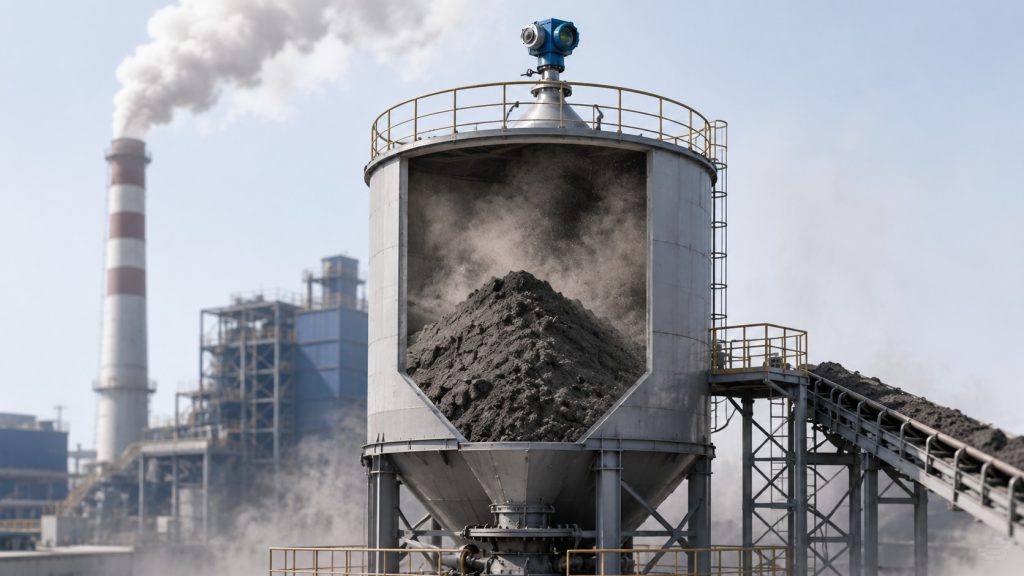
Slag and ash in thermal power boiler systems usually need to be discharged regularly. If level detection is unstable, it may affect the coordinated control of slag discharge, ash conveying, silo pumps, or downstream conveying equipment. In a public case, a technical renovation project at a thermal power plant in Shandong re-evaluated level instruments because slag and ash required level detection and process control. During the project comparison, it was found that a plumb bob level meter had the risk of buried weights, while a radio frequency admittance level switch could cause false alarms or bending after material buildup.
The difficulties of this type of working condition are mainly reflected in three aspects. First, dust and fly ash may affect instrument signal judgment. Second, the temperature, impact, and wear of ash and slag test the probe structure. Third, the material surface may be conical, collapse, or change rapidly, making it difficult for a single measuring point to reflect the actual inventory status.
2. What Problems Is a Radar Level Meter Suitable For?
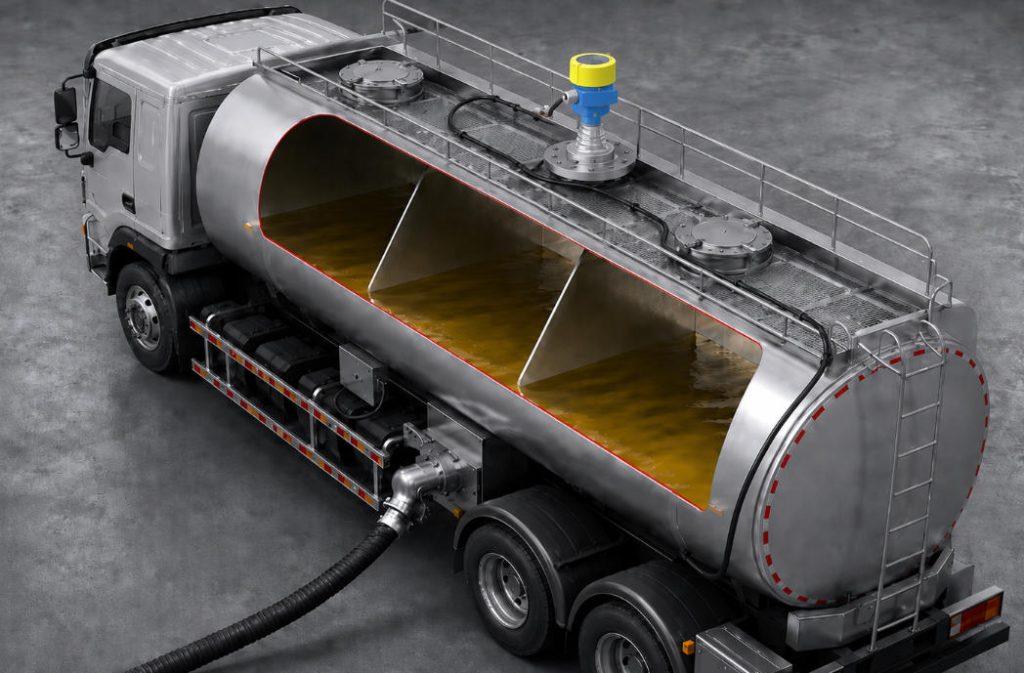
The core value of a radar level meter lies in non-contact continuous measurement. It emits electromagnetic waves and receives echoes from the material surface, calculates the distance from the instrument to the material surface, and then converts it into level height. The propagation speed of radar waves is not directly affected by medium characteristics such as temperature, pressure, or steam, while echo strength is related to the conductivity and dielectric constant of the medium.
For ash silos, ash hoppers, slag silos, and similar applications, radar level meters are more suitable for the task of “continuously monitoring trends,” such as determining whether the silo is close to full, whether the level drops after discharge, and whether the level change is abnormal.
3. What Problems Is a Vibrating Rod Level Switch Suitable For?
If a radar level meter solves the question of “how the level changes continuously,” then a vibrating rod level switch solves the question of “whether the level has reached a certain alarm point.” In powder or granular materials such as ash, slag, coal powder, lime, and cement, point level control such as high-level alarm, low-level protection, and discharge interlock often requires a stable and reliable level switch.
The Tube-11 vibrating rod level switch adopts an inner and outer nested dual-tube probe design. It uses piezoelectric components to drive and detect the vibration state. When the vibrating rod contacts the material, the resonance state of the outer tube changes, the resonance condition between the inner and outer tubes is disrupted, and the probe amplitude decreases. The circuit identifies this change and outputs a switch signal. Public product information states that Tube-11 can detect media with a density as low as 0.02 g/cm³, is suitable for measuring various solid materials, and features high material buildup tolerance, self-diagnosis, and no calibration requirements.
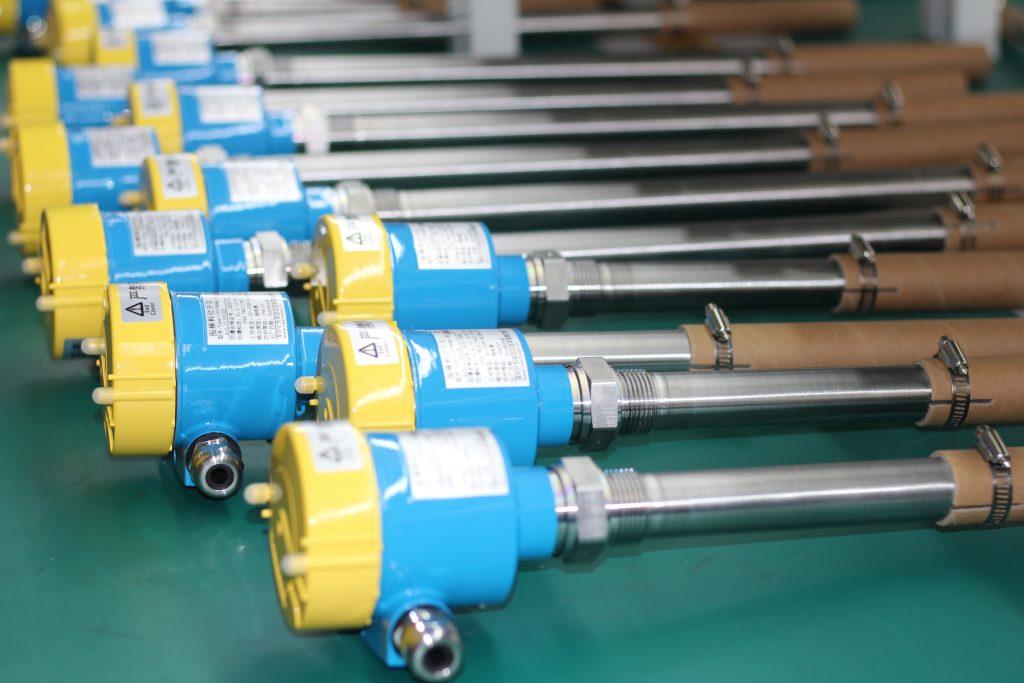
In thermal power plant ash and slag detection, vibrating rod level switches are usually used for key point level alarms. For example, a high-level alarm in an ash silo can prevent overfilling, while a low-level alarm can protect downstream equipment or indicate the discharge status. Compared with continuous measurement instruments, level switches provide more direct output logic and are suitable for connection to PLC, DCS, or alarm systems.
4. Why Recommend the Combination of “Radar Continuous Measurement + Vibrating Rod Point Level Alarm”?
Slag and ash systems do not always require only one level signal. Continuous level measurement can reflect trends, while point level switches can provide independent alarms or interlock protection. When the two are combined, the site can obtain a more complete basis for judgment.
1. Continuous Measurement for Process Judgment
Radar level meters provide level change trends, helping operators determine whether the silo needs discharge, whether discharge is smooth, and whether the level fluctuates abnormally.
2. Point Level Switches for Safety Boundaries
Vibrating rod level switches can be installed at high-level, low-level, or key control points. When the material reaches the set position, the switch outputs a signal to help complete alarm, interlock, or equipment protection.
3. Mutual Verification Between Two Types of Signals
When the continuous level value from the radar level meter is inconsistent with the status of the vibrating rod switch, it may remind operators to check material buildup, probe coverage, abnormal material surface, wiring, or parameter settings. This redundancy does not replace a safety system, but it can improve operation and maintenance judgment efficiency.
5. Selection Considerations for Jiwei Solutions in This Type of Application
In the Shandong thermal power plant technical renovation project materials, the selected products were Jiwei Rada-22 high-frequency pulse radar level meter and Jiwei vibrating rod level switch. After application, the project recorded accurate measurement and no false alarms.
From the selection logic, this combination is not simply “using two instruments for extra assurance,” but matches the two types of requirements in slag and ash applications: radar for continuous level measurement and vibrating rod switch for point level control. For site conditions such as dust, high temperature, material buildup, and solid particles, users should focus on confirming the following parameters:
- Measured material: ash, slag, fly ash, coal powder, lime, or other solid particles.
- Medium density: low-density powders require confirmation of the detection capability of the level switch.
- Process temperature: normal-temperature, high-temperature, or ultra-high-temperature environments require corresponding product configurations.
- Installation method: top mounting, side mounting, insertion depth, and avoiding the material inlet impact area.
- Signal output: 4–20 mA/HART, relay, two-wire system, or other control system requirements.
- Explosion-proof requirements: dust explosion-proof, gas explosion-proof, or intrinsically safe/flameproof requirements should be confirmed according to project documents.
Jiwei Automation focuses on the R&D, production, and sales of level measurement instruments. Its products cover vibrating level switches, radio frequency admittance level switches, rotary paddle level switches, radar liquid level meters, radar level meters, magnetic level gauges, ultrasonic level meters, float level switches, and more. The application industries include chemical, power, environmental protection, food, pharmaceutical, building materials, and other fields.
6. Selection Suggestions: How to Judge Different Site Conditions?
1. When Continuous Level Trends Are Required
Radar level meters should be evaluated first. Especially for ash silos, slag silos, powder silos, and other applications where level changes, process control, or remote monitoring are required, continuous measurement has higher value.
2. When Only High/Low Level Alarms Are Required
A vibrating rod level switch can be evaluated first. If the site only requires point level alarm, full silo protection, low-level protection, or empty silo prevention, a point level switch is a simpler solution.
3. When Dust Is Heavy and Material Buildup Is Obvious
The probe structure, buildup tolerance, installation angle, and cleaning conditions should be confirmed carefully. For materials that may wrap around the probe for a long time, the working condition should be clarified in advance. If necessary, non-contact solutions or combined solutions should be evaluated.
4. High-Temperature Ash or Slag Applications
The process temperature range, cooling structure, sealing materials, and installation position must be confirmed. Public information states that the standard high-temperature design of Tube-11 can reach a process temperature of 250°C, and the ultra-high-temperature version can reach 400°C. The specific project should still be confirmed based on the actual model and technical confirmation documents.
7. Issues That Still Need Attention
There is no single instrument that can cover all slag and ash level detection applications. Under complex working conditions, the following issues still need attention: inclined material surfaces may cause weak echoes, dust accumulation may contaminate the installation opening, material impact may damage the probe, material buildup may cause point level misjudgment, and explosion-proof areas place additional requirements on wiring and maintenance.
Therefore, project selection should not only consider measuring range and price. Medium, temperature, installation, output, maintenance, explosion-proof requirements, and control logic should be evaluated together. For technical renovation projects, it is also necessary to understand the cause of failure of the original instrument before deciding whether to replace it with the same type of instrument or adopt a radar, vibrating rod, or combined solution.
Conclusion
The core of slag and ash level detection in thermal power plants is matching the instrument to the real working conditions. Radar level meters are suitable for continuous monitoring of level changes, while vibrating rod level switches are suitable for key point level alarms and interlock protection. For complex applications involving high temperature, dust, material buildup, and impact, it is recommended to provide medium information, silo dimensions, installation position, temperature and pressure, explosion-proof requirements, and control logic during selection, so that Jiwei Automation can help confirm a more suitable product configuration and application solution.