From RS-485 to Modbus RTU: The Fundamental Difference Between Communication Channels and Languages in Industrial Systems
In industrial automation systems, RS-485 and Modbus RTU are often mentioned together, but they are also among the most commonly misunderstood concepts. In field practice, it is common to hear statements such as “this device uses 485 communication” or “just connect it via Modbus.” While these descriptions may seem acceptable in daily communication, they are incomplete from an engineering architecture perspective.
To properly understand industrial communication, one key principle must be clarified: RS-485 is not a protocol, and Modbus RTU is not a physical interface. They belong to completely different communication layers.
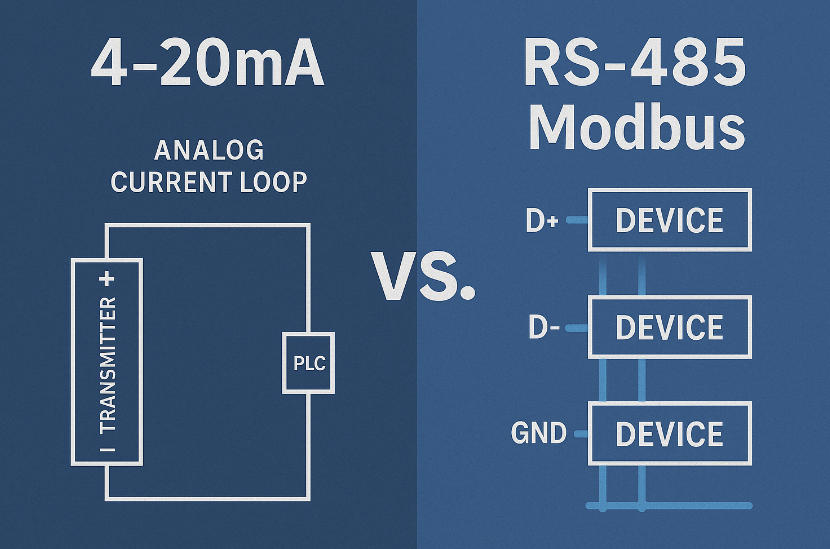
1. The Nature of Communication Systems: Layered Architecture Determines Everything
Industrial communication is not a single technology but a layered system, typically consisting of three levels:
The physical layer, which defines how signals are transmitted
The data link or transport layer, which ensures stable data exchange
The application layer, which defines what the data actually represents
Within this structure:
RS-485 belongs to the physical layer standard
Modbus RTU belongs to the application layer protocol
They are not competing technologies but a stacked relationship.
A simple analogy:
RS-485 is like a highway that carries vehicles (electrical signals)
Modbus RTU is the traffic rule system that defines how vehicles behave, identify themselves, and interact
2. RS-485: A Differential Transmission Channel in Industrial Environments
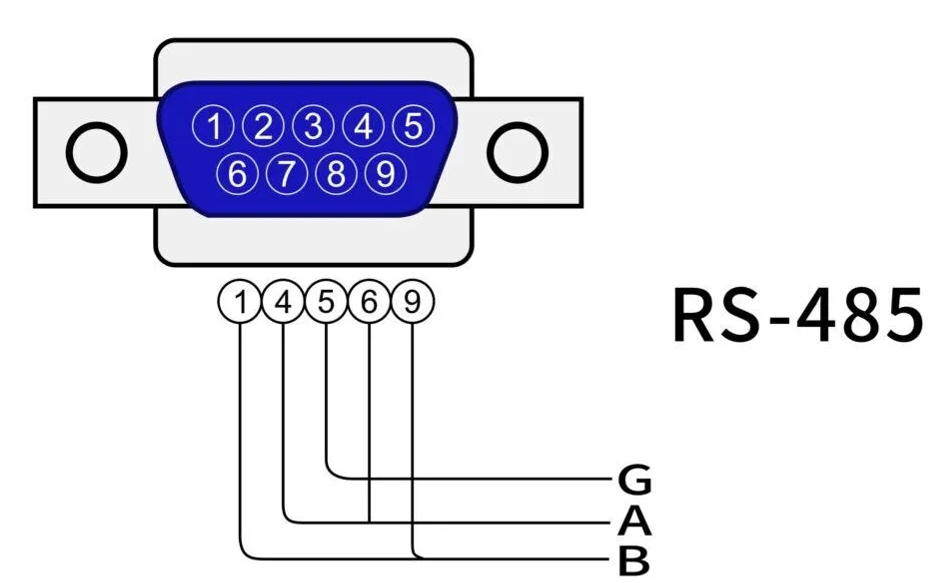
RS-485 is an electrical standard that defines how signals are physically transmitted rather than what the data means.
Its core principle is differential signaling, using the voltage difference between two wires (A and B) to determine logic states. This design provides strong immunity to industrial noise.
In practical applications, RS-485 has several key characteristics:
It provides strong anti-interference capability, especially in environments with motors, inverters, and relays where noise levels are high.
It supports long-distance communication, often up to hundreds or even thousands of meters under proper wiring and termination.
It allows multi-node bus topology, enabling multiple devices on a single communication line.
However, RS-485 only defines electrical transmission. It does not define data meaning, device identity, or communication logic.
It does not define device addressing, data framing structure, or control commands. It only determines how electrical signals are transmitted reliably between two points.
From an engineering perspective, RS-485 is a transparent transmission channel. It carries electrical signals from one point to another without interpreting their meaning.
3. Modbus RTU: A Universal Language for Industrial Devices

If RS-485 is the road, Modbus RTU is the language used on that road.
Modbus RTU defines how data is structured, transmitted, and interpreted. It belongs to the application layer, meaning it determines what is communicated and how it is understood.
The core concept of Modbus RTU is the master-slave architecture. A master device, such as a PLC or control system, initiates communication requests, while multiple slave devices respond with data.
This structure provides clear logic and centralized control, making it highly suitable for industrial automation systems.
Modbus RTU organizes all field data into a register-based model. Parameters such as level, temperature, and pressure are mapped into standardized register addresses.
This abstraction enables cross-device compatibility. As long as devices follow the Modbus standard, they can communicate regardless of manufacturer.
In addition, Modbus RTU uses a compact binary format and includes CRC error-checking mechanisms to ensure data integrity, making it reliable in industrial environments.
4. Fundamental Difference Between RS-485 and Modbus RTU
From an engineering perspective, the difference is clear:
RS-485 focuses on the signal layer, ensuring stable transmission of electrical signals.
Modbus RTU focuses on the data layer, defining how devices interpret those signals.
RS-485 does not care about data content; it only transmits signals.
Modbus RTU does not care about physical media; it defines data structure and logic.
One is a channel, the other is a language. They cannot replace each other.
In practice, they are used together: Modbus RTU runs on top of RS-485 to form a complete industrial communication system.
5. Why These Concepts Are Often Confused in Practice
There are three main reasons why RS-485 and Modbus RTU are frequently confused in the field.
First, industrial devices commonly integrate both RS-485 interfaces and Modbus RTU protocol support, making them appear as a single concept in practice.
Second, technical documentation often uses combined terminology such as “RS-485 Modbus communication,” which blurs the distinction.
Third, during commissioning and troubleshooting, engineers mainly observe data transmission results rather than the underlying layered structure.
6. Typical Engineering Problems Caused by Misunderstanding
When the distinction is not clear, several common issues occur in the field.
For example, communication failure despite correct wiring is often not an RS-485 issue but a mismatch in Modbus parameters such as baud rate or device address.
Another case is abnormal data despite successful communication, which is usually caused by incorrect register mapping or data interpretation errors.
Intermittent communication or instability is often related to RS-485 wiring issues, improper termination resistors, or electromagnetic interference.
Although these problems may look similar, they originate from different layers of the communication system.
7. Correct Engineering Approach to System Design
In industrial communication design, the layered architecture must be followed rather than treating RS-485 and Modbus RTU as alternatives.
The correct approach is:
First, define physical layer requirements such as distance, noise environment, and number of nodes.
Then select an appropriate physical interface such as RS-485.
Finally, choose the communication protocol such as Modbus RTU or others.
Only this layered approach ensures a complete and scalable system design.
8. Conclusion: Do Not Confuse the Road with the Language
RS-485 solves the problem of reliable signal transmission and belongs to the physical foundation layer.
Modbus RTU solves the problem of data interpretation and belongs to the communication rule layer.
They must work together to form a complete industrial communication system, but they should never be treated as the same concept.
In engineering practice, communication problems are often not device failures but misunderstandings of system layering.
Once physical layer and protocol layer are clearly separated, most field communication issues become explainable, traceable, and easier to optimize.