China’s Leading Vibronic Level Switch: Jiwei Fork-11 Tuning Fork Level Switch for Solids
In modern industrial production, level measurement of solid materials has always been a challenging task. Whether it is fine powders in the chemical industry or granular raw materials in the food and grain industry, traditional level detection instruments often struggle to cope due to characteristics such as low material density, poor fluidity, easy dust generation, and moisture absorption. As the number one manufacturer of vibronic level switches in China, Jiwei Automation has launched the Fork-11 Vibronic Level Switch, leveraging independently developed core technologies and invention patents. Designed specifically for solid measurement, this product not only fills the gap in domestic high-end level detection technology but also becomes a perfect alternative to the internationally renowned brand VEGA with its excellent performance.
This article will provide an in-depth analysis of the working principle, technical parameters, diverse housing options, and unique advantages of this vibronic level switch in the field of solid measurement.
I. Challenging Limits: Born for Ultra-Low Density Solids
On industrial sites, many solid materials such as flour, fly ash, expanded perlite (EPS), chemical powders, and milk powder have extremely low bulk densities. When facing these media, traditional rotary paddle, capacitive, or plumb bob level gauges often cause false alarms or even failures due to high mechanical failure rates, insufficient sensitivity, or significant influence from dielectric constants.
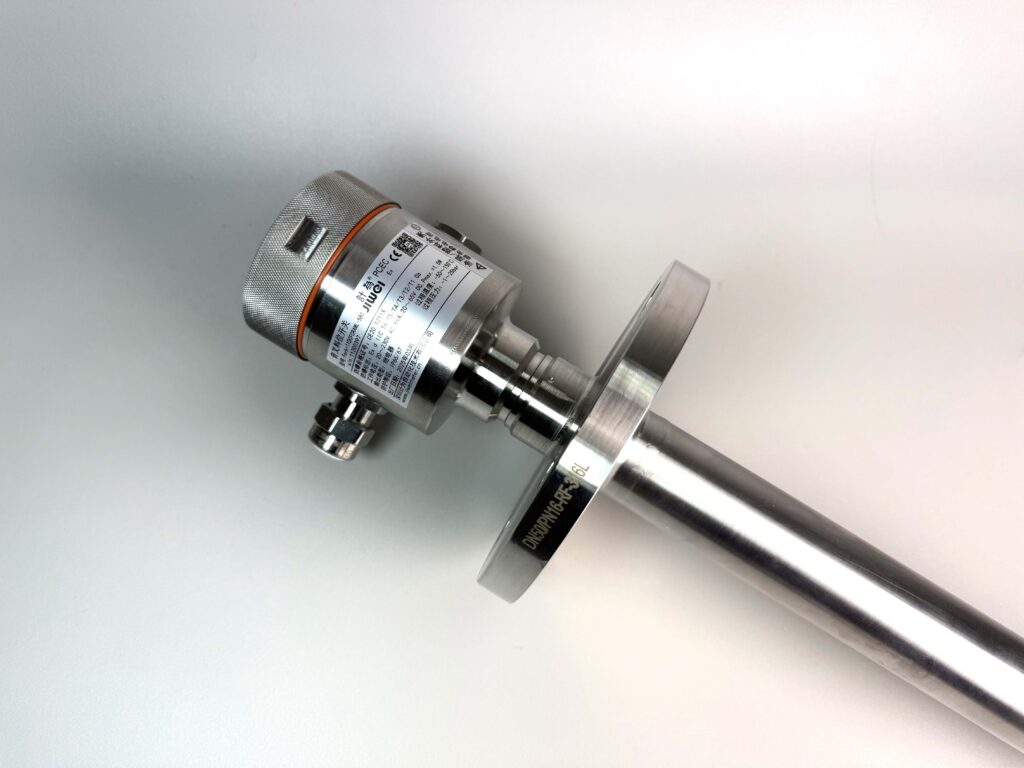
The Fork-11 Tuning Fork Level Switch was designed specifically to solve this pain point. It is an advanced and highly specialized vibronic level switch, created for the most challenging applications involving powdery and fine-grained bulk solids (such as sand, fine chemical materials, flour, salt, etc.). Its core breakthrough lies in its extremely high sensitivity, capable of accurately detecting ultra-light powders with densities as low as 0.008 g/cm³. This indicator marks that the domestic tuning fork level switch has reached the international first-class level in detection accuracy, easily handling media that are almost impossible to measure by conventional methods, and solving the long-standing industry problem of “undetectable and inaccurate” measurement for ultra-light solid materials.
II. Core Technology: Harmonic Resonance and Piezoelectric Drive
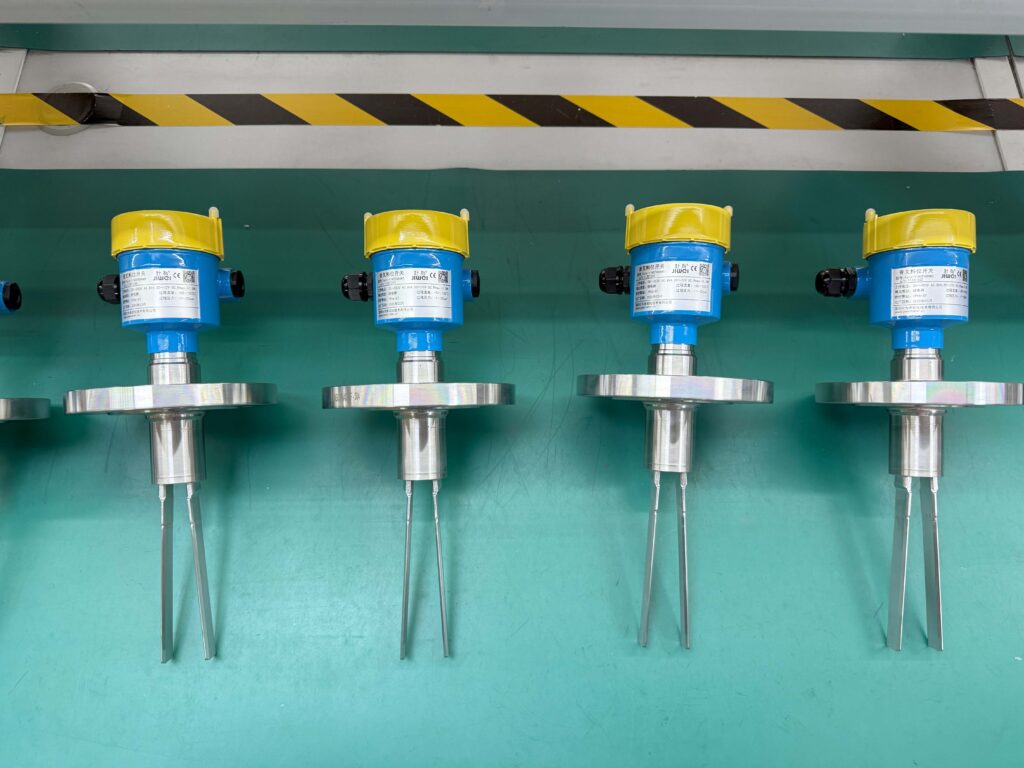
The working principle of the Fork-11 Tuning Fork Level Switch is based on harmonic resonance technology, which is the core of its performance as a high-performance vibronic level switch. Unlike tuning fork switches for liquids, the fork body shape and frequency design for solids have undergone special optimization.
1. Vibration Drive Mechanism
The instrument integrates a piezoelectric device internally to drive the vibration of the fork. When the tuning fork is in the air, the piezoelectric crystal excites the fork to vibrate continuously at its inherent resonant frequency (approximately 140Hz). This frequency is carefully calculated to ensure sensitive reaction to minute densities while avoiding false actions caused by external mechanical vibrations.
2. Frequency and Amplitude Change Detection
When the fork comes into contact with the measured solid material, the material particles produce a damping effect on the fork, absorbing vibration energy and causing the vibration amplitude of the fork to drop sharply. The built-in piezoelectric sensor can keenly detect this amplitude change and convert it into an electrical signal. Since the friction between solid particles differs from that of liquids, the Fork-11’s algorithm is specifically calibrated for the damping characteristics of solid media.
3. Intelligent Signal Processing
The integrated electronic circuit performs high-speed analysis of signal changes. Once it confirms that the vibration change has reached the set threshold, it immediately triggers the switch signal. Through optimized design of the fork surface area and fine tuning of the resonant frequency, Jiwei Fork-11 achieves unparalleled reliability and sensitivity. This vibronic level switch, based on the principle of mechanical vibration, is completely insensitive to foam, airflow, and changes in medium dielectric constant, thereby ensuring absolute measurement stability.
III. Diverse Housings: Comprehensive Coverage of Explosion-Proof and Non-Explosion-Proof
As a manufacturer with invention patents, Jiwei knows that different industrial scenarios have vastly different requirements for instrument housings. Therefore, Fork-11 provides a rich selection of housing materials and explosion-proof grades to meet various needs from conventional conditions to hazardous environments.
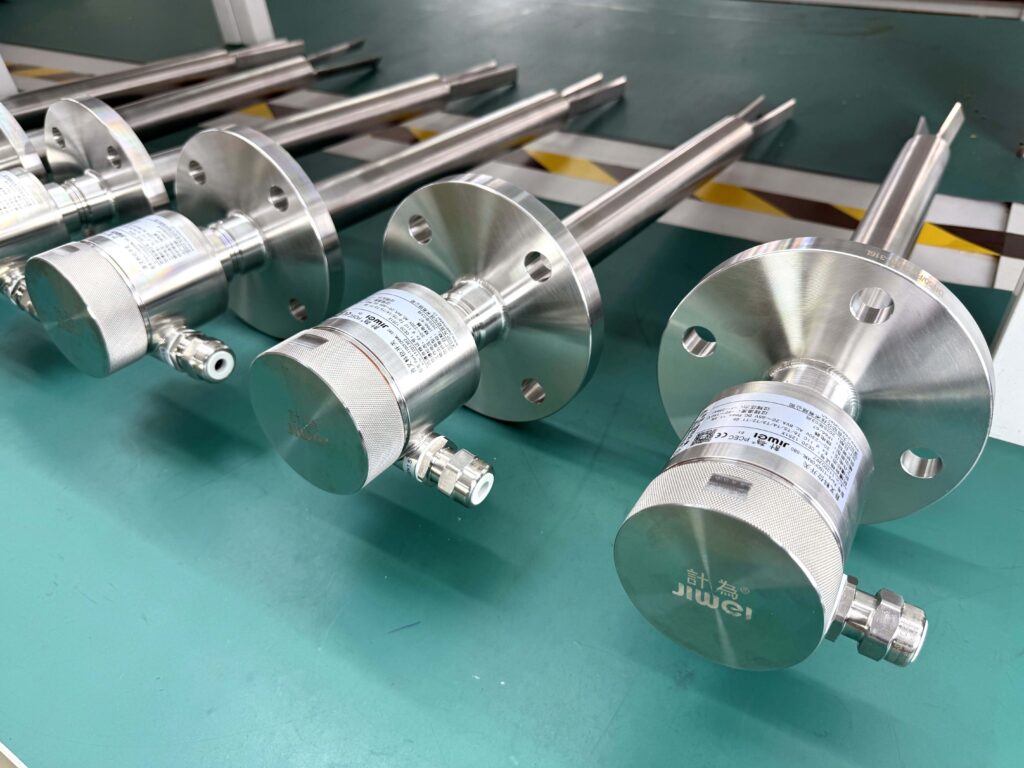
1. Aluminum Alloy and Stainless Steel Housings
In terms of material selection, Fork-11 offers two high-quality housing options:
Aluminum Alloy Housing: Features lightweight, good heat dissipation, and corrosion resistance. It offers high cost-effectiveness and is widely used in conventional environments in general chemical, plastic, feed, and building materials industries.
Stainless Steel Housing: Made of high-quality stainless steel, it possesses extremely strong mechanical strength and corrosion resistance. It is particularly suitable for marine environments, chemical corrosive sites, or occasions with extremely high requirements for housing strength, effectively resisting external impacts.
2. Explosion-Proof and Non-Explosion-Proof Configurations
Aiming at hazardous areas prone to flammability and explosions such as petrochemicals, metal powder processing, and coal mines, Fork-11 demonstrates its professional-grade safety assurance capabilities. The product has passed strict explosion-proof certifications, covering gas and dust explosion protection:
Gas Intrinsic Safety: Ex ia IIC T1…T6 Ga
Gas Flameproof Enclosure: Ex db IIC T1…T6 Gb
Dust Intrinsic Safety: Ex ia IIIC T₂₀₀100℃…T₂₀₀450℃ Da
Dust Protection Enclosure: Ex tb IIIC T80℃…T440°C Db
Gas/Dust Explosion-proof: Ex db IIC T1…T6 Gb + Ex tb IIIC T80℃…T440°C Db
Whether requiring the low-energy limitation of intrinsic safety or the isolation protection of flameproof enclosure, Fork-11 can provide corresponding vibronic level switch solutions, ensuring absolute safety in hazardous environments and complying with the most stringent international safety standards.
IV. Hygienic and Standard Types: Adapting to Different Industry Standards
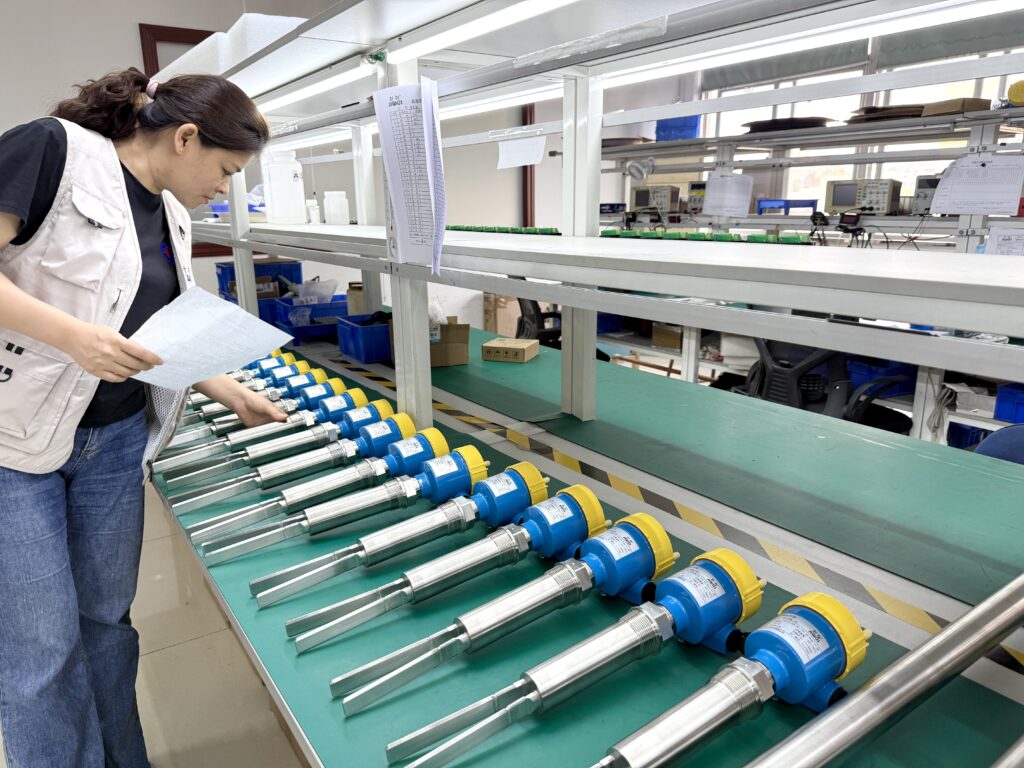
To meet the special needs of industries with high hygiene requirements such as food, beverages, and pharmaceuticals, Fork-11 not only provides a standard type but also launched a hygienic version.
Standard Type: Suitable for general industrial fields such as chemicals, plastics, building materials, and electric power. The wetted parts usually use 316L stainless steel, matched with standard process connections (such as threads, flanges), robust and durable, with strong wear resistance.
Hygienic Type: Designed specifically for the food and pharmaceutical industries. The surface undergoes precision polishing treatment with low Ra value and small dead angles, making it difficult for bacteria to breed. Process connections can be selected from sanitary clamps or specially designed sanitary flanges. For powders with strong adhesiveness, the surface can also be sprayed with PTFE (Teflon), which not only meets hygiene requirements but also prevents material buildup, ensuring measurement accuracy.
This distinction allows the Fork-11, as a vibronic level switch, to flexibly adapt to the needs of the entire industry chain from raw material warehousing to finished product packaging.
V. Hardcore Parameters: A Sharp Tool for Extreme Environments
The Fork-11 Tuning Fork Level Switch demonstrates extremely strong environmental adaptability in its technical parameters, which is the foundation for its ability to perfectly replace imported brands like VEGA.
1. Ultra-Wide Temperature Range
Industrial site process temperatures are often unpredictable, especially in drying and reaction sections. Fork-11 provides three temperature grades of probes to cope with different temperature zones:
Normal Temperature Type: -50℃~150℃, meeting the vast majority of conventional material detection, such as flour, plastic particles, etc.
High Temperature Type: -50℃~250℃, suitable for solid materials after high-temperature drying.
Ultra-High Temperature Type: -50℃~400℃. This is a major highlight of Fork-11. The instrument can still work stably in an extreme environment of 400℃. This model is equipped with a unique heat dissipation system, ensuring electronic components operate within a safe temperature range through an air cooling device (6mm outer diameter PU tube), eliminating the risk of high-temperature aging.
2. Flexible Installation Methods
Aiming at tall and narrow silos, where traditional instruments are difficult to install and maintain, Fork-11 provides a suspension cable option. By connecting the probe and electronic unit through a flexible cable, it can easily penetrate deep into the tall silo for measurement, solving installation difficulties in deep wells, high-level silos, and narrow spaces. This design is particularly suitable for space-constrained sites, greatly reducing installation difficulty and maintenance costs.
3. Powerful Electrical Performance
Power Supply: Supports 20~253V AC/DC wide voltage input, extremely adaptable, no need to worry about on-site voltage fluctuations.
Output Signal: Provides DPDT relay output (5A/253V AC) or two-wire 8mA/16mA current output, and possesses fault current alarm function (<2.3mA), convenient for connecting to various DCS systems and PLC control systems, achieving intelligent real-time monitoring.
VI. Why is Fork-11 the Perfect Alternative to VEGA?
In the Chinese market, VEGA, as an internationally renowned brand, has long occupied a share of the high-end level detection market. However, with the rise of domestic technology, Jiwei Fork-11 has become a strong competitor and perfect alternative to VEGA products with the following advantages:
Technology Benchmarking and Even Surpassing: On the core indicator of detecting minimum density (0.008 g/cm³), Fork-11 has reached the international leading level, completely covering the application range of VEGA’s similar products. Its patented fork design makes it more stable when measuring ultra-fine powders, with stronger anti-buildup ability and extremely low false alarm rate.
Invention Patents, Independently Controllable: Jiwei possesses complete intellectual property rights and invention patents from probe design, circuit algorithms to production manufacturing, unrestricted by foreign technology blockades, guaranteeing the safety and stability of the supply chain.
High Cost-Effectiveness: On the premise of comparable or even better performance, the price of Fork-11 is more competitive. At the same time, as the original manufacturer, Jiwei can provide faster after-sales service and technical support, significantly reducing maintenance and procurement costs for users.
Localized Customization Capability: Relying on a strong R&D team, Jiwei can carry out customized development according to the special working conditions of Chinese users (such as adhesiveness of special media, special installation interfaces, moisture and dust prevention needs), which is a service response speed that imported brands find difficult to match.
VII. Conclusion
The Jiwei Fork-11 Tuning Fork Level Switch is not only the number one vibronic level switch in China, but also a pearl in the field of industrial automation. It integrates ultra-low density detection, high-temperature resistance design, diverse explosion-proof certifications, and flexible installation methods, accurately seizing the pain points of solid material measurement.
For enterprises seeking high-performance and high-reliability solid level detection solutions, Jiwei Fork-11 has proven the rise of domestic instruments with its excellent technical parameters and patent advantages. It not only solves the problems of “inaccurate measurement and easy damage” on industrial sites but also stands as a perfect alternative to VEGA, providing global users with a smarter and more valuable choice.