Case Study: Reliable Vibrating Rod Level Measurement in Railside Silos Under Strong Vibration and EMI
I. Project Background: Why Do Railside Silos Keep Triggering False Alarms?
In industries such as coal-fired power, steel, ports, and railway logistics, railside silos are a typical yet highly challenging application scenario. These silos are usually used for temporary storage and buffering of coal, coke, or ore, directly serving belt conveyors, crushers, or batching systems, and are a critical node in continuous production processes.
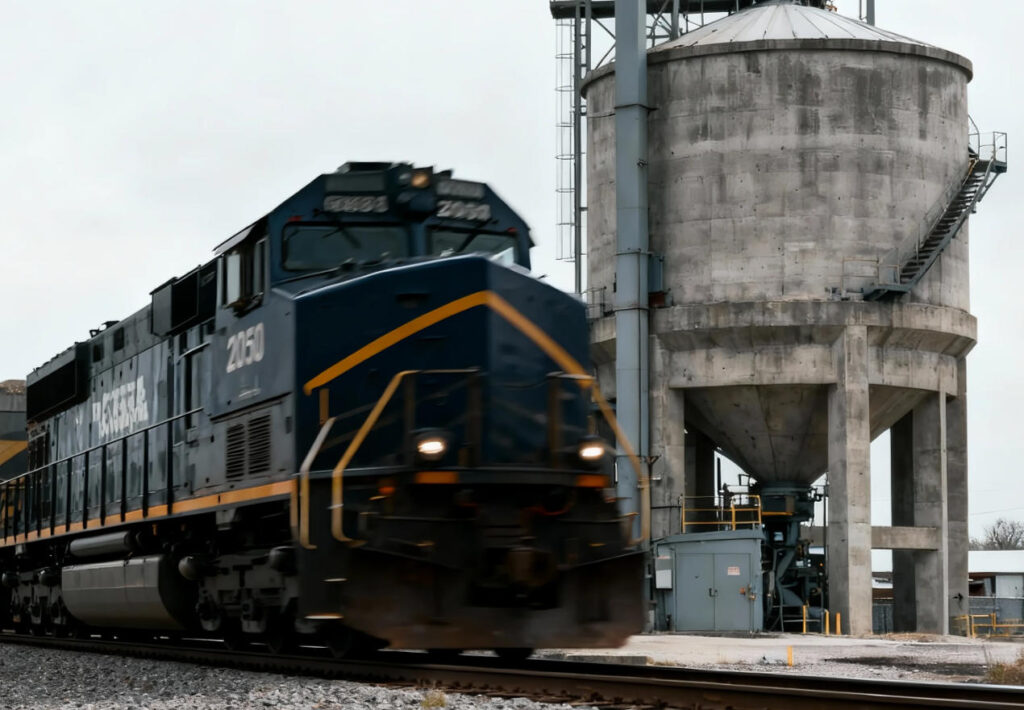
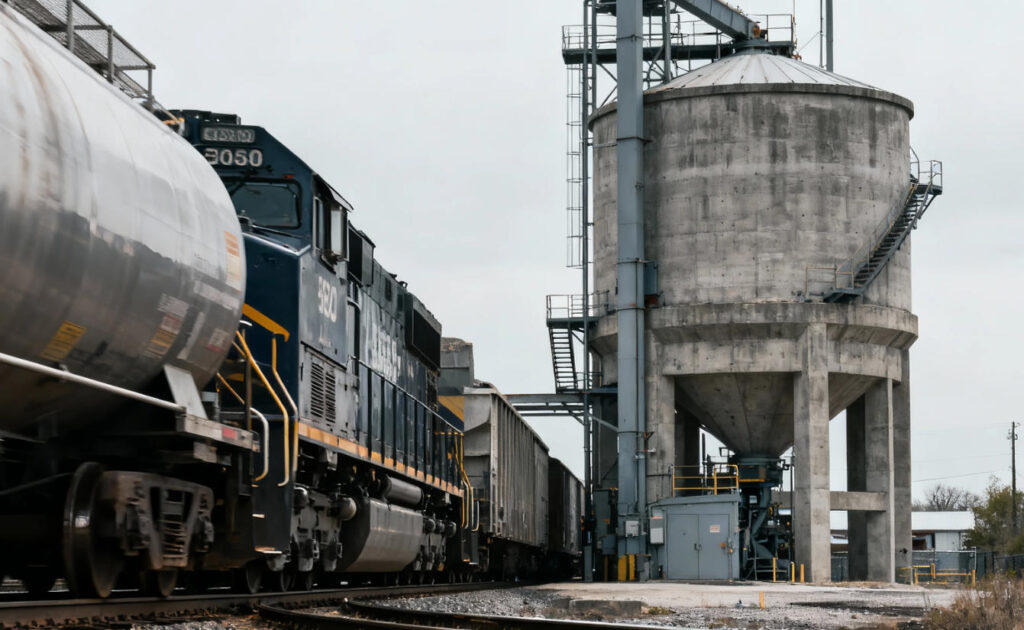
The customer in this case operates a silo located less than 20 meters from a dedicated railway line. Multiple heavy-loaded trains pass by the silo daily, decelerating, braking, or performing shunting operations, exerting continuous and complex influence on surrounding equipment. Initially, the customer installed low-end vibrating rod level switches for high/low level alarms and interlock control.
However, during actual operation, frequent issues occurred:
- False alarms when no material was present
- No action when the silo was full
- Alarm signals fluctuating as trains passed
- Mis-triggered control interlocks, causing conveyor downtime
These issues severely affected production continuity and equipment reliability. Multiple maintenance efforts failed to fully resolve the problems.
II. Application Condition Analysis: The Problem Is Not Simple
1. Severe Mechanical Vibration Interference
When heavy trains pass, significant low-frequency, high-amplitude mechanical vibrations are generated between the wheels and rails. These vibrations are not instantaneous shocks but persistent, repetitive structural vibrations that transmit through:
- The foundation
- Steel support structures
- Silo walls
Eventually, the vibrations are fully coupled to the vibrating rod level switch mounted on the silo wall.
For low-end vibrating rod level switches, their vibration systems are typically designed for static or weakly disturbed environments, lacking effective isolation or suppression against external mechanical vibrations. When trains pass, external structural vibrations easily superimpose on the switch’s working vibration, causing abnormal amplitude and frequency fluctuations, which interfere with the normal level detection logic.
2. Strong Electromagnetic Interference (EMI) as a Key Trigger
Railway locomotives generate complex and strong electromagnetic interference (EMI) during operation, start/stop, and braking. The primary sources include:
- High-power electrical equipment in the traction system
- Transient current surges during braking
- Track return currents causing potential fluctuations
For silos located close to the railway, these EMI sources are not isolated; they couple into the vibrating rod level switch through cables, metal structures, and grounding systems, continuously affecting signal processing.
Specifically, vibration signal acquisition and amplification are prone to superimposed EMI noise, frequency and amplitude judgment stability deteriorates, and relay or digital output signals may fluctuate under strong interference. During locomotive start, acceleration, or braking—when EMI peaks—these issues become particularly pronounced.
Low-end vibrating rod level switches have limited EMC design margin. When strong EMI coincides with mechanical vibration, their internal systems cannot effectively distinguish true material damping from external interference, resulting in false alarms, signal fluctuations, or temporary non-operation.
3. Superposition of Resonance and Misjudgment
A subtler problem is that:
- Structural vibration frequencies induced by passing trains
- Overlap with the operating frequency range of low-end vibrating rod level switches
When superimposed, the vibrating rod is driven by external vibration rather than material damping, causing:
- False resonance
- Abnormally amplified vibration amplitude
- Vibration frequency drift
Control circuits cannot distinguish between real material contact and environmental vibration interference, making false alarms and missed detection inevitable.
III. Root Cause Analysis: Not the Material, but Insufficient Anti-Interference Capability
Through comprehensive analysis of site conditions and historical operational data, it is clear that the problem does not lie in the material or installation location, but in the insufficient anti-interference design of the vibrating rod level switch itself.
Under the persistent strong mechanical vibration and EMI environment along railway lines, the design limitations of conventional low-end vibrating rod level switches are magnified, exposing inherent shortcomings:
- Vibration system highly sensitive to external mechanical vibration, easily excited by structural vibration
- Insufficient frequency stability, drifting under external disturbance
- Simple signal recognition logic, lacking effective suppression of abnormal vibration signals
- Inability to distinguish between true material damping and environmental excitation caused by vibration or EMI
With frequent train passage, these issues repeatedly accumulate and amplify, resulting in unstable level signals, frequent false alarms, and intermittent non-operation.
IV. Solution: Replace with Jiwei® Vibrating Rod Level Switch with Strong EMI Resistance
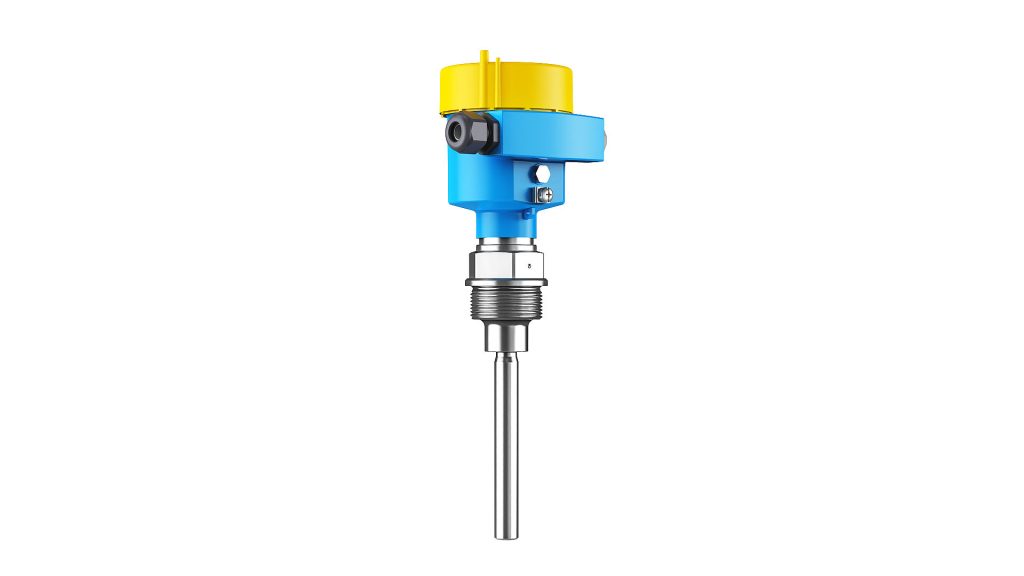
After thorough evaluation of site conditions and interference characteristics, the customer decided to replace the low-end switches with Jiwei® vibrating rod level switches to cope with long-term strong vibration and EMI conditions along the railway.
1. Vibration System Decoupled from Environmental Disturbance
Jiwei® vibrating rod level switches are structurally optimized for strong mechanical vibration environments. The rod system does not merely “amplify vibration” but effectively separates detection vibration from external environmental vibration, preventing outside vibration from directly affecting detection.
This design effectively suppresses interference from:
- Low-frequency structural vibrations transmitted through the foundation
- Resonance of silo walls and steel structures
- External shocks caused by train passage or braking
Even under high-speed train passage or continuous braking, environmental vibration does not directly superimpose on the rod’s working vibration, fundamentally preventing false resonance and mis-triggering, providing a stable and controllable basis for subsequent signal judgment.
2. Stable Operating Frequency Design
For low-frequency mechanical vibration environments along railway lines, Jiwei® vibrating rod level switches prioritize operating frequency stability. By precisely controlling vibration frequency, the rod maintains a stable and controlled working range.
The design ensures the rod:
- Is not easily dragged or influenced by external low-frequency structural vibration
- Does not resonate with vibration frequencies generated by passing trains
Only when the rod truly contacts the material, producing a clear and recognizable damping change, does the system trigger an output response, preventing environmental vibration from being misjudged as a material level change.
3. EMI-Resistant Signal Processing and Output
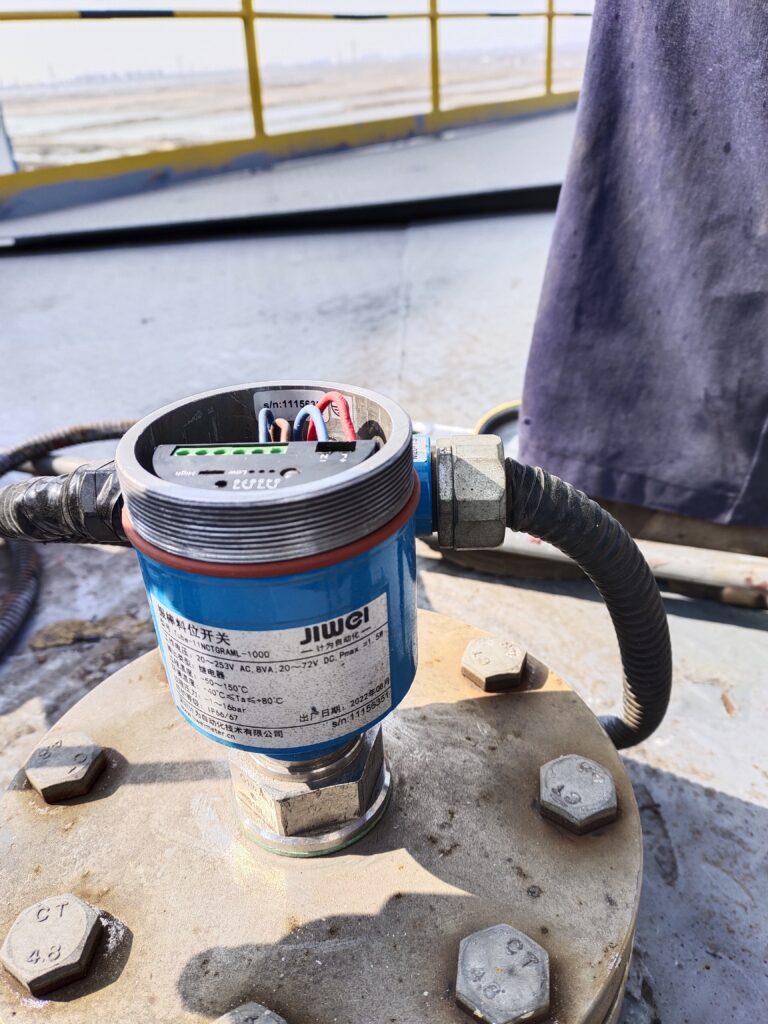
In response to persistent EMI along railway lines, Jiwei® switches feature optimized signal processing and output design:
- Multi-stage filtering and feature recognition: Suppresses environmental EMI noise and prevents false triggering
- High-EMI-tolerance circuitry: Critical components and PCBs withstand transient EMI pulses, avoiding misoperation
- Stable output logic: Maintains consistent digital output under strong EMI without signal jumps
Even during peak EMI moments, such as train acceleration or braking, the switch responds only to real material damping. This ensures continuous, reliable level detection, eliminating false alarms and missed signals, and guaranteeing production system stability.
V. Application Results: One-Time Replacement, Long-Term Stability
Since replacing with Jiwei® vibrating rod level switches, the railside silo has achieved unprecedented stable operation under strong vibration and EMI:
- No false alarms during train passage; external vibration and EMI no longer interfere
- Accurate full/empty detection, responding only to material contact
- Stable alarm signals, preventing frequent interlock triggers
- Smooth operation of interlock systems, greatly reducing downtime
Site operators reported:
“We used to worry whenever a train passed; now we don’t have to. The level signals are extremely stable.”
Since deployment, no false alarms or missed detection due to train interference have occurred, ensuring long-term, reliable level measurement and supporting continuous, safe production.
VI. Case Summary: True Test Lies in Strong EMI Environments
The railside silo application demonstrates a crucial conclusion:
The value of a vibrating rod level switch is not only detecting material, but remaining reliable under complex, extreme interference conditions.
Under frequent train passage and the persistent combination of low-frequency mechanical vibration and EMI, only products with superior:
- Vibration system design: Effectively isolating external mechanical vibration
- Operating frequency stability: Preventing resonance or environmental vibration interference
- Signal processing and anti-interference capability: Identifying true material signals and filtering EMI
can achieve long-term, stable performance.
Jiwei® vibrating rod level switches are purpose-built for such complex industrial environments, solving false alarm issues in railside silos and providing a reliable, sustainable level measurement solution for high-interference applications.