High-Temperature Level Switches Recommendation: 250°C and 400°C Industrial Application Solutions
In high-temperature industrial environments, material level measurement places significantly higher demands on equipment stability. Standard level switches may experience reduced sensitivity, seal aging, or false alarms under continuous high-temperature conditions. Therefore, in industries such as cement, metallurgy, chemical processing, and high-temperature powder storage, selecting a dedicated high-temperature level switch is essential.
Shenzhen Jiwei Automations Ltd specializes in the research, development, and manufacturing of industrial-grade level and point level measurement instruments. The company has introduced the Tube-11 high-temperature vibrating rod level switch and the Fork-11 vibrating fork level switch, designed for demanding high-temperature applications.
Challenges of High-Temperature Level Measurement
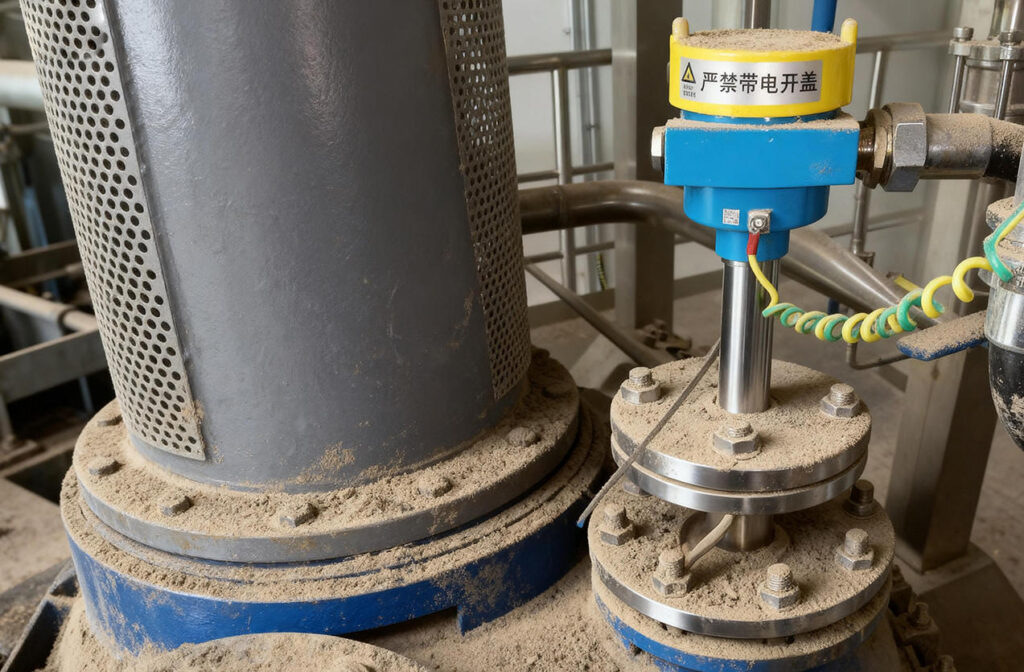
When the medium temperature exceeds 200°C, the instrument structure, electronic components, and sealing materials are continuously exposed to thermal stress. If the product is not properly engineered for high-temperature operation, signal drift, false triggering, or reduced service life may occur.
In addition, high-temperature environments are often accompanied by dust, vibration, pressure fluctuations, and material caking. These factors further increase the stability requirements for level detection. A truly reliable high-temperature level switch must therefore be designed with comprehensive thermal resistance, stable vibration elements, and long-term heat reliability — not merely short-term temperature tolerance.
In the current market, some domestic high-temperature level switches adopt heat-sink structures to dissipate heat from the electronic module. However, this approach is primarily auxiliary. Long-term stability in high-temperature environments ultimately depends on the thermal capability of the core vibration element.
The key component in vibration-based devices — the piezoelectric ceramic element — has inherent material temperature limitations. If the core vibration structure cannot reliably withstand high temperatures, measurement stability may be affected.
Jiwei High-Temperature Vibration Technology
For this reason, relatively few manufacturers in China can achieve 250°C long-term stable operation, and products rated for 400°C high-temperature applications are even rarer.
When selecting equipment, it is critical to evaluate the continuous operating temperature rating, rather than relying solely on short-term temperature resistance. Some products may withstand high temperatures briefly, but long-term reliability must be verified under real operating conditions.
Industrial-grade high-temperature level switches should provide clearly defined continuous temperature ratings, complete structural design, and validated long-term performance data.
Tube-11 High-Temperature Vibrating Rod Level Switch
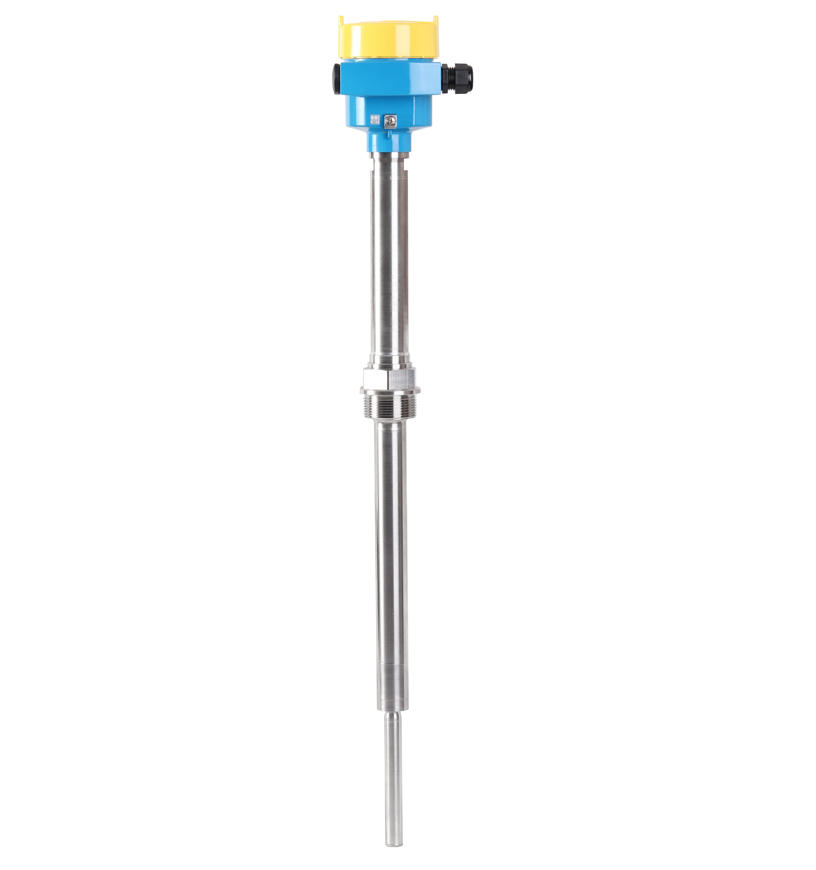
The Tube-11 vibrating rod level switch is designed for powder and granular material detection in industrial environments. It is available in both 250°C and 400°C versions, meeting diverse high-temperature requirements.
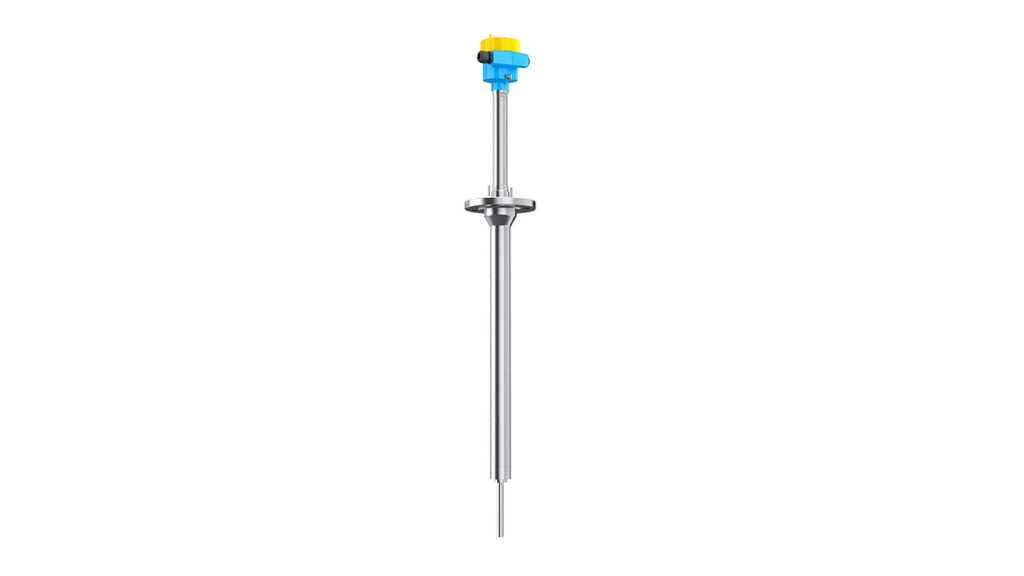
The 400°C model incorporates a cooling system (air or water cooling) to maintain safe internal operating conditions. It is particularly suitable for cement kiln systems, metallurgical processes, high-temperature silos, and heat-treatment equipment.
The operating principle is based on vibration frequency change when the rod contacts material. This technology provides strong dust resistance and stable performance, making it suitable for continuous production environments.
The Tube-11 super high-temperature version maintains the same working principle as the standard model but features an innovative external cooling sleeve. Through controlled airflow or water circulation via a dedicated channel, the internal piezoelectric components and high-temperature wiring operate within allowable temperature limits, enabling reliable measurement in 400°C applications.
The structure is robust, maintenance requirements are low, and it is suitable for long-term industrial operation.
Fork-11 Vibrating Fork Level Switch Advantages
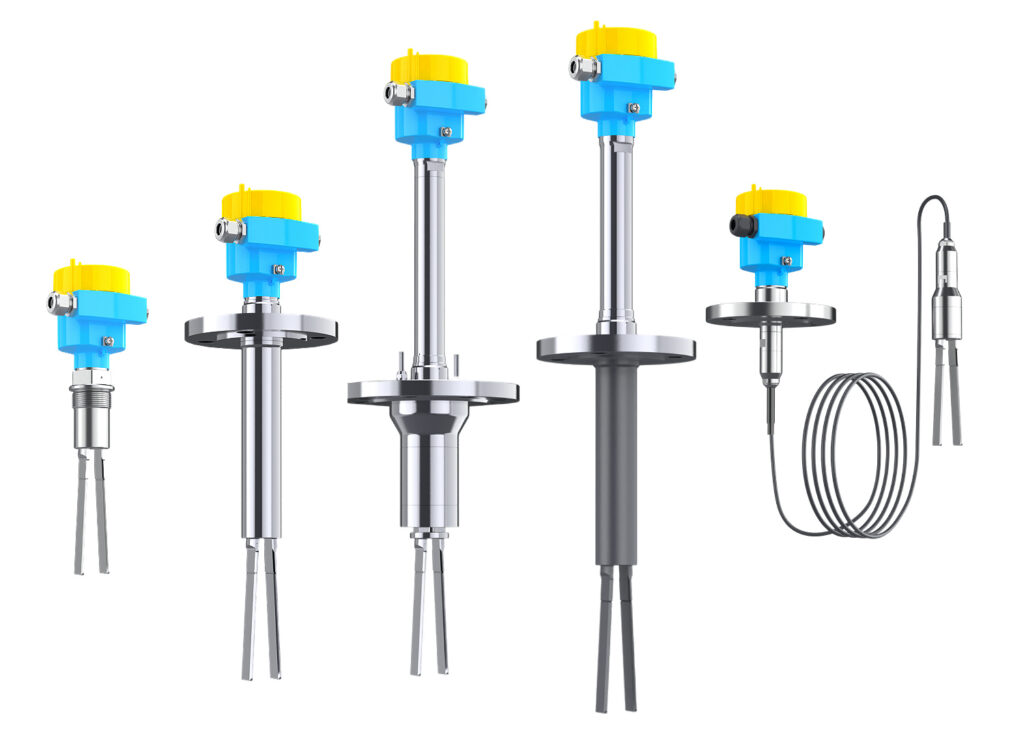
The Fork-11 vibrating fork level switch is also available in 250°C and 400°C versions and is ideal for applications requiring higher sensitivity.
It can detect materials with a minimum density as low as 0.008 g/cm³, making it suitable for lightweight powders and special industrial materials. For low-density applications, Fork-11 provides stable and reliable switching signals.
The vibrating fork design offers fast response time, strong anti-coating performance, and is well suited for small silos and precision-level control systems.
Selection Guidance: Vibrating Rod vs. Vibrating Fork
In practical applications, vibrating rod level switches are generally more suitable for medium-to-high density materials and relatively large particles, such as cement powder, metallurgical raw materials, and building materials. They perform well in dusty environments and stable process conditions.
Fork-11 vibrating fork switches, on the other hand, offer higher sensitivity and are better suited for low-density materials or applications requiring precise detection response. With a minimum detectable density of 0.008 g/cm³, Fork-11 is ideal for lightweight powders and fine materials.
Both products support 250°C and 400°C temperature versions, allowing users to select the appropriate model based on actual site conditions to ensure long-term stable operation.
Conclusion
In high-temperature industrial environments, selecting a professionally designed high-temperature level switch is essential for ensuring system safety and operational stability.
Shenzhen Jiwei Automations Ltd provides Tube-11 high-temperature vibrating rod level switches (250°C / 400°C) and Fork-11 vibrating fork level switches (minimum density 0.008 g/cm³), offering reliable solutions for complex industrial applications.
For industries requiring stable, high-temperature, and low-maintenance level detection solutions, Jiwei instruments represent a dependable and professional choice.