80GHz Radar Level Transmitter for Seawater Level Monitoring: HZMB Smart Infrastructure Case Study
Abstract: As a mega-scale cross-sea transportation project connecting Hong Kong, Zhuhai, and Macau, the Hong Kong–Zhuhai–Macau Bridge (HZMB) serves as both a critical regional transport hub and a benchmark for China’s “Smart Transportation” and “Digital Twin Infrastructure.” The marine dynamic environment surrounding this cross-sea bridge is exceptionally complex, subject to the combined interactions of strong tides, monsoons, typhoons, and storm surges. To achieve 24/7, high-precision perception of dynamic sea levels—thereby ensuring bridge structural integrity, optimizing navigation management, and facilitating scientific decision-making for flood and typhoon prevention—a highly stable and accurate seawater level monitoring system is indispensable. This paper examines the mass deployment of the JWrada® MINI 80GHz high-frequency radar level transmitter, independently developed by Shenzhen Jiwei Automations Ltd., at the HZMB. It explores the technical pathways and engineering value of non-contact millimeter-wave radar technology in overcoming extreme conditions such as severe marine corrosion, dynamic wave noise, and spatial constraints, providing a repeatable domestic alternative model for global smart ocean and digital water management infrastructure.
Keywords: Hong Kong–Zhuhai–Macau Bridge (HZMB); Smart Transportation; Seawater Level Monitoring; 80GHz Radar Level Transmitter; Non-contact Level Measurement; Digital Twin Infrastructure
1. Introduction: Digital Twin Infrastructure and Marine Physical Perception
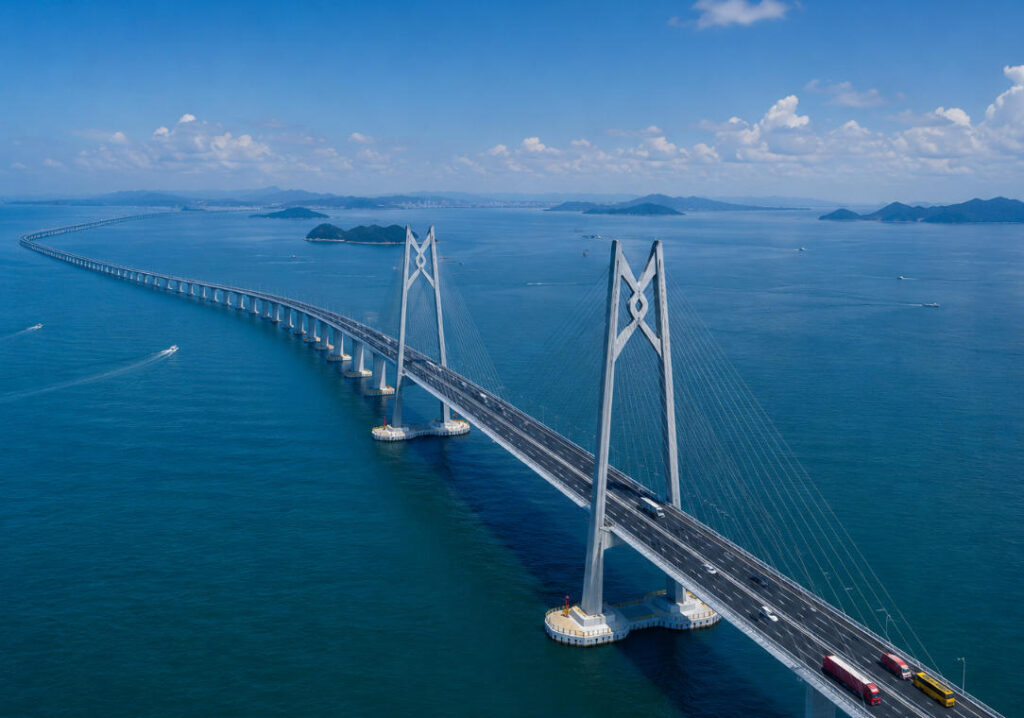
Under the strategic framework of advancing national transport capacity and “New Infrastructure” (New Infrastructure Development), the digitalization and intelligent operation and maintenance (O&M) of cross-sea bridges have become key indicators of modern transport governance. Spanning approximately 55 kilometers across the Lingdingyang waters of the Pearl River Estuary, the HZMB integrates bridges, artificial islands, and an undersea tunnel into a world-class cross-sea corridor. This maritime zone features a highly active hydrodynamic environment characterized by high sediment concentrations, complex tidal regimes, and frequent typhoon impacts.
Throughout the lifecycle management of cross-sea bridges, seawater level is a core physical parameter with systemic implications:
- Structural Integrity: Long-term anomalies in water level fluctuations and extreme storm surges exert direct erosive forces on pier foundations and pose potential threats to the overall structural safety through fluid-structure interaction (FSI).
- Navigation Management: Precise water level data serves as the critical foundation for calculating vessel clearance heights and managing maritime traffic safely.
- Meteorological Early Warning: Given the rising frequency of extreme weather events driven by global climate change, establishing a real-time, high-frequency, continuous seawater level perception network is essential for the HZMB’s flood and typhoon emergency response systems.
However, constructing a highly reliable physical perception layer along extensive coastlines and open marine environments has long been a technical bottleneck in industrial instrumentation. Recently, the HZMB underwent a comprehensive digital upgrade of its water level monitoring infrastructure, deploying batches of the JWrada® MINI 80GHz radar level transmitters developed by Shenzhen Jiwei Automation. The successful implementation of this project marks a significant breakthrough for industrial high-frequency radar technology, transitioning from core technical R&D to large-scale engineering application under extreme marine conditions.
2. Technical Challenges of Complex Marine Conditions on Traditional Instruments
The marine environment—characterized by high salt spray, high humidity, intense dynamic wave action, and aggressive biofouling—is widely recognized as a severe testing ground for industrial instrumentation. At the specific geographic and structural sites of the HZMB, traditional water level measurement technologies (such as hydrostatic pressure level transmitters, float-operated gauges, and ultrasonic level meters) encounter distinct technical bottlenecks, failing to satisfy the rigorous centuries-long operational standards of the bridge.
2.1. Chemical Aggression and Biofouling Degradation
Marine atmospheres and seawaters contain high concentrations of chloride ions (Cl), rendering them highly electrochemically corrosive. Traditional contact-type sensors, such as hydrostatic or submersible level transmitters, suffer from pitting, crevice corrosion, and stress corrosion cracking (SCC) due to the prolonged immersion of their sensing elements, metallic enclosures, and signal cables in seawater.
Furthermore, the Lingdingyang waters exhibit high marine biological density. Organisms such as barnacles, mussels, and algae possess strong bio-adhesive properties. Once the probes or pressure-conducting tubes of contact-type instruments are blanketed by marine growth, the physical mass of the sensor alters, and pressure transmission becomes obstructed. This leads to severe non-linear signal drift or complete mechanical seizure of the sensor.
2.2. Dynamic Wave Action and Multipath Reflections
The sea surface is never an ideal static plane; it exhibits highly non-linear dynamic driven by winds, swells, and wake surges from large passing vessels. Traditional low-frequency radars (such as 26GHz or 6GHz pulse radars) and ultrasonic level meters typically feature wide beam angles (generally ranging from 10° to 24°).
When mounted on bridge railings or external outriggers, these broad beams inevitably strike bridge piers, steel guardrails, and reflective structures during propagation. These structural reflections overlap spatially with the weak sea surface echo, creating severe multipath interference. Concurrently, the continuous rolling of sea waves causes drastic variations in the Radar Cross Section (RCS), making it extremely difficult for conventional instruments to isolate true, smooth average tidal data from the overlapping clutter.
2.3. High-Altitude Deployment and Life-Cycle Cost (LCC) Bottlenecks
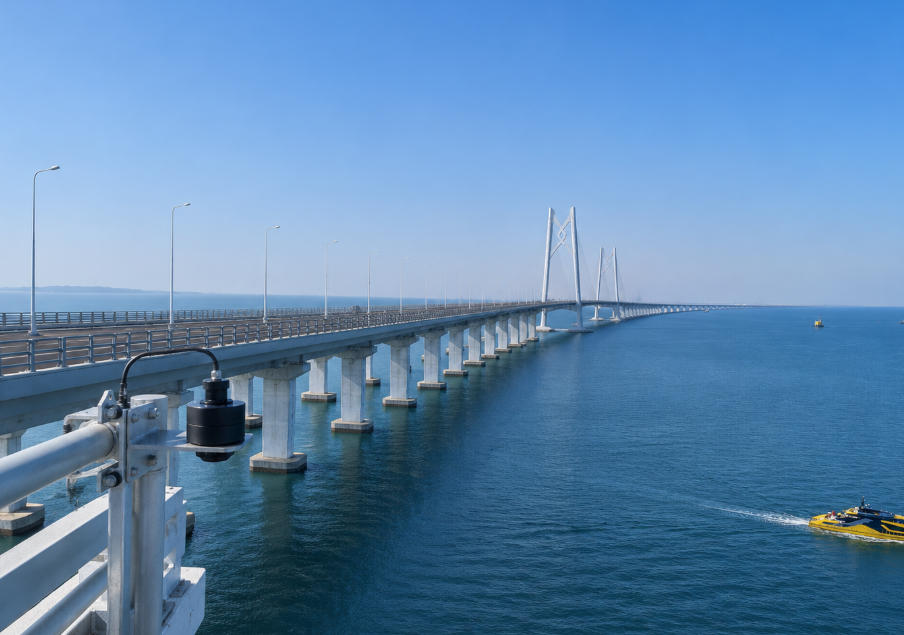
Water level monitoring nodes on the HZMB are distributed across external box girders, main bridge piers, or customized hanging brackets, often sitting dozens of meters above the sea surface. These locations represent high-risk working zones characterized by high-altitude, proximity to water, and strong winds.
Contact-type instruments or low-end non-contact devices prone to signal drift require maintenance crews to regularly perform high-altitude suspended operations to clear biofouling and recalibrate zero points. This incurs high labor costs and vessel rental fees while compounding safety risks during bridge operations. Consequently, “high robustness and intrinsic maintenance-free operation” have become mandatory technical criteria for equipment selection.
3. Technical Decoupling and Engineering Solutions of JWrada® MINI
To fulfill the stringent technical mandates of the HZMB seawater monitoring project, the Jiwei Automation R&D team utilized 80GHz Frequency Modulated Continuous Wave (FMCW) technology as the core foundation. Through hardware miniaturization, antenna engineering optimization, and proprietary digital signal processing algorithms, the team overcame multiple technical barriers inherent to marine water level measurement.
3.1. 80GHz Millimeter-Wave and FMCW Technology Anti-Noise Mechanism
The JWrada® MINI operates within the 80GHz millimeter-wave band and utilizes the Frequency Modulated Continuous Wave (FMCW) measurement principle. Compared to traditional pulse time-of-flight (ToF) radars, FMCW technology performs signal demodulation within the frequency domain.
The radar antenna transmits a microwave signal whose frequency varies linearly over time. This signal reflects off the sea surface and is captured by the receiver antenna. A transient frequency difference, △ f, exists between the transmitted and received signals, which is strictly proportional to the target distance R. This relationship is mathematically expressed as:
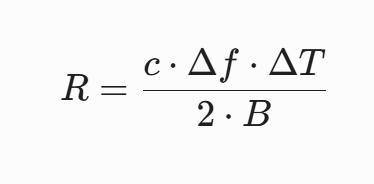
Where c represents the speed of light, △ T represents the modulation period, and B represents the modulation bandwidth of the radar signal.
Operating at 80GHz, the radar achieves a wide modulation bandwidth B of up to 4GHz or higher. According to the radar range resolution formula, a larger bandwidth yields millimeter-level theoretical range resolution. When confronting complex reflections caused by minute sea surface ripples, the JWrada® MINI precisely distinguishes the micro-distance variations between the true sea flat, the upper wave crests, and underlying backscatters, establishing a solid physical foundation for high-precision measurement.
3.2. 3° Ultra-Narrow Beam Angle: Eliminating Multipath Effects
In electromagnetic field engineering, the beam angle of a radar antenna is directly proportional to the operating wavelength and inversely proportional to the antenna aperture. The wavelength of an 80GHz radar is merely around 3.75mm, enabling the instrument to highly concentrate electromagnetic energy even with an extremely small antenna aperture.
The emission beam angle of the JWrada® MINI is compressed to an ultra-narrow envelope of approximately 3°. In the field deployment at the HZMB, because the beam is highly focused, the radar signal acts like a precise “scalpel,” slicing through the intricate external steel structures, cable trays, and pier edges to strike the sea surface directly below. This effectively avoids multipath interference and near-field parasitic coupling caused by surrounding static bridge components, ensuring the purity of the returned echo spectrum.
3.3. Matrix Dynamic Filtering Algorithm for Wave Smoothing
To transform the high-frequency fluctuating signals captured by the radar into smooth water level data viable for hydrological and navigational management, Jiwei Automation integrated a proprietary Matrix Dynamic Filtering Algorithm tailored for marine hydrology into the instrument’s digital signal processor (DSP).
The algorithm conducts dual time-domain and frequency-domain sequential analyses on continuously acquired echo spectra. By establishing a dynamic time window, the algorithm automatically identifies transient, high-frequency spike pulses caused by periodic swells or abrupt vessel wakes, assigning them minimal weight or filtering them out entirely. Consequently, the 4-20mA or RS-485 digital output represents a statistically smoothed true average sea level curve, successfully achieving the engineering objective of “extracting static trends from dynamic environments.”
3.4. Complete Physical Isolation via Non-Contact Design
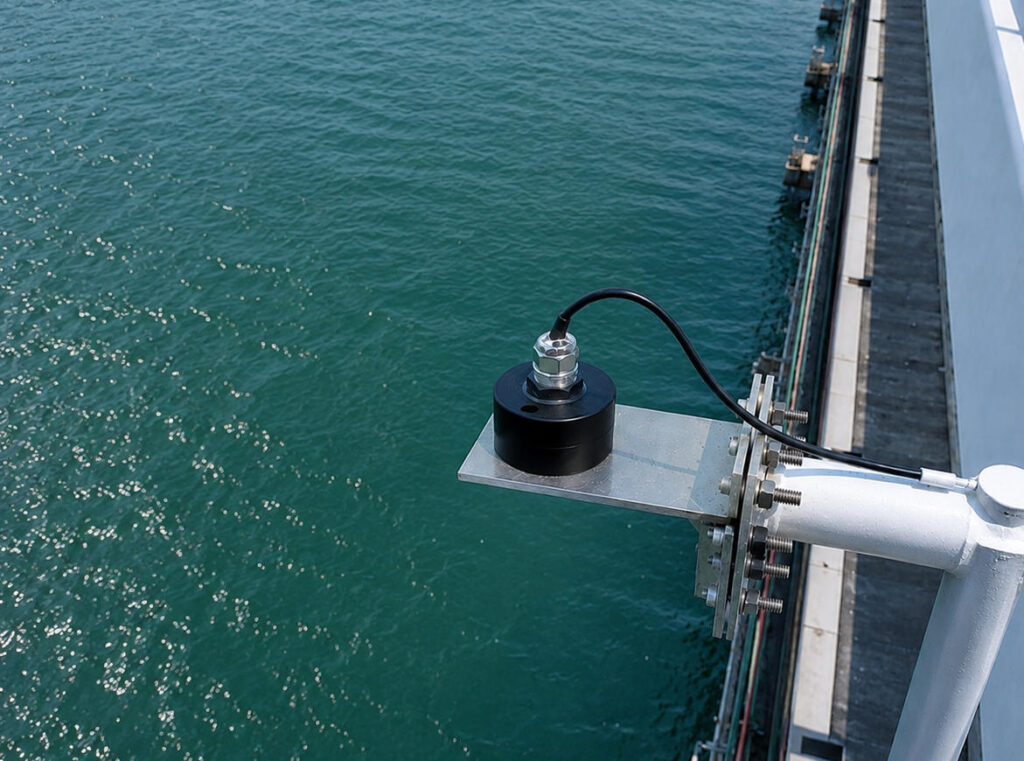
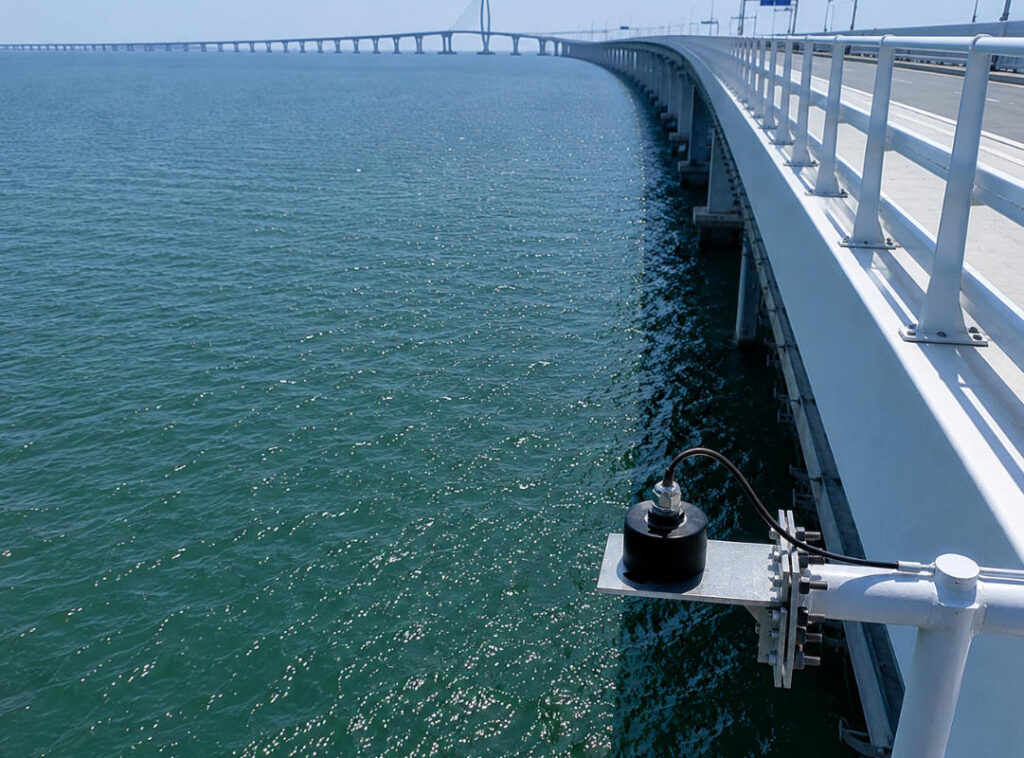
Leveraging antenna engineering optimization, the JWrada® MINI is suspended outward on dedicated steel anti-corrosion brackets along the bridge edges, maintaining a buffer zone of several meters above the maximum astronomical tide level.
This non-contact measurement method completely alters the instrument’s operating environment. By remaining isolated from the seawater, the device stands immune to chemical erosion by acids, bases, and high salinity, while preventing marine organisms from nesting on its optical lens antenna. This intrinsically safe design drastically extends the Mean Time Between Failures (MTBF) and minimizes field maintenance over the system’s operational lifespan.
4. Structural Design and Spatial Adaptation Optimization
Beyond its core electronic and signaling capabilities, the HZMB—as a national landmark monument—enforces ultra-strict entrance standards regarding the industrial aesthetics, mechanical load limits, and wind resistance profiles of all attached field hardware.
4.1. Compact Industrial Aesthetics and Minimal Mechanical Loads
Conventional industrial radar level meters typically feature heavy flameproof enclosures and large flange connections, weighing anywhere from several to over a dozen kilograms. These bulky form factors complicate installation and exert continuous cantilever mechanical stress on bridge railings.
The JWrada® MINI achieves high-density integration, featuring an ultra-compact, lightweight architecture that minimizes physical dimensions and utilizes a streamlined G3/4 thread process connection. This miniaturized design allows the instrument to integrate unobtrusively into the existing electromechanical conduits and railing frameworks of the HZMB. This preserves the macro-visual architectural consistency of the bridge while significantly lowering the dead-load stress on the cantilever brackets.
4.2. Aerodynamic Profile Optimization and High Aeroelastic Stability
The Lingdingyang maritime zone is frequently subjected to high winds, facing direct landfalls of category-12 or higher typhoons during summer and autumn. Simultaneously, heavy freight trucks traveling at high speeds across the bridge deck induce continuous, low-frequency, high-amplitude structural vibrations through the main box girders.
The minimal windward surface area and aerodynamic housing design of the JWrada® MINI substantially reduce its aerodynamic drag coefficient, mitigating vortex-induced vibrations caused by high winds. Furthermore, the internal electronic components utilize full solid-state potting and shock-absorption reinforcement techniques, allowing the unit to withstand structural fatigue induced by bridge vibrations and ensuring uninterrupted real-time data backhaul during extreme typhoon events.
5. Smart O&M: Applications of Wireless Bluetooth in Spatial Extremes
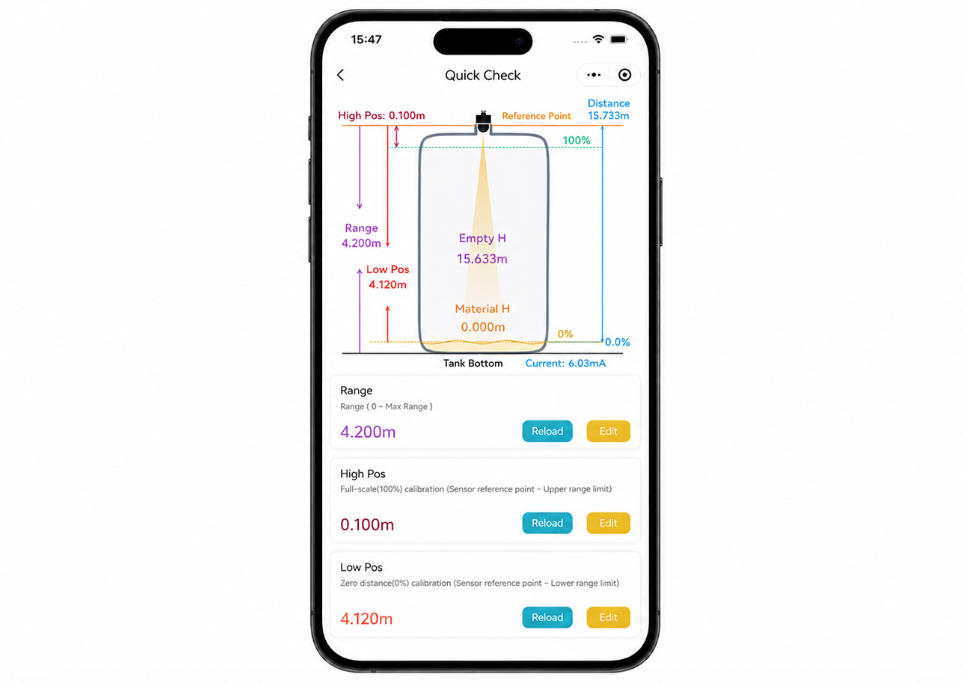
In digital infrastructure ecosystems, “maintainability” matches “reliability” as a core engineering metric. The intelligent maintenance mechanism introduced by the JWrada® MINI addresses the safety pain points of high-altitude, near-water field interventions.
5.1. Wireless “No-Disassembly, No-Cover-Opening” Field Tuning
Traditional industrial instruments require field technicians to use dedicated infrared remote controllers or open metallic enclosures to interface with buttons or calibration cables when performing parameter modifications, span adjustments, or echo diagnostics. Given the suspended position of instruments on the outer edge of the HZMB, opening the housing introduces risks of dropping tools into the sea and exposes personnel to hazardous high-altitude environments.
The JWrada® MINI integrates a low-power, long-range, industrial-grade Bluetooth communication module. Field inspection crews and maintenance engineers can remain on the safe pedestrian zones of the bridge deck, using an industrial PDA or smartphone running the dedicated “Jiwei Tools” App to establish an encrypted wireless link with the radar.
5.2. Full-Lifecycle Data Visualization and Health Diagnostics
Within the “Jiwei Tools” mobile interface, microwave reflection spectra captured by the radar are converted into real-time, digitized Echo Curves. Through these curves, engineers can inspect reflection intensity at the sea surface, verify the presence of static structural clutter, and assess electromagnetic attenuation.
Should extreme meteorological surges occur or the antenna lens encounter accidental fouling, the onboard self-diagnostic module broadcasts anomaly warning codes via Bluetooth. This transparent, visualized data interaction enables the HZMB water level monitoring system to execute predictive maintenance, moving away from reactive blind inspections.
5.3. Multi-Protocol Physical Interfaces and Digital Twin Integration
In addition to local wireless debugging interfaces, the JWrada® MINI provides standardized physical communication layers for backbone data transmission. The device supports conventional 4-20mA signals superimposed with the HART protocol, and is compatible with RS-485 digital buses running the Modbus protocol.
Within the broader HZMB Internet of Things (IoT) architecture, seawater level data harvested by these high-frequency radars travels via bridge-wide industrial fiber-optic ring networks with millisecond-level responsiveness back to the HZMB Main Control Center (SCADA System). The data feeds into the bridge’s 3D Digital Twin dashboard, converging with multi-source data from anemometers, strain gauges, and navigation radars to formulate precise data baselines for smart traffic management and emergency response plans.
6. Project Outcomes and Life-Cycle Cost Valuation
Since the batch deployment of the JWrada® MINI in the HZMB seawater level monitoring project, the system has undergone long-cycle, high-intensity field validation, delivering significant economic and engineering returns.
| Evaluation Metric | Traditional Contact Solution (Hydrostatic/Float) | Jiwei JWrada® MINI 80GHz Radar |
| Measurement Stability | Highly prone to signal drift due to flow velocity, density shifts, and biofouling. | 80GHz FMCW combined with dynamic algorithms delivers smooth, precise values. |
| Device Durability | Severe chemical corrosion from seawater; typical operational lifespan is only 1–2 years. | Non-contact physical isolation and full anti-corrosion design extend lifespan manifold. |
| O&M Workload | Requires quarterly manual cleaning of marine growth and zero-point calibration. | Inherently maintenance-free; requires only remote health checks via the mobile App. |
| Life-Cycle Cost | Low initial procurement cost, but driven high by frequent field maintenance and replacement cycles. | Exceptionally high return on investment (ROI); significantly lowers long-term bridge operating costs. |
When subjected to heavy rainstorms, severe lightning strikes, and massive wave actions induced by tropical cyclones typical of the region, the control center dashboards showed stable echo profiles, accurate target tracking, and zero system downtime caused by signal loss or data saturation. Feedback from the core HZMB O&M engineering team indicates that the equipment delivers high data fidelity while reducing overall field maintenance frequency by over 90%, markedly elevating the overall efficiency of smart bridge asset management.
7. Conclusion: The Rise of Advanced High-Frequency Radar Instruments
The successful deployment of the seawater level monitoring project at the Hong Kong–Zhuhai–Macau Bridge provides validation for advanced industrial-grade high-frequency radar technology within top-tier national infrastructure. Historically, core water level sensing nodes in critical infrastructure, such as cross-sea corridors, mega-ports, and nuclear power plant intakes, were dominated by imported instruments from European and American industrial conglomerates.
By deepening its R&D in 80GHz high-frequency millimeter-wave technology, Shenzhen Jiwei Automation has addressed these application barriers with the JWrada® MINI’s core strengths: high precision, compact footprint, intelligent operation, and an inherently maintenance-free nature. This proves that in the high-end industrial instrumentation sector, domestic manufacturing possesses the capabilities to compete with elite global brands and achieve comprehensive functionality upgrades in digital field performance.
As global initiatives in smart water conservancy, digital oceans, intelligent ports, and basin-wide disaster mitigation projects continue to expand, high-performance high-frequency radars represented by Jiwei Automation are transitioning from localized bridge perception nodes into robust digital sentinels safeguarding national hydrological security and marine strategy frameworks.