Case Study: Jiwei Vibrating Rod Level Switch at Duracell Battery Factory – Reliable Measurement in High Dust & High Viscosity Stirred Tanks
In the alkaline battery industry, electrolytic manganese dioxide (EMD) is a critical raw material. In the production process at Duracell Battery Factory, EMD powder is added to high-concentration potassium hydroxide (KOH) solution for stirring, mixing, and chemical reactions. This process involves dust generation, medium heating, moisture release, and condensation, creating highly challenging conditions for level measurement devices.
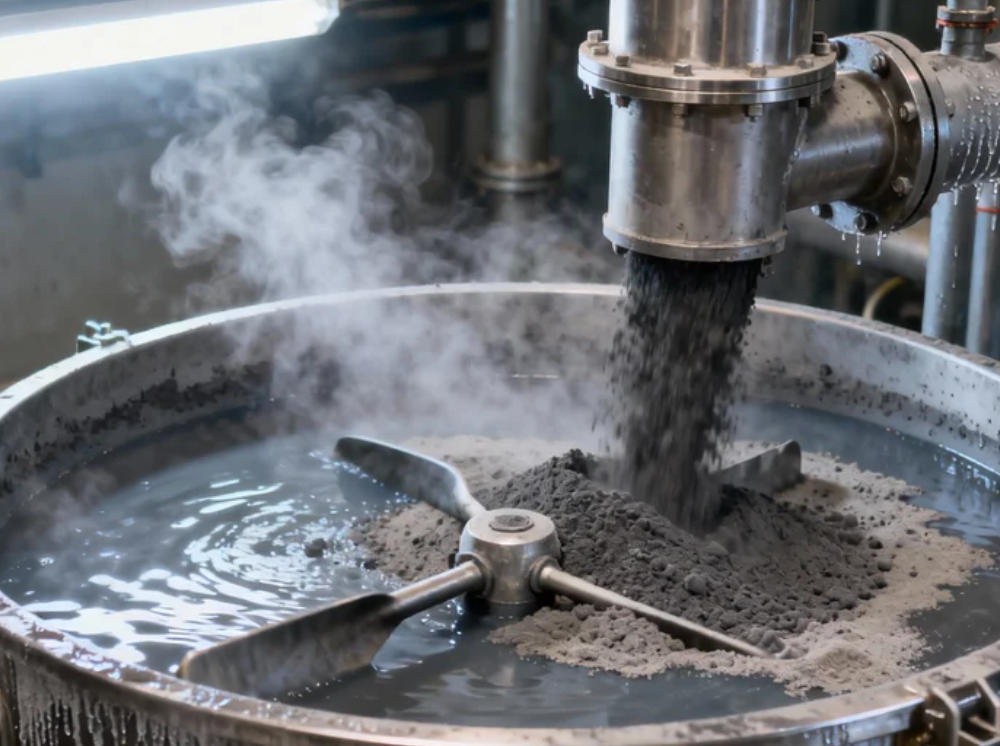
In this case, Duracell Battery Factory installed Jiwei Automation’s vibrating rod level switches in several stirring tanks for high or low level monitoring, ensuring overflow prevention, dry-run protection, clog prevention, and stable feeding control. After several months of continuous operation, the equipment demonstrated high reliability, particularly under challenges such as dust deposition, condensation, and medium disturbance caused by stirring. Below is a detailed description of the site background, challenges, device configuration, installation, operational performance, and project summary.
1. Process Background and Equipment Structure
At Duracell Battery Factory, multiple conical stirring tanks are used for continuous addition and reaction of EMD powder and KOH solution. The tanks are approximately 2 m high, with a top-wide, bottom-narrow design that promotes material flow and reduces dead zones, enhancing mixing efficiency. The medium consists of dense EMD powder in highly alkaline KOH solution, with strong chemical corrosion, posing high demands on sensor materials and measurement stability.
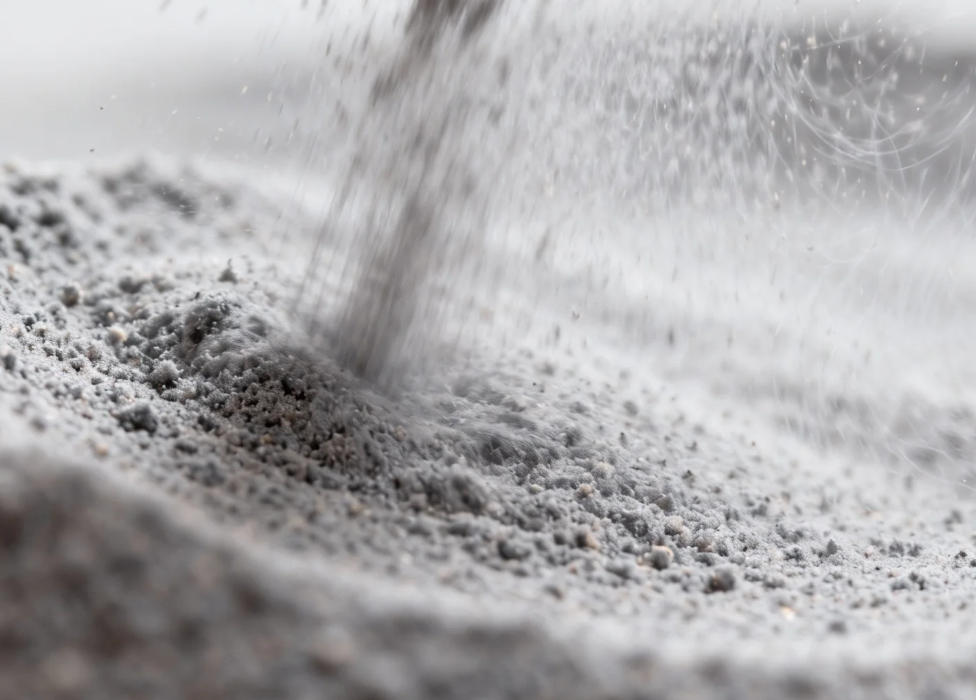
The stirring system uses high-speed mechanical blades to circulate the medium. During operation, materials are constantly added, broken down, settled, and resuspended, forming a dynamic flow structure. This ensures uniform powder dispersion, stable viscosity distribution, and controlled solid-liquid ratios. Material height and density vary continuously, requiring multi-point level monitoring at different tank locations to obtain accurate real-time level feedback.
Tank layouts are not standardized; installation positions include feed side, opposite side, and edge locations, complicating signal stability and response requirements. Sensors must adapt to varying tank geometries and ensure reliable signals regardless of position.
Level measurement is critical not only for display or alarm purposes but also for controlling stirring efficiency, reaction consistency, feeding frequency, production rhythm, and safety. Any error can cause empty-blade rotation, overfeeding, forced shutdown, viscosity fluctuation, powder accumulation, or overflow. Thus, reliable and interference-resistant sensors are essential.
2. Site Challenges – Dust, Heat, Moisture, and Adhesion
The operating conditions are far more complex than ordinary powder level measurement. Previously, the factory used domestic SP brand rotary paddle level switches, which frequently misfired or failed under sticky, dusty, and stirred conditions.
- Complex medium: EMD powder has high density and fine particles; KOH is corrosive and conductive.
- Strong stirring disturbance: High-speed blades create turbulence and material movement, destabilizing rotary paddle switches.
- Frictional heat: Powder friction and blade contact generate localized heating and moisture.
- Condensation and adhesion: Condensed moisture at the tank top combines with dust to form blocky deposits.
- Multi-location installations: Feed side, opposite side, and edge positions require sensors to handle differing signal environments.
Overall, these tanks represent a typical “complex industrial scenario” with dust, strong stirring, wet medium, adhesion, temperature gradients, and rapidly changing level profiles.
3. Solution Selection – Why Vibrating Rod Level Switches?
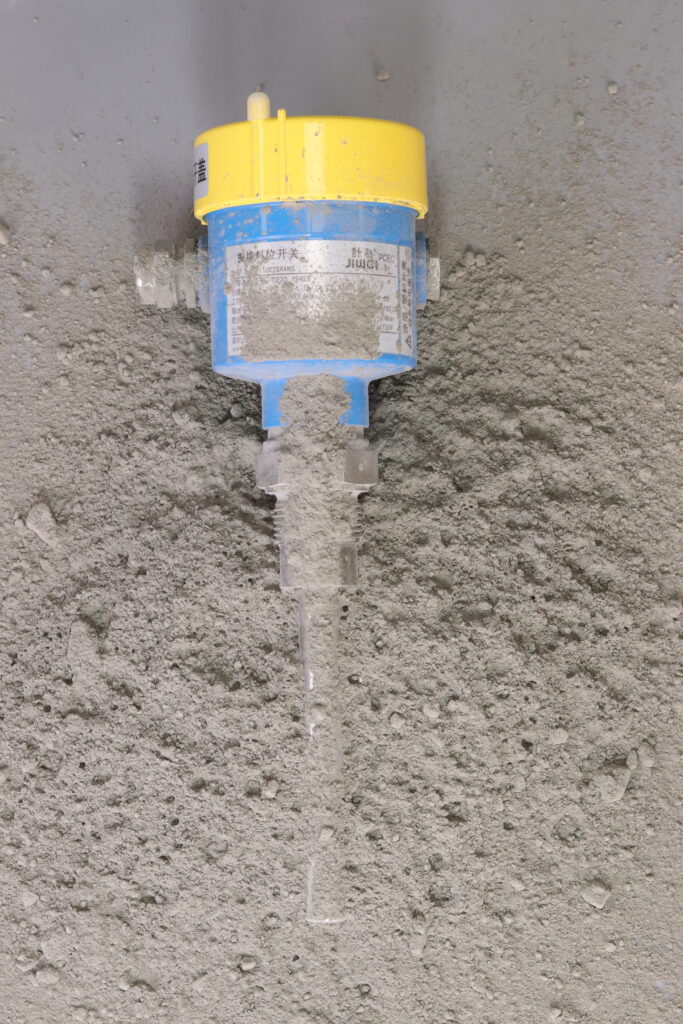
The Jiwei Tube-11 vibrating rod level switch with patented dual-rod structure was selected after technical evaluation.
- Insensitive to medium dielectric properties: Vibration damping-based measurement is unaffected by powder-liquid dielectric changes.
- Stable under dust and particles: Air and powder interfaces do not trigger false signals.
- Structural advantages: Detection is based on vibration damping; adhesion, clumping, or sticky material does not affect output. Reliable even under wet powders or wall deposits.
- Compact, flexible installation: Fits various tanks, regardless of shape or wall thickness.
- Corrosion-resistant and maintenance-free: Suitable for strong alkaline media.
Tests showed reliable operation under high dust and condensation, outperforming capacitance or RF-based sensors.
4. Installation and Layout
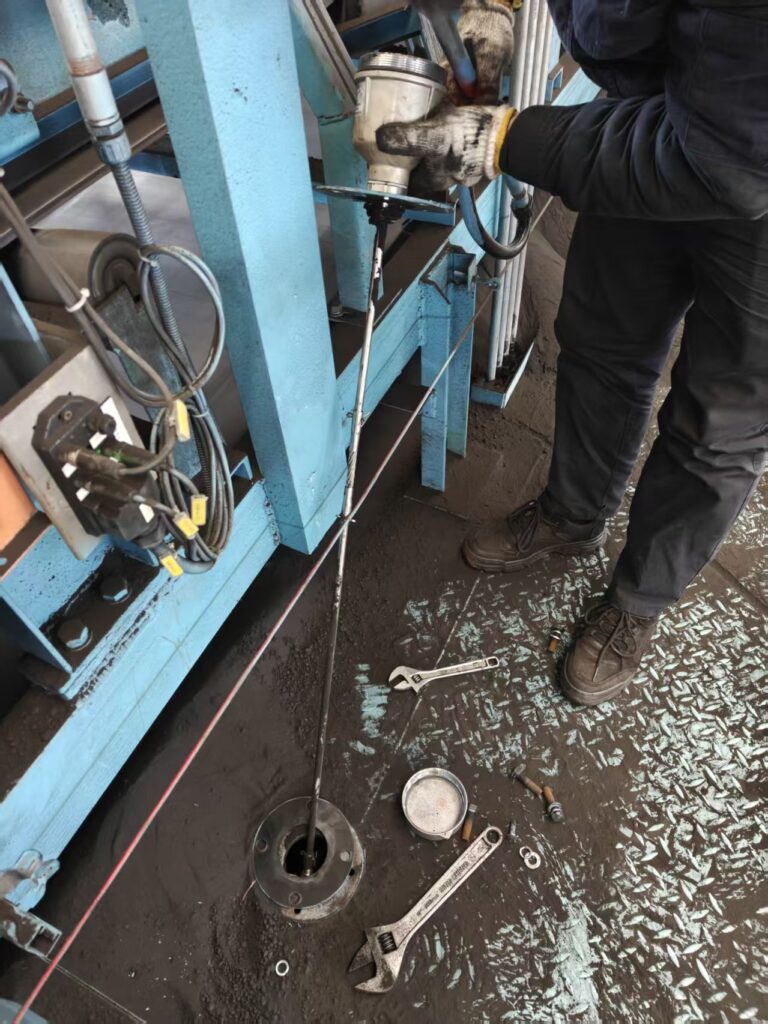
Three installation positions were used to optimize coverage:
- Feed side: Detect material drop to prevent dry-run.
- Opposite side: Monitor uneven material accumulation.
- Edge side: Ensure stability on tank perimeter.
Sensors were positioned to correspond with upper and lower level thresholds, integrating directly into process control and synchronizing with stirring speed and feeding rate.
5. Operational Performance and Feedback
After months of continuous operation:
- No false or missed alarms.
- Dust deposition did not affect detection.
- Resistant to mechanical vibration interference.
- Maintenance-free operation.
- Fast response time enhanced feeding efficiency.
User feedback: “Once installed, we almost forget it’s there.” For industrial instrumentation, this is the highest praise.
6. Actual Value Delivered
Previously, the factory relied on domestic SP rotary paddle switches, which proved unsuitable under mixed EMD/KOH stirring conditions. Paddle switches were prone to misfire due to adhesion, clumping, variable viscosity, and condensation deposits, requiring frequent maintenance, causing downtime, and generating safety risks.
The vibrating rod switch solved these issues through a damping-based mechanism, eliminating interference from sticking, abrasion, and dust, improving system stability and production efficiency.
7. Conclusion and Outlook
This case demonstrates the reliability of vibrating rod level switches in high-dust, adhesive, strongly stirred environments. It shows that complex media can be reliably measured with the right technology.
Future expansions at Duracell Battery Factory will likely adopt similar solutions across powder silos, slurry tanks, and mixing systems, ensuring higher efficiency, stability, and safety. This technology is also applicable to feed systems, rotary mixers, conveyors, settling tanks, and bulk material storage.
The case provides a practical reference for level measurement in mixed powder-liquid systems and can serve as a replicable example for similar industries.